Hudson River Trading Bets Big on CoreWeave AI Cloud
Hudson River Trading signed a multiyear agreement with CoreWeave to use its AI computing services. The partnership will support the development of new trading research and machine-learning models.
10 results on this page
Hudson River Trading signed a multiyear agreement with CoreWeave to use its AI computing services. The partnership will support the development of new trading research and machine-learning models.
Oxford researcher Carl Benedikt Frey argues that China’s biggest obstacle to large-scale AI deployment may be inadequate social protection for workers displaced by automation, not computing power or algorithms. The analysis compares China with historical British welfare systems and Denmark’s flexicurity model, while noting that the cited Chinese incidents do not prove a broad AI crackdown.

Researchers propose a Metamorphic Artificial Age Score (AAS) prototype that detects drone propeller health issues from flight-log data. It combines six normalized indicators to prioritize routine monitoring, maintenance review, or mandatory inspection across different fault severities.
A researcher applied the same SFT and GRPO recipe to three from-scratch LLMs ranging from 316M to 672M parameters, but observed sharply different outcomes. GRPO barely affected the smallest model, severely degraded the middle model, and caused modest degradation in the largest, with no GSM8K transfer despite curriculum learning.

A security researcher discovered that more than 9 million face photos were stored in an unsecured ClarityCheck database. The database reportedly required no password to access.
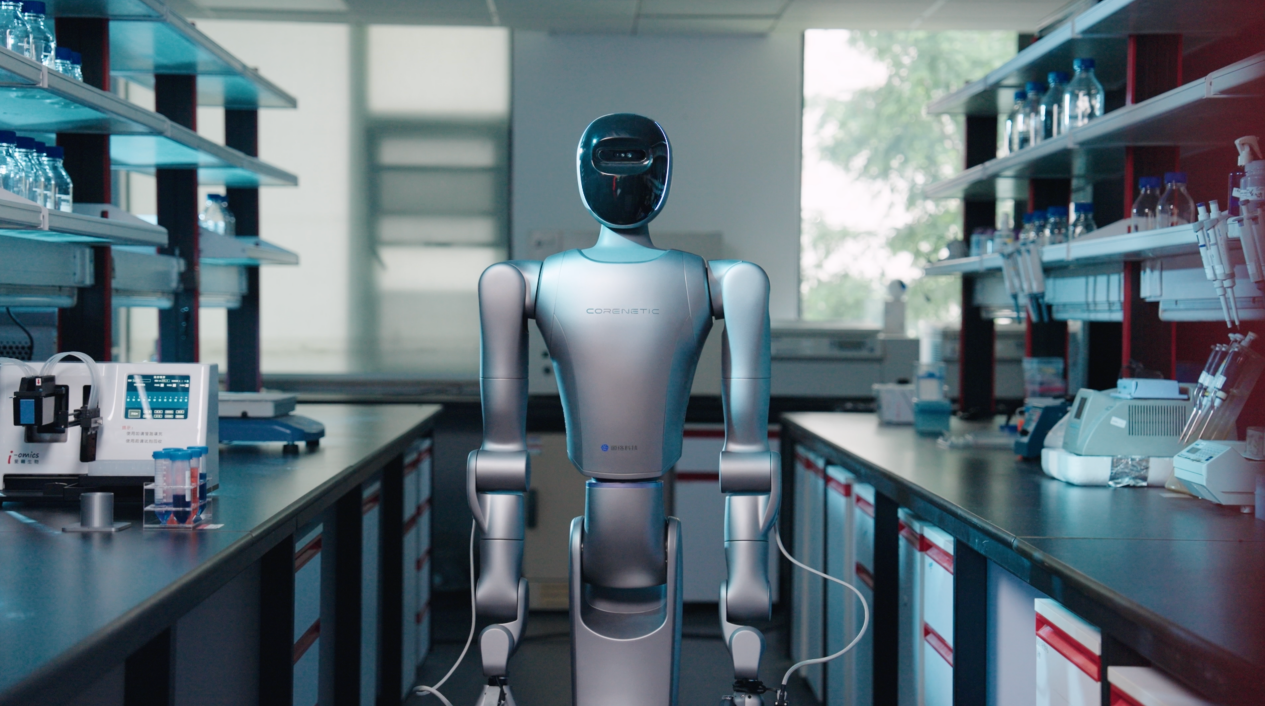
The article examines a new phase of AI for Science in which robots are becoming foundational infrastructure for research. It highlights the growing role of robotic systems in enabling and automating scientific work.
VentureBeat has appointed Rob Strechay as its first Lead Analyst and founding analyst of VentureBeat Research. He will focus on enterprise AI infrastructure, platform engineering, DevOps, observability, and AI security as organizations move from experimentation to production.
A Pew Research Center survey found that the youngest members of the US workforce are becoming increasingly skeptical of artificial intelligence. Their concerns center on the possibility that rapid AI advances will cause widespread job losses.

The post argues that Qwen3.8 intermediate tokens should not be interpreted as human-like reasoning. Citing research, it highlights that trace validity often does not correlate with answer correctness, and that models trained on corrupted or irrelevant traces can perform as well as or better than models trained on valid traces.
Lee Moon Tae, head of the Superintelligence Lab at LG AI Research, discusses the future opportunities and responsibilities surrounding superintelligence. He emphasizes the importance of developing AI capabilities that reflect national and organizational sovereignty.