📚InfoQ中国•Freshcollected in 0m
Robots Become AI for Science Infrastructure
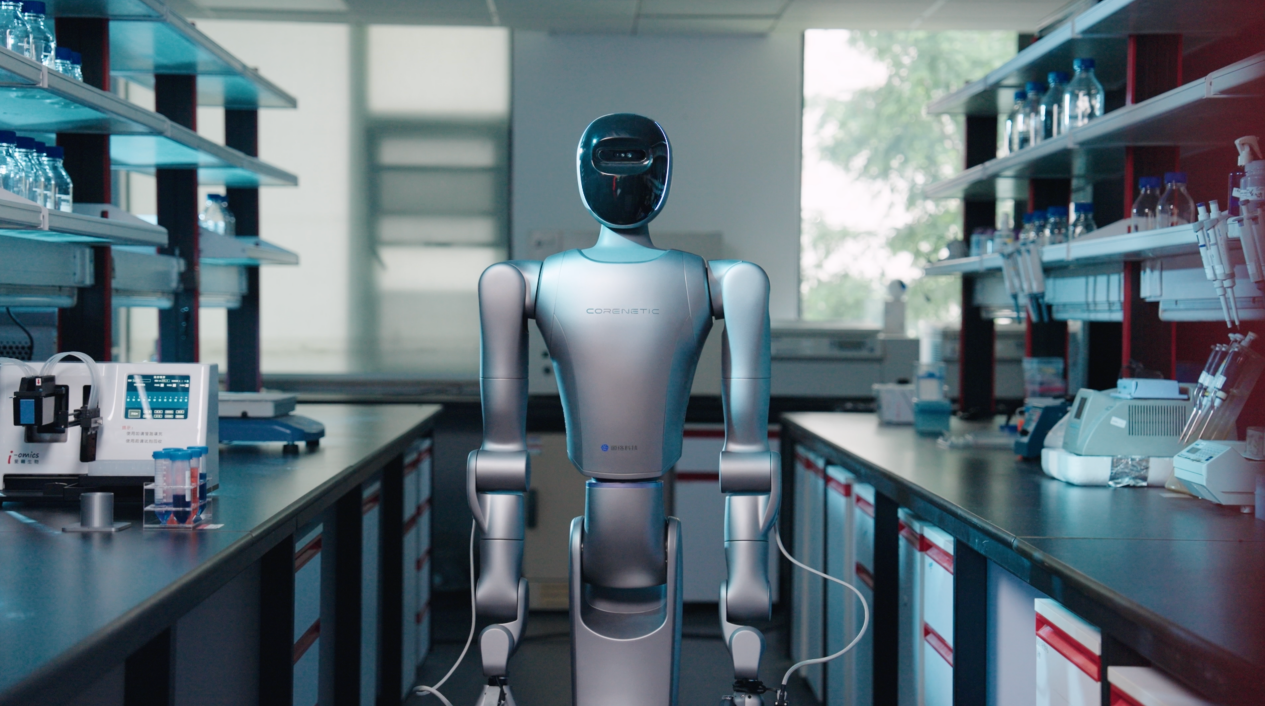
💡See why robotic systems may become the next core layer of AI-driven scientific research.
⚡ 30-Second TL;DR
What Changed
AI for Science is entering a new development phase.
Why It Matters
For research teams, this shift could change how experiments are designed, executed, and scaled. AI practitioners may need to consider robotics, laboratory automation, and data pipelines as one integrated research system.
What To Do Next
Map one repetitive experiment in your lab and identify the robot-control, data-capture, and validation steps required to automate it.
Who should care:Researchers & Academics
Key Points
- •AI for Science is entering a new development phase.
- •Robots are shifting from laboratory tools to core research infrastructure.
- •Scientific workflows may increasingly depend on robotic automation and experimentation.
🧠 Deep Insight
AI-generated analysis for this event.
🔑 Enhanced Key Takeaways
- •The integration of 'Self-Driving Labs' (SDLs) combines closed-loop robotic experimentation with Bayesian optimization to autonomously navigate chemical and material discovery spaces.
- •Standardization efforts like the Laboratory Automation Protocol (LAP) are emerging to ensure interoperability between heterogeneous robotic hardware and AI control software.
- •Digital Twin technology is being utilized to simulate robotic workflows in virtual environments before physical execution, significantly reducing the cost of failed experiments.
- •Cloud-based laboratory-as-a-service (LaaS) platforms are enabling remote access to robotic infrastructure, democratizing high-throughput experimentation for researchers without local hardware.
- •Recent advancements in foundation models for robotics allow systems to interpret natural language experimental protocols and translate them into executable robotic code (API calls) without manual programming.
🛠️ Technical Deep Dive
- Closed-loop architecture: Utilizes an 'Active Learning' cycle where AI models predict experimental outcomes, select the next optimal experiment, and command robotic arms to execute it.
- Hardware Abstraction Layers (HAL): Implementation of middleware (e.g., ROS 2) to decouple high-level AI decision-making from low-level robotic motor control.
- Data Standardization: Adoption of FAIR (Findable, Accessible, Interoperable, Reusable) data principles to ensure robotic-generated datasets are machine-readable for training future AI models.
- Sensor Fusion: Integration of real-time analytical instrumentation (mass spectrometry, NMR, spectroscopy) directly into the robotic feedback loop for instantaneous data ingestion.
🔮 Future ImplicationsAI analysis grounded in cited sources
Scientific reproducibility rates will increase by over 40% within five years.
Robotic automation eliminates human variability and ensures precise, logged execution of experimental parameters.
The cost of discovering new functional materials will drop by an order of magnitude by 2030.
Autonomous robotic systems operate 24/7, drastically increasing the throughput of experimental cycles compared to human-led research.
⏳ Timeline
2021-06
Rise of the first fully autonomous 'Self-Driving Lab' for materials discovery.
2023-09
Integration of Large Language Models (LLMs) as controllers for robotic laboratory hardware.
2025-02
Standardization of cloud-based robotic research infrastructure for cross-institutional collaboration.
📰
Weekly AI Recap
Read this week's curated digest of top AI events →
👉Related Updates



AI-curated news aggregator. All content rights belong to original publishers.
Original source: InfoQ中国 ↗