💼
Anthropic Eyes SpaceX-Sized IPO
Anthropic reportedly expects its initial public offering to match or exceed SpaceX’s record-setting IPO size. Preparations for the AI company’s debut are accelerating, according to people familiar with the matter.
10 results on this page
Anthropic reportedly expects its initial public offering to match or exceed SpaceX’s record-setting IPO size. Preparations for the AI company’s debut are accelerating, according to people familiar with the matter.
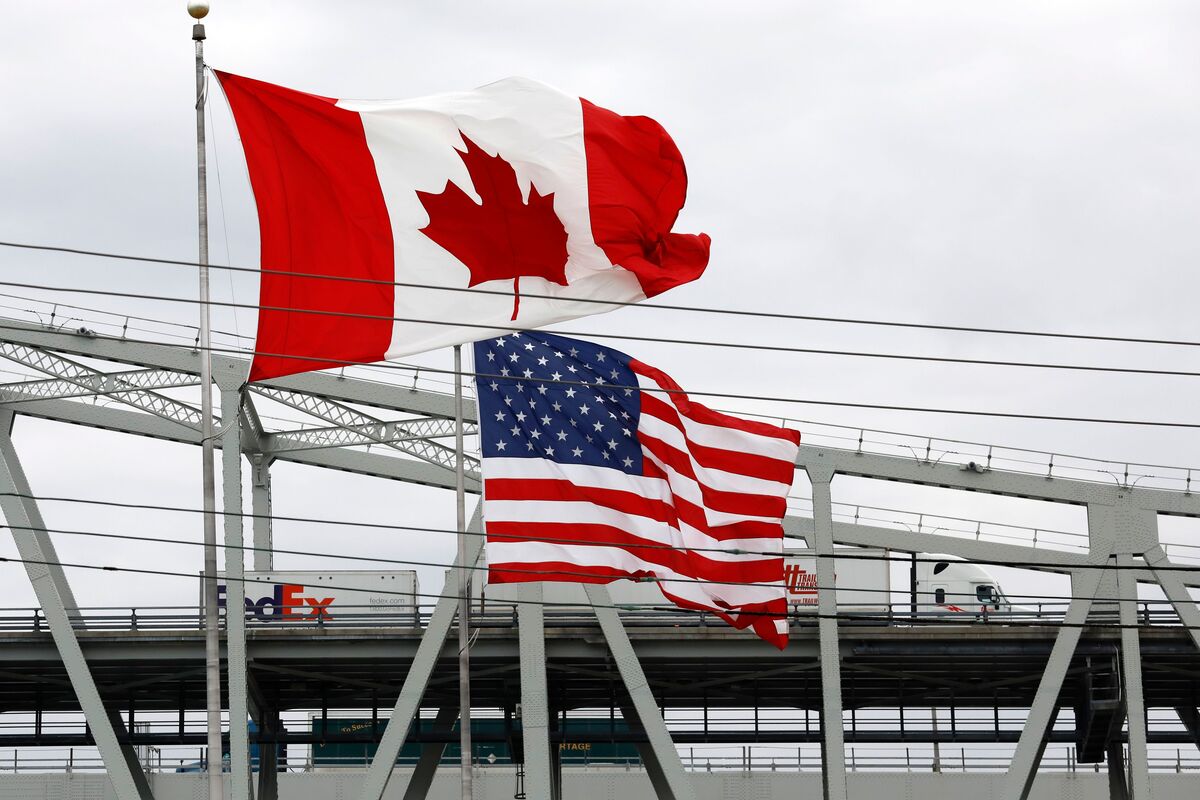
The US Trade Representative’s reference to “digital trade alignment” in talks with Prime Minister Mark Carney’s government is raising concerns in Canada. Critics worry the agreement could limit Canada’s ability to independently regulate technology companies and AI.

An independent builder pretrained a 1.02-billion-parameter Kimi-K3 replica on 5 billion decontaminated tokens for roughly $250. The model achieved 33.4% on HellaSwag, exceeding the reported 28% score of GPT-2 124M despite receiving no instruction tuning.
SMIC reported its first $3 billion quarter, with revenue rising 36.1% year over year and net profit nearly tripling to $479.2 million. The Chinese foundry is also raising wafer prices as US sanctions strengthen demand from China’s captive AI market.
Moonshot and ZAI are reportedly approaching the performance of models from OpenAI and Anthropic. The models can reportedly build passable websites at a cost 75% lower than Claude, highlighting potential advantages in cost-sensitive coding workflows.

Claude is expanding into protein design, adding a scientific research capability to its existing AI portfolio. The update suggests potential use in computational biology and biotech workflows, though the article excerpt does not provide implementation or benchmark details.

The European Commission appears to be moving away from imposing exceptionally large fines on major technology companies and toward compliance-focused dialogue. Critics warn that this softer approach could allow dominant platforms to further entrench their market power.

The paper proposes Transition Complexity Profile (TCP), a reproducible framework for measuring how difficult game-world transition prediction is at a specified interface. It evaluates branching, interaction-driven uncertainty, opponent influence, and temporal or spatial dependencies to improve comparisons across game-modeling and reinforcement-learning benchmarks.
The Association for Advancing Automation says non-automotive industries accounted for 54.8% of North American robot orders in the first half of 2026. The shift is being driven by applications in semiconductors, life sciences, pharmaceuticals, food, and consumer products, while AI, collaborative robots, and mobile robots expand the market.
New releases from Chinese competitors are narrowing the gap with Silicon Valley’s AI products, including ChatGPT and Gemini. Lower pricing is helping these services gain market share, alongside offerings such as DeepSeek and Kimi agents.