來源The Next Web (TNW)•較早收集於 2h
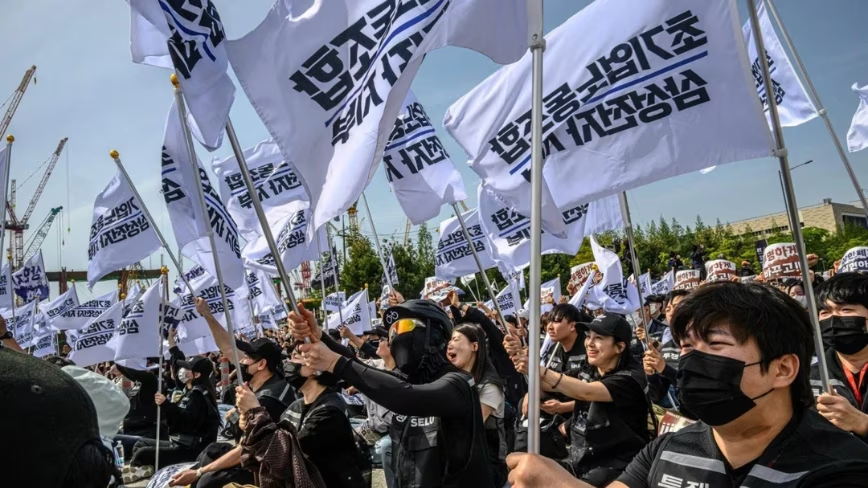
Samsung 工會達成里程碑式利潤分享協議
了解 Samsung 的勞資動態變化,這對全球 AI 硬體與晶片供應鏈至關重要。
30 秒速覽
有什麼變化
Samsung 工會成員投票支持新的薪資協議。
為什麼重要
此協議為韓國科技業的勞資關係樹立了新先例。它可能會影響其他面臨工會壓力的科技集團的薪酬結構。
下一步行動
若您與韓國大型硬體製造商有供應鏈依賴關係,請密切關注與勞工相關的營運風險。
誰應關注:Enterprise & Security Teams
關鍵要點
- •Samsung 工會成員投票支持新的薪資協議。
- •該協議包含基於獲利的 10.5% 利潤分享公式。
- •這是韓國大型企業中僅有的第二份書面利潤分享協議。
- •該協議險些因非晶片部門工會的禁制令申請而受阻。
關鍵數字10.5%1.5%$340,000,$4,000
深度解析
背景與延伸:來自公開資料,非原文內容。引用 19 個來源。
增強重點摘要
- •The approved agreement specifically allocates 10.5% of the semiconductor division's operating profit in stock and an additional 1.5% in cash to eligible employees, with a potential duration of up to ten years.
- •The deal was finalized after government-mediated discussions, including an unprecedented direct intervention from Employment and Labor Minister Kim Younghoon, just hours before a planned 18-day strike by approximately 48,000 unionized workers in the semiconductor division.
- •A smaller non-chip union, the Donghaeng union, filed an injunction arguing that the deal unfairly favors semiconductor division employees, who could receive average bonuses of around $340,000, significantly more than the approximately $4,000 expected by non-chip workers.
- •The agreement also removed a previous cap that limited special bonuses linked to a unit's performance to 50% of a worker's annual salary.
- •This landmark agreement is considered a significant breakthrough for Samsung's labor unions, marking the first major win in the company's 56-year history, and is expected to set a precedent for other major South Korean firms, with unions at companies like Kakao and Hyundai Motor already demanding similar profit-sharing arrangements.
前景展望基於引用來源的 AI 分析
The agreement will likely trigger similar profit-sharing demands from unions at other major South Korean corporations.
The Samsung settlement has created a precedent that other chaebol systems will now be benchmarked against, with unions at companies like Kakao and Hyundai Motor already making similar demands.
The deal could exacerbate internal conflicts within Samsung and other diversified conglomerates due to significant bonus disparities between high-performing and lower-performing divisions.
The substantial difference in potential bonuses between chip and non-chip employees (e.g., $340,000 vs. $4,000) has already led to an injunction filing and is expected to fuel further backlash and shareholder opposition.
This shift in labor relations could lead to a re-evaluation of corporate earnings distribution models across South Korea, potentially impacting investment and R&D strategies.
Critics argue that allocating a fixed percentage of operating profit to bonuses, especially before taxes, deviates from traditional practices and could reduce funds available for dividends or future investments.
時間線
2020-05
Samsung Electronics Vice Chairman Lee Jae-yong publicly apologizes for the company's long-standing 'no-union' policy and union-busting activities.
2021-08
Samsung Electronics signs a collective agreement with four different trade unions, formally recognizing unions after decades of a no-union policy.
2025-11
A coalition of Samsung Electronics unions forms, demanding removal of performance-based bonus caps and a share of operating profit, influenced by rival SK Hynix's compensation.
2026-03
93% of Samsung Electronics union members vote in favor of striking, intensifying pressure for a new wage agreement.
2026-05-20 to 2026-05-26
A tentative wage agreement is reached after government mediation, narrowly averting a strike, but a smaller non-chip union files an injunction to block the subsequent ratification vote, citing unfair favoritism.
2026-05-27
Samsung Electronics' unionized workforce approves the government-mediated pay agreement.
- 2020-05Samsung Electronics Vice Chairman Lee Jae-yong publicly apologizes for the company's long-standing 'no-union' policy and union-busting activities.
- 2021-08Samsung Electronics signs a collective agreement with four different trade unions, formally recognizing unions after decades of a no-union policy.
- 2025-11A coalition of Samsung Electronics unions forms, demanding removal of performance-based bonus caps and a share of operating profit, influenced by rival SK Hynix's compensation.
- 2026-0393% of Samsung Electronics union members vote in favor of striking, intensifying pressure for a new wage agreement.
- 2026-05-20 to 2026-05-26A tentative wage agreement is reached after government mediation, narrowly averting a strike, but a smaller non-chip union files an injunction to block the subsequent ratification vote, citing unfair favoritism.
- 2026-05-27Samsung Electronics' unionized workforce approves the government-mediated pay agreement.
來源 (19)
Factual claims are grounded in the sources below. Forward-looking analysis is AI-generated interpretation.
1cryptobriefing.comvertexaisearch.cloud.google.com236kr.comvertexaisearch.cloud.google.com3jurist.orgvertexaisearch.cloud.google.com4thenextweb.comvertexaisearch.cloud.google.com5businesstimes.com.sgvertexaisearch.cloud.google.com6tradingkey.comvertexaisearch.cloud.google.com7tradingview.comvertexaisearch.cloud.google.com8youtube.comvertexaisearch.cloud.google.com9koreatimes.co.krvertexaisearch.cloud.google.com10koreaherald.comvertexaisearch.cloud.google.com11chosun.comvertexaisearch.cloud.google.com12wikipedia.orgvertexaisearch.cloud.google.com13labornotes.orgvertexaisearch.cloud.google.com14theguardian.comvertexaisearch.cloud.google.com15ajupress.comvertexaisearch.cloud.google.com16koreatimes.co.krvertexaisearch.cloud.google.com17thestar.com.myvertexaisearch.cloud.google.com18tradingview.comvertexaisearch.cloud.google.com19investing.comvertexaisearch.cloud.google.com
AI 週報
閱讀本週精選 AI 大事摘要 →
相關動態



AI 策展新聞聚合。所有內容版權歸原始發布者所有。
原始來源: The Next Web (TNW) ↗
每週電子報
每週一封,可隨時退訂。