來源較早收集於 19m

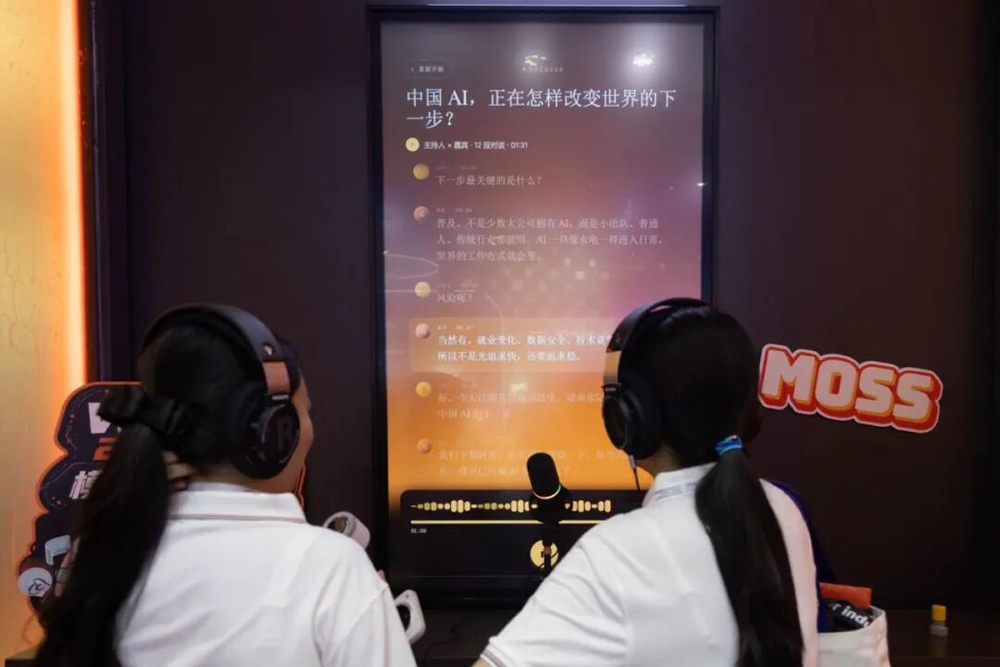
MOSS團隊轉型:專注端到端多模態語音AI

閱讀原文: 虎嗅
#multimodal#voice-ai#end-to-end

了解 MOSS 團隊為何放棄純文本模型,轉向端到端語音以解決實時交互延遲問題。

30 秒速覽

有什麼變化

從純文本大模型轉向端到端語音優先的多模態模型,以降低延遲並減少信息丟失。

為什麼重要

通過專注於端到端語音處理,該團隊旨在解決傳統級聯式(ASR-LLM-TTS)架構中固有的延遲與情感細節缺失問題,可能為 AI 硬體集成樹立新的標準。

下一步行動

在為硬體構建實時交互式 AI 代理時,評估端到端語音模型與級聯式架構在性能上的權衡。

誰應關注:Developers & AI Engineers

關鍵要點

  • 從純文本大模型轉向端到端語音優先的多模態模型,以降低延遲並減少信息丟失。
  • 開發「情境智能」,使模型能感知物理環境、情緒及說話人身份。
  • 產品線涵蓋 MOSS-Transcribe-Diarize、MOSS-Video-Preview 及 MOSS-TTS。
  • 採取用戶導向的開發模式,根據實際場景需求(如時延、性能)反推模型架構與訓練方案。

深度解析

本篇為 AI 生成分析,非原文內容。

增強重點摘要

  • Moss Intelligence was established by Professor Qiu Xipeng and his team from Fudan University, transitioning the academic MOSS project into a commercial entity.
  • The company has secured strategic backing from major Chinese venture capital firms focusing on AGI infrastructure to support the high compute costs of end-to-end multimodal training.
  • The 'Situational Intelligence' framework utilizes a proprietary streaming architecture that processes audio tokens directly without intermediate text conversion, significantly reducing 'time-to-first-token' latency.
  • Moss Intelligence is targeting the enterprise 'Digital Employee' market, specifically focusing on high-stakes sectors like legal transcription and real-time medical diagnostics where speaker diarization accuracy is critical.
  • The team is leveraging a hybrid training strategy that combines large-scale synthetic audio data with real-world acoustic environment datasets to improve robustness in noisy, non-studio conditions.

競品分析

Architecture
Moss Intelligence
End-to-End Native
OpenAI (Voice Mode)
End-to-End Native
DeepSeek (Voice)
Text-to-Speech Pipeline
Primary Focus
Moss Intelligence
Situational/Physical Context
OpenAI (Voice Mode)
Conversational Fluidity
DeepSeek (Voice)
Reasoning/Coding
Diarization
Moss Intelligence
High-Precision Native
OpenAI (Voice Mode)
Standard
DeepSeek (Voice)
Limited
Market Target
Moss Intelligence
Enterprise/Industrial
OpenAI (Voice Mode)
Consumer/General
DeepSeek (Voice)
Developer/API

技術深入

  • Architecture: Utilizes a unified transformer backbone that processes multi-stream inputs (audio, visual, text) into a shared latent space.
  • Latency Optimization: Implements a speculative decoding mechanism specifically tuned for audio tokens to maintain sub-200ms response times.
  • Diarization Engine: Employs a speaker-embedding module integrated directly into the attention layers, allowing the model to maintain speaker identity across long-form audio sessions.
  • Training Data: Employs a multi-stage curriculum learning approach, starting with synthetic speech-to-intent tasks and scaling to complex, multi-speaker situational dialogues.

前景展望基於引用來源的 AI 分析

Moss Intelligence will achieve a dominant market share in the Chinese enterprise voice-AI sector by 2027.
Their focus on specialized, high-accuracy diarization and situational awareness addresses specific pain points in Chinese enterprise workflows that general-purpose models currently struggle with.
The shift to end-to-end voice models will trigger a consolidation of the Chinese TTS and transcription software market.
As end-to-end models provide superior latency and emotional nuance, legacy pipeline-based transcription and TTS providers will face significant obsolescence pressure.

時間線

2023-02
Fudan University releases MOSS, the first Chinese conversational LLM, to the public.
2023-04
MOSS project open-sources its model weights and codebase on GitHub.
2025-09
Moss Intelligence is officially incorporated to commercialize multimodal voice technologies.
2026-03
Company announces the successful training of its first end-to-end multimodal foundation model.

AI 週報

閱讀本週精選 AI 大事摘要 →

AI 策展新聞聚合。所有內容版權歸原始發布者所有。
原始來源: 虎嗅

這是摘要,不是原文。去看原站,或訂閱每週簡報。

每週電子報

每週一封,可隨時退訂。