Zoox Launches Steering-Wheel-Free Robotaxi Service
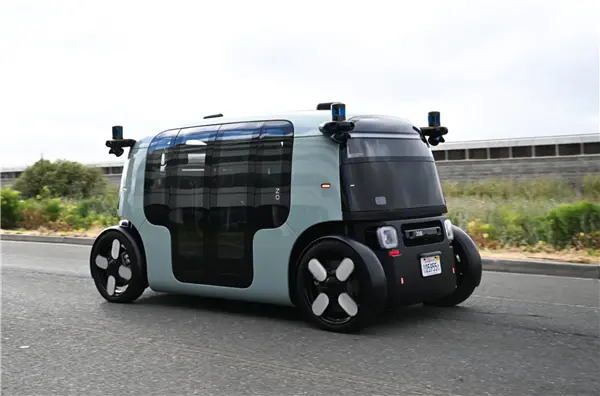
Zoox is taking fully autonomous vehicles from pilot programs to paid rides without steering wheels or pedals.
30-Second TL;DR
What Changed
Zoox says it will become the first company to commercially deploy Robotaxis without steering wheels or pedals.
Why It Matters
The launch could provide a significant real-world test of fully autonomous vehicle operations and customer willingness to pay a premium. It also raises the competitive bar for autonomous-driving companies seeking to move beyond pilot programs.
What To Do Next
Add Zoox’s steering-wheel-free vehicle design and Comfort-tier pricing to your autonomous-driving benchmark for evaluating commercial deployment readiness.
Key Points
- •Zoox says it will become the first company to commercially deploy Robotaxis without steering wheels or pedals.
- •Paid operations are scheduled to start in Las Vegas on August 10.
- •Fares will combine a base charge with distance- and time-based pricing, targeting the Uber and Lyft Comfort segment.
Deep Insight
AI-generated analysis for this event — not the original article.
Enhanced Key Takeaways
- •Zoox’s vehicle is purpose-built as a carriage-style robotaxi, featuring a bidirectional design that allows it to travel in either direction without performing U-turns.
- •The vehicle utilizes a proprietary sensor suite including LiDAR, radar, and cameras providing a 270-degree field of view at each corner to eliminate blind spots.
- •Zoox operates under the umbrella of Amazon’s Devices & Services organization, benefiting from deep integration with AWS for cloud-based simulation and fleet management.
- •The deployment in Las Vegas follows years of rigorous testing in California and Nevada, including successful public road testing with employees before the commercial launch.
- •Safety architecture includes over 100 innovations, such as airbag systems designed for the unique carriage-style seating configuration and redundant braking and steering systems.
Competitor Analysis
- Zoox Robotaxi
- Purpose-built, no steering wheel
- Waymo One
- Retrofitted Jaguar I-PACE
- Cruise
- Retrofitted Chevy Bolt / Origin (paused)
- Zoox Robotaxi
- Face-to-face carriage
- Waymo One
- Traditional forward-facing
- Cruise
- Traditional forward-facing
- Zoox Robotaxi
- Las Vegas (Geofenced)
- Waymo One
- Multiple major US cities
- Cruise
- Multiple major US cities
- Zoox Robotaxi
- Premium (Comfort tier)
- Waymo One
- Dynamic/Market-based
- Cruise
- Dynamic/Market-based
| Feature | Zoox Robotaxi | Waymo One | Cruise |
|---|---|---|---|
| Vehicle Design | Purpose-built, no steering wheel | Retrofitted Jaguar I-PACE | Retrofitted Chevy Bolt / Origin (paused) |
| Seating | Face-to-face carriage | Traditional forward-facing | Traditional forward-facing |
| Operational Area | Las Vegas (Geofenced) | Multiple major US cities | Multiple major US cities |
| Pricing Strategy | Premium (Comfort tier) | Dynamic/Market-based | Dynamic/Market-based |
Technical Deep Dive
- Vehicle Architecture: Purpose-built electric vehicle (EV) platform with four-wheel steering for high maneuverability in urban environments.
- Power System: Equipped with a 133 kWh battery pack, designed to support up to 16 hours of continuous operation on a single charge.
- Safety Systems: Features a multi-layered sensor fusion stack that processes data in real-time to handle complex urban scenarios like unprotected left turns and pedestrian interactions.
- Redundancy: Includes dual-redundant systems for critical components such as steering, braking, and compute, ensuring the vehicle can reach a safe state in the event of a primary system failure.
- Interior Tech: Cabin features wireless charging pads, touchscreen controls for climate and music, and a specialized airbag system that deploys from the seats to protect passengers in the carriage layout.
Future ImplicationsAI analysis grounded in cited sources
Timeline
- 2020-06Amazon officially acquires Zoox to accelerate autonomous vehicle development.
- 2020-12Zoox unveils its first fully functional, purpose-built autonomous robotaxi.
- 2023-02Zoox conducts the first public road transport of passengers in a robotaxi in Foster City, California.
- 2023-06Zoox receives permit to test its purpose-built vehicle on public roads in Las Vegas.
- 2024-05Zoox expands testing operations to include nighttime and rain scenarios in Las Vegas.
Weekly AI Recap
Read this week's curated digest of top AI events →
Related Updates


AI-curated news aggregator. All content rights belong to original publishers.
Original source: cnBeta (Full RSS) ↗
This is a summary, not the original. Read the source, or get the weekly briefing.
The weekly digest
One email a week. Unsubscribe anytime.