Zhuque Fund's decline from private equity to public
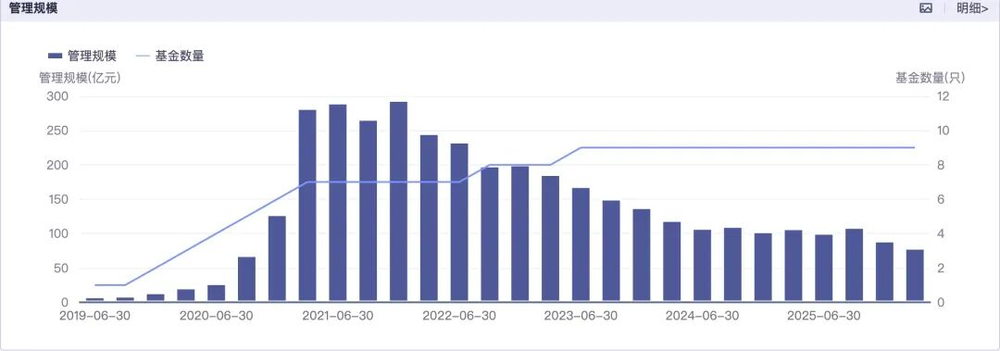
💡Lessons on the operational pitfalls of scaling private investment strategies into public fund structures.
⚡ 30-Second TL;DR
What Changed
Public fund AUM dropped below 10 billion RMB.
Why It Matters
This case illustrates the cultural and operational friction when private equity firms attempt to scale via public fund licenses.
What To Do Next
Evaluate the operational stability and team retention metrics before partnering with asset managers transitioning from private to public markets.
Key Points
- •Public fund AUM dropped below 10 billion RMB.
- •High turnover of senior management and core investment personnel since 2019.
- •Significant cumulative losses across major equity products.
- •Failed to translate private equity 'absolute return' expertise into public fund success.
🧠 Deep Insight
AI-generated analysis for this event — not the original article.
🔑 Enhanced Key Takeaways
- •Zhuque Fund was one of the earliest 'private-to-public' (si-zhuan-gong) pioneers in China, receiving its public fund license in early 2019 after a decade of private equity operations.
- •The firm's investment philosophy, rooted in 'absolute return' strategies typical of private equity, struggled to adapt to the relative performance benchmarks and strict disclosure requirements of the public fund market.
- •Regulatory filings indicate that the firm's flagship public products suffered from heavy concentration in specific sectors like new energy and manufacturing, which faced severe market corrections starting in 2022.
- •The transition period saw a cultural clash between the firm's original private equity team, accustomed to long-term lock-up periods, and the public fund side, which faced constant redemption pressure from retail investors.
- •Zhuque's AUM decline is part of a broader trend where several high-profile Chinese private equity firms that transitioned to public funds have struggled to retain top-tier talent due to the lower fee structures and higher transparency demands of the public sector.
📊 Competitor Analysis▸ Show
| Feature | Zhuque Fund (Public) | Typical Public Fund Competitor | Private Equity Peers (e.g., Hillhouse) |
|---|---|---|---|
| Fee Structure | Standard Management Fee | Standard Management Fee | Performance-based (2/20) |
| Investment Horizon | Short-to-Medium | Short-to-Medium | Long-term (3-7+ years) |
| Benchmark | Relative (CSI 300) | Relative (CSI 300) | Absolute Return |
| Liquidity | Daily/Weekly | Daily | Illiquid (Lock-ups) |
🔮 Future ImplicationsAI analysis grounded in cited sources
⏳ Timeline
Weekly AI Recap
Read this week's curated digest of top AI events →
👉Related Updates

AI-curated news aggregator. All content rights belong to original publishers.
Original source: 虎嗅 ↗
This is a summary, not the original. Read the source, or get the weekly briefing.
Weekly AI briefing
One email a week. Unsubscribe anytime.