Zhipu’s Revenue Surges on GLM Models
💡Zhipu’s API revenue exploded, but its model pricing still has not translated into strong margin gains.
⚡ 30-Second TL;DR
What Changed
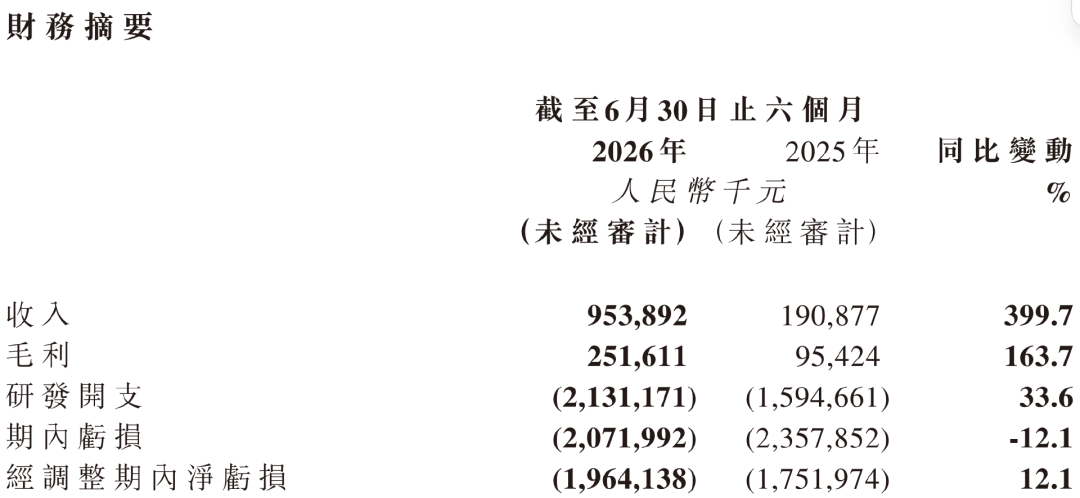
First-half revenue reached RMB 954 million, up 399.7% year over year.
Why It Matters
Zhipu’s results suggest that leading model quality can rapidly convert into API consumption, pricing power, and user growth. However, the weak relationship between API price increases and gross-margin expansion means developers and founders should watch inference economics rather than revenue growth alone.
What To Do Next
Benchmark GLM API alternatives on your real workloads, recording quality, latency, token pricing, and end-to-end gross margin before committing to migration.
Key Points
- •First-half revenue reached RMB 954 million, up 399.7% year over year.
- •Open-platform and API revenue rose 2,735.7% to RMB 825 million, accounting for 86.5% of total revenue.
- •Local deployment revenue fell 20.5% as Zhipu shifted toward standardized MaaS services.
- •Adjusted net loss expanded 12.1% to RMB 1.964 billion, while overall gross margin declined to 26.4%.
- •Zhipu reported 7.4 million registered MaaS users and a 603% increase in paid daily active users from the start of the year.
🧠 Deep Insight
Background and context from public sources — not the original article. 14 sources cited.
🔑 Enhanced Key Takeaways
- •Zhipu AI successfully transitioned its primary revenue stream from project-based local deployments to a scalable MaaS model, with API revenue now constituting 86.5% of total income.
- •The company has achieved a significant milestone in hardware independence by operating a cluster of over 100,000 domestic Chinese AI chips for large-scale inference.
- •Despite a high R&D expenditure of 2.13 billion yuan, the company's net loss narrowed year-over-year to 2.07 billion yuan, indicating improved operational efficiency.
- •Zhipu's market capitalization experienced significant volatility in 2026, peaking at HK$1 trillion in June before adjusting to HK$556.4 billion by the end of August.
- •The gross margin for the open platform and API business segment turned positive, reaching 24.6% in H1 2026 compared to a negative 0.4% in the same period of the previous year.
📊 Competitor Analysis▸ Show
| Feature | Zhipu AI | Alibaba (Qwen) | ByteDance (Doubao) |
|---|---|---|---|
| Primary Model | GLM-5.3 | Qwen-2.5 | Doubao-Pro |
| Hardware Strategy | Domestic-first (100k+ chips) | Hybrid (NVIDIA/Custom) | Hybrid (NVIDIA/Custom) |
| Pricing Strategy | Aggressive API discounting | Highly competitive/Free tiers | Low-cost volume focus |
| Market Focus | Enterprise MaaS/API | Cloud Ecosystem/Global | Consumer/Content Apps |
🛠️ Technical Deep Dive
- GLM-5.3 Architecture: Utilizes a refined General Language Model framework optimized for heterogeneous domestic hardware clusters.
- Inference Optimization: The GLM-5.3 Flash model is specifically engineered for high-throughput, low-latency execution on domestic silicon.
- Hardware Integration: Deployment of a massive-scale inference cluster exceeding 100,000 domestic AI chips to mitigate reliance on restricted foreign hardware.
- Model Efficiency: Implementation of advanced quantization and distillation techniques to maintain coding and reasoning performance in the Flash variant while reducing compute overhead.
🔮 Future ImplicationsAI analysis grounded in cited sources
⏳ Timeline
📎 Sources (14)
Factual claims are grounded in the sources below. Forward-looking analysis is AI-generated interpretation.
Weekly AI Recap
Read this week's curated digest of top AI events →
👉Related Updates


AI-curated news aggregator. All content rights belong to original publishers.
Original source: 虎嗅 ↗
This is a summary, not the original. Read the source, or get the weekly briefing.
Weekly AI briefing
One email a week. Unsubscribe anytime.