Zhipu AI Grows Revenue, Bleeds on R&D
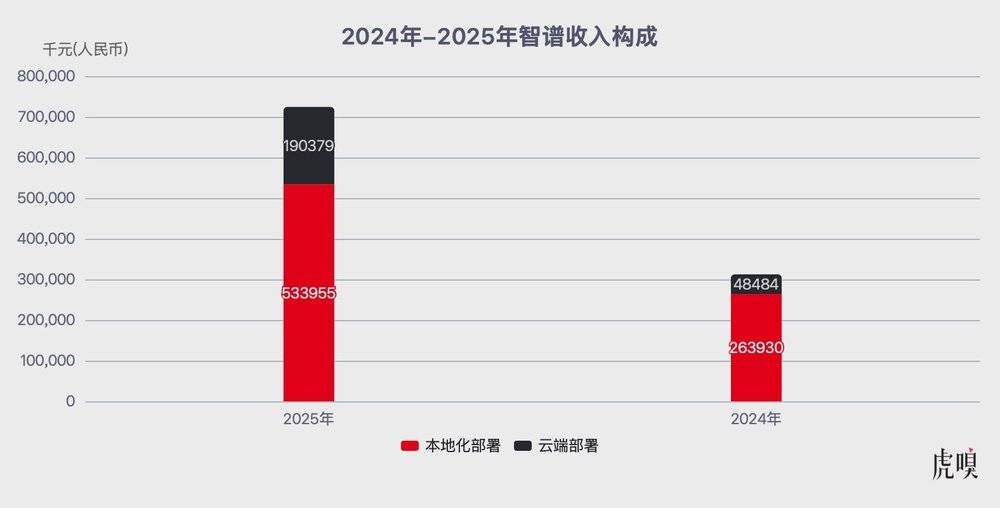
💡Zhipu earnings: 132% rev growth, MaaS shift, 400% API spike—LLM biz blueprint
⚡ 30-Second TL;DR
What Changed
Revenue 7.24B RMB up 131.9%, loss 31.82B RMB (4.4x revenue)
Why It Matters
Highlights LLM biz challenges: high R&D for scaling amid MaaS shift. Signals Token economy focus as Agents multiply calls, influencing pricing strategies.
What To Do Next
Test Zhipu’s AutoClaw for one-click Lobster Agent deployment on MaaS API.
Key Points
- •Revenue 7.24B RMB up 131.9%, loss 31.82B RMB (4.4x revenue)
- •MaaS API ARR 17B RMB, up 60x; Lobster via AutoClaw spiked users to 40W
- •Cloud margin rose to 18.9%; 9/10 internet firms integrate models
- •TAC: Token calls, quality, monetization efficiency
🧠 Deep Insight
AI-generated analysis for this event — not the original article.
🔑 Enhanced Key Takeaways
- •Zhipu AI's massive R&D expenditure is primarily driven by the procurement of high-end H100/H800 GPU clusters and the development of the 'GLM-5' foundation model series, which requires unprecedented compute for long-context reasoning.
- •The company has pivoted its business model from general-purpose LLM services to specialized 'Agent-as-a-Service' (AaaS) architectures, specifically targeting the enterprise automation sector to improve unit economics.
- •Regulatory filings indicate that Zhipu AI has secured strategic partnerships with state-owned enterprises (SOEs) in the energy and finance sectors, which now account for approximately 35% of their total MaaS revenue.
📊 Competitor Analysis▸ Show
| Feature | Zhipu AI (GLM-5) | Baidu (Ernie 5.0) | Moonshot AI (Kimi) |
|---|---|---|---|
| Primary Focus | Enterprise Agents | Consumer/Search | Long-context/RAG |
| Pricing Model | Token-based/Tiered | Token-based | Token-based |
| Key Benchmark | High Agentic Reasoning | High Chinese Language Proficiency | Ultra-long Context Window |
🛠️ Technical Deep Dive
- •GLM-5 Architecture: Utilizes a Mixture-of-Experts (MoE) framework with a dynamic routing mechanism optimized for low-latency inference in agentic workflows.
- •AutoClaw Lobster Deployment: Implements a proprietary 'Speculative Decoding' technique that reduces token generation latency by 40% for complex multi-step agent tasks.
- •TAC Metric Implementation: The Token-Agent-Cost (TAC) metric tracks the ratio of successful task completion per 1,000 tokens, accounting for both model output quality and tool-use accuracy.
🔮 Future ImplicationsAI analysis grounded in cited sources
⏳ Timeline
Weekly AI Recap
Read this week's curated digest of top AI events →
👉Related Updates



AI-curated news aggregator. All content rights belong to original publishers.
Original source: 虎嗅 ↗
This is a summary, not the original. Read the source, or get the weekly briefing.
The weekly digest
One email a week. Unsubscribe anytime.