SenseTime shifts to AI cloud and token-based model
💡Understand the strategic pivot of a major AI player from project-based revenue to a high-stakes token-based cloud model.
⚡ 30-Second TL;DR
What Changed
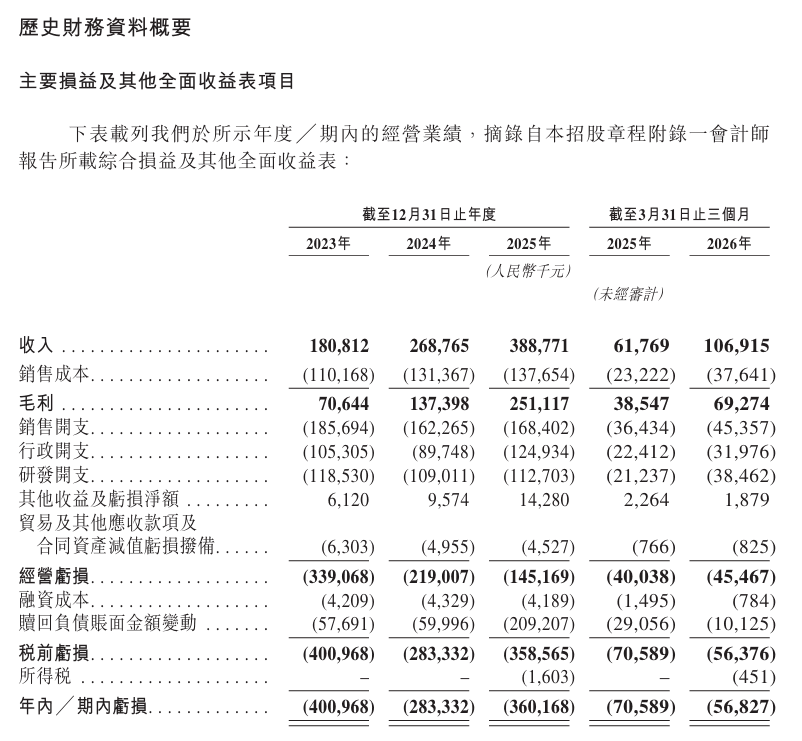
Generated 72.4% of revenue from generative AI services in 2025.
Why It Matters
Highlights the intense price war in the Chinese LLM market and the shift towards treating 'tokens' as the primary commodity.
What To Do Next
Monitor the pricing strategies of major Chinese AI cloud providers as they shift from project-based revenue to token-based utility models.
Key Points
- •Generated 72.4% of revenue from generative AI services in 2025.
- •Operates a massive AIDC with 4.04 million PetaFLOPS of computing power.
- •Launched a 'Token Plan' offering free model usage to compete with rising industry prices.
- •Financial turnaround is partially attributed to one-time asset divestments.
🧠 Deep Insight
AI-generated analysis for this event — not the original article.
🔑 Enhanced Key Takeaways
- •SenseTime's 'SenseCore' infrastructure has been upgraded to support multi-modal training at scale, specifically optimizing for the 'SenseNova' 5.5 and 6.0 model series.
- •The company has faced significant regulatory scrutiny regarding data privacy compliance in international markets, leading to a strategic focus on 'sovereign AI' solutions for domestic enterprise clients.
- •To mitigate the high operational costs of its AIDC, SenseTime has integrated proprietary liquid cooling and energy-efficient scheduling algorithms that reportedly reduce power consumption by 15%.
- •The 'Token Plan' strategy is a direct response to the 'price war' initiated by major Chinese cloud providers like Alibaba Cloud and Baidu, who slashed API prices by over 90% in early 2026.
- •SenseTime has shifted its R&D focus toward 'Agentic AI' workflows, aiming to move beyond simple text generation to autonomous task execution for industrial automation.
📊 Competitor Analysis▸ Show
| Feature | SenseTime (SenseNova) | Alibaba (Qwen) | Baidu (Ernie) |
|---|---|---|---|
| Primary Model | SenseNova 6.0 | Qwen-Max | Ernie 4.0 Turbo |
| Pricing Strategy | Aggressive Free Token Tier | Volume-based low cost | Tiered enterprise subscription |
| Core Strength | Computer Vision/Industrial AI | Ecosystem Integration | Search/Knowledge Graph |
| AIDC Capacity | 4.04M PetaFLOPS | Massive Distributed Cluster | Proprietary Kunlun Chips |
🛠️ Technical Deep Dive
- Architecture: SenseNova 6.0 utilizes a Mixture-of-Experts (MoE) architecture to optimize inference latency and reduce compute requirements per token.
- Infrastructure: The AIDC utilizes a high-speed interconnect fabric (likely InfiniBand or equivalent) to manage massive parallel training across thousands of GPUs.
- Tokenization: Implements a custom byte-pair encoding (BPE) tokenizer optimized for Chinese-English bilingual efficiency, reducing token overhead by approximately 20% compared to standard Llama-based tokenizers.
- Optimization: Employs FP8 precision training and inference to maximize throughput on existing hardware clusters.
🔮 Future ImplicationsAI analysis grounded in cited sources
⏳ Timeline
Weekly AI Recap
Read this week's curated digest of top AI events →
👉Related Updates

AI-curated news aggregator. All content rights belong to original publishers.
Original source: 虎嗅 ↗
This is a summary, not the original. Read the source, or get the weekly briefing.
The weekly digest
One email a week. Unsubscribe anytime.