Zhipu AI Overtakes MiniMax in Market Valuation Race
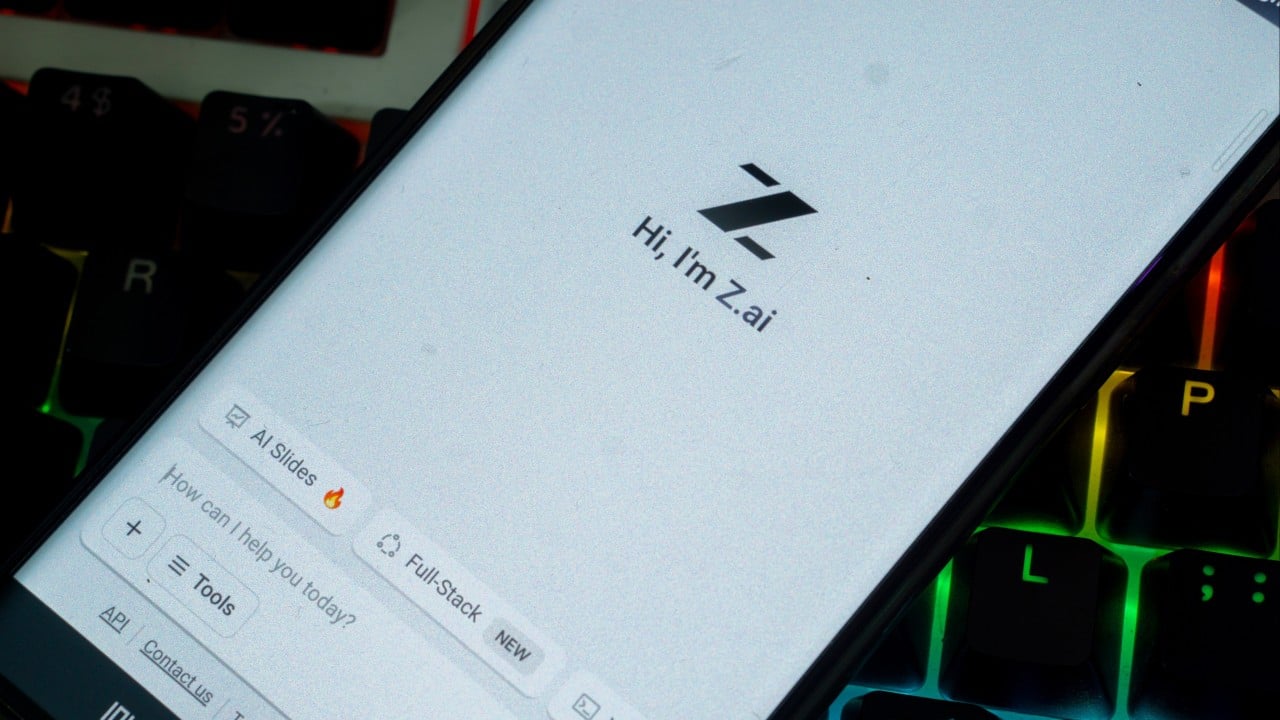
💡Understand the shifting market dynamics and investor sentiment between China's two leading AI model developers.
⚡ 30-Second TL;DR
What Changed
Zhipu AI (Knowledge Atlas Technology) has surged in market value since its January listing.
Why It Matters
This market shift signals that investors are prioritizing specific growth metrics or product adoption rates over initial listing hype in the Chinese AI sector. It serves as a reminder for founders to focus on long-term sustainable growth rather than just initial valuation.
What To Do Next
Monitor the product adoption and API usage growth of Zhipu AI and MiniMax to understand which platform is gaining more traction in the enterprise market.
Key Points
- •Zhipu AI (Knowledge Atlas Technology) has surged in market value since its January listing.
- •MiniMax initially listed with a valuation nearly double that of Zhipu AI in January.
- •The competitive landscape between China's top AI labs is shifting rapidly based on investor confidence.
🧠 Deep Insight
Background and context from public sources — not the original article. 31 sources cited.
🔑 Enhanced Key Takeaways
- •Zhipu AI debuted on the Hong Kong Stock Exchange on January 8, 2026, raising approximately $558 million at an initial valuation of around $6.57 billion. Its shares have since surged by nearly 1,600%, pushing its market capitalization above $80 billion by late May 2026.
- •MiniMax also went public in Hong Kong on January 9, 2026, raising about $619 million with an initial valuation of approximately $6.5 billion. Its shares have risen more than fourfold since its debut, reaching a market value of roughly $33.6 billion by late May 2026.
- •Both Zhipu AI and MiniMax are pursuing secondary listings on the A-share market in mainland China, with MiniMax formally initiating its IPO tutoring process on the Shanghai Stock Exchange's STAR Market in May 2026, and Zhipu AI appointing advisors for a similar listing in February 2026.
- •Chinese AI models, including MiniMax's M2.5, Moonshot AI's Kimi K2.5, and Zhipu AI's GLM-5, collectively accounted for 61% of total token consumption among the top ten models on OpenRouter, the world's largest LLM API aggregation platform, by February 2026.
- •Zhipu AI is actively expanding its global footprint, particularly in Southeast Asia, and is involved in building 'sovereign AI' infrastructure for partner countries through initiatives like the 'International Alliance for Independent Large Model Co-construction'.
📊 Competitor Analysis▸ Show
| Feature/Category | Zhipu AI (Knowledge Atlas Technology) | MiniMax | Other Key Chinese Competitors |
|---|---|---|---|
| Primary Focus | General-purpose AI foundation models (GLM series), coding, reasoning, vision, agentic abilities, enterprise solutions. | Multimodal AI models (text, audio, image, video, music), consumer applications (Talkie, Hailuo AI), enterprise API services, coding, agentic workflows. | Moonshot AI (Kimi series, ultra-long context), DeepSeek (high-performance open-source models, cost-efficient), Baidu (Ernie Bot, search-data integration), Alibaba (Qwen family, multilingual, cloud scale). |
| Flagship Models | GLM-5 (744B MoE), GLM-4.7, GLM-4.5. | MiniMax M3, MiniMax M2.5, Hailuo AI, Speech 2.8, Music 2.6. | Kimi (Moonshot AI), DeepSeek-V2, DeepSeek-Coder (DeepSeek), Ernie Bot (Baidu), Qwen (Alibaba). |
| IPO/Valuation (Jan 2026) | HKEX IPO on Jan 8, 2026. Raised ~$558M. Initial valuation ~$6.57B. Market cap >$80B by late May 2026. | HKEX IPO on Jan 9, 2026. Raised ~$619M. Initial valuation ~$6.5B. Market cap ~$33.6B by late May 2026. | Moonshot AI reportedly seeking up to $2B at $30B valuation (June 2026). |
| Pricing Strategy | Aggressive pricing for AI services, e.g., AI coding tool at <$3/month, aiming to trigger global AI price war. GLM-4.5-Air input API cost 0.8 RMB/million tokens. | MiniMax M2 costs 92% less than Claude Sonnet 4.5, with competitive API pricing. | DeepSeek's V4 model (April 2026) offered at a fraction of competitors' costs, driving model democratization. |
| Key Benchmarks | GLM-4.7 achieved 73.8% on SWE-bench Verified. GLM-5 scored 77.8% on SWE-bench Verified, rivaling Claude Opus 4.5 and GPT-5.2. | MiniMax M3 claims to outperform GPT-5.5 and Gemini 3.1 Pro on SWE-Bench Pro and approaches Opus 4.7. MiniMax M2 achieved 69.4 on SWE-bench Verified. | DeepSeek-V2 and DeepSeek-Coder achieved state-of-the-art results on coding and reasoning benchmarks. |
| Global Market Share | GLM-5 from Zhipu AI was among the top three most-used models globally on OpenRouter by February 2026. | MiniMax M2.5 was among the top three most-used models globally on OpenRouter by February 2026. | Kimi K2.5 from Moonshot AI was among the top three most-used models globally on OpenRouter by February 2026. |
| International Strategy | Focus on Southeast Asia, building 'sovereign AI' infrastructure, leading 'International Alliance for Independent Large Model Co-construction'. | Serves over 1 million enterprise and developer customers globally, with a global user base of approximately 300 million. | Chinese models are pursuing a strategy of wide diffusion and cheap tokens to gain market share globally. |
🛠️ Technical Deep Dive
-
Zhipu AI GLM Models:
- GLM-4.5: An open-source large language model built with a Mixture-of-Experts (MoE) architecture, featuring 355 billion total parameters and 32 billion active parameters. It includes a 'thinking mode' for dynamic response based on task complexity and supports a 128K context window. It also uses 3D Rotated Positional Encoding (3D-RoPE) for vision capabilities.
- GLM-4.7: Released December 2025, built upon approximately 400 billion parameters, supporting a 200,000-token context window with a maximum output capacity of 128,000 tokens. It has an inference efficiency of 55 tokens per second.
- GLM-5: Released February 2026, a 744-billion parameter Mixture-of-Experts language model that activates only 40 billion parameters per token, utilizing a 256-expert MoE with efficient routing. It supports a 200K+ context window and includes native tool calling and function execution.
-
MiniMax Models:
- Multimodal Foundation Models: MiniMax develops models capable of understanding, generating, and integrating text, audio, image, video, and music.
- MiniMax M1: Utilizes a Mixture-of-Experts (MoE) architecture with 456 billion total parameters, where a sparse subset of approximately 45.9 billion parameters (10% of total) is activated during inference. It incorporates a custom 'lightning attention' mechanism and supports up to a 1 million token context window.
- MiniMax M2: A compact, high-efficiency large language model with 230 billion total parameters and 10 billion activated parameters, optimized for end-to-end coding and agentic workflows. It has native support for tools like Shell, Browser, and Python interpreter.
- MiniMax M3: Features a novel attention architecture called MiniMax Sparse Attention (MSA) and supports ultra-long context windows of up to 1 million tokens. It is natively multimodal, supporting image and video input, and can operate a desktop computer.
🔮 Future ImplicationsAI analysis grounded in cited sources
⏳ Timeline
📎 Sources (31)
Factual claims are grounded in the sources below. Forward-looking analysis is AI-generated interpretation.
- cgtn.com
- ipox.com
- techfundingnews.com
- siliconangle.com
- law.asia
- technode.com
- globaltimes.cn
- chinadaily.com.cn
- startupfortune.com
- economictimes.com
- digitalinasia.com
- labellerr.com
- businessmodelcanvastemplate.com
- wikipedia.org
- minimax.io
- amazon.com
- aifindertools.com
- digitalapplied.com
- respan.ai
- remoteopenclaw.com
- medium.com
- clore.ai
- openrouter.ai
- minimax.io
- cherry-ai.com
- youtube.com
- merics.org
- mindstudio.ai
- vllm.ai
- caproasia.com
- wikipedia.org
Weekly AI Recap
Read this week's curated digest of top AI events →
👉Related Updates
AI-curated news aggregator. All content rights belong to original publishers.
Original source: SCMP Technology ↗
This is a summary, not the original. Read the source, or get the weekly briefing.
The weekly digest
One email a week. Unsubscribe anytime.