Yum China's Business Model and Operational Moats
💡Learn how a massive restaurant chain uses digital infrastructure and supply chain data to maintain competitive advantage
⚡ 30-Second TL;DR
What Changed
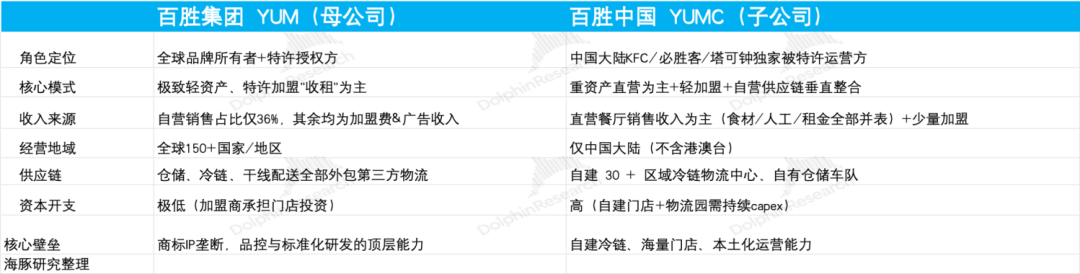
Yum China operates as a heavy-asset, self-operated model, distinct from its parent company's light-asset franchise strategy.
Why It Matters
The analysis demonstrates how traditional retail giants leverage data-driven supply chain management to maintain high ROE, offering a blueprint for digital transformation in physical industries.
What To Do Next
Study Yum China's digital middle-office architecture to understand how to integrate cross-brand operational data for large-scale enterprise efficiency.
Key Points
- •Yum China operates as a heavy-asset, self-operated model, distinct from its parent company's light-asset franchise strategy.
- •The company maintains industry-leading profitability through internal cost reduction via supply chain optimization and digital efficiency.
- •A multi-brand strategy and diverse price points allow the company to hedge against consumption volatility and economic cycles.
- •Digital transformation and a unified supply chain platform serve as the core competitive moats for all its brands.
🧠 Deep Insight
AI-generated analysis for this event — not the original article.
🔑 Enhanced Key Takeaways
- •Yum China utilizes a proprietary 'Super App' ecosystem that integrates loyalty programs across KFC and Pizza Hut, capturing over 450 million digital members as of recent reporting periods.
- •The company has aggressively expanded into lower-tier cities (Tier 3-6) by utilizing a 'flexible store model' that reduces capital expenditure per unit while maintaining standardized supply chain logistics.
- •Yum China's logistics network includes a self-owned cold chain infrastructure spanning over 30 logistics centers, which provides a significant barrier to entry for smaller competitors relying on third-party providers.
- •The company has implemented AI-driven demand forecasting tools that optimize inventory levels at the store level, reducing food waste and improving margins during periods of high inflation.
- •Yum China maintains a dual-listing status on the NYSE and the Hong Kong Stock Exchange, providing unique access to global capital markets to fund its aggressive store opening targets.
📊 Competitor Analysis▸ Show
| Feature | Yum China | McDonald's China | Jollibee China |
|---|---|---|---|
| Operational Model | Heavy-asset/Self-operated | Joint Venture/Franchise-heavy | Franchise-focused |
| Digital Integration | High (Super App/Unified) | High (App/Third-party) | Moderate |
| Supply Chain | Self-owned/Integrated | Third-party/Partnered | Outsourced |
| Market Penetration | Extensive (Tier 1-6) | Concentrated (Tier 1-3) | Niche/Regional |
🛠️ Technical Deep Dive
- Digital Infrastructure: Utilizes a cloud-native architecture to support real-time transaction processing across 15,000+ locations.
- Supply Chain Tech: Employs an integrated ERP system that synchronizes procurement, warehousing, and last-mile delivery to ensure cold-chain integrity.
- AI/ML Implementation: Deploys predictive analytics for store site selection, analyzing demographic data, traffic patterns, and economic indicators to maximize ROI on new openings.
- IoT Integration: Uses smart kitchen equipment connected to a centralized monitoring system to ensure food safety compliance and energy efficiency.
🔮 Future ImplicationsAI analysis grounded in cited sources
⏳ Timeline
Weekly AI Recap
Read this week's curated digest of top AI events →
👉Related Updates
AI-curated news aggregator. All content rights belong to original publishers.
Original source: 虎嗅 ↗
This is a summary, not the original. Read the source, or get the weekly briefing.
Weekly AI briefing
One email a week. Unsubscribe anytime.