XVL Studio Adds GenAI Auto-Programming
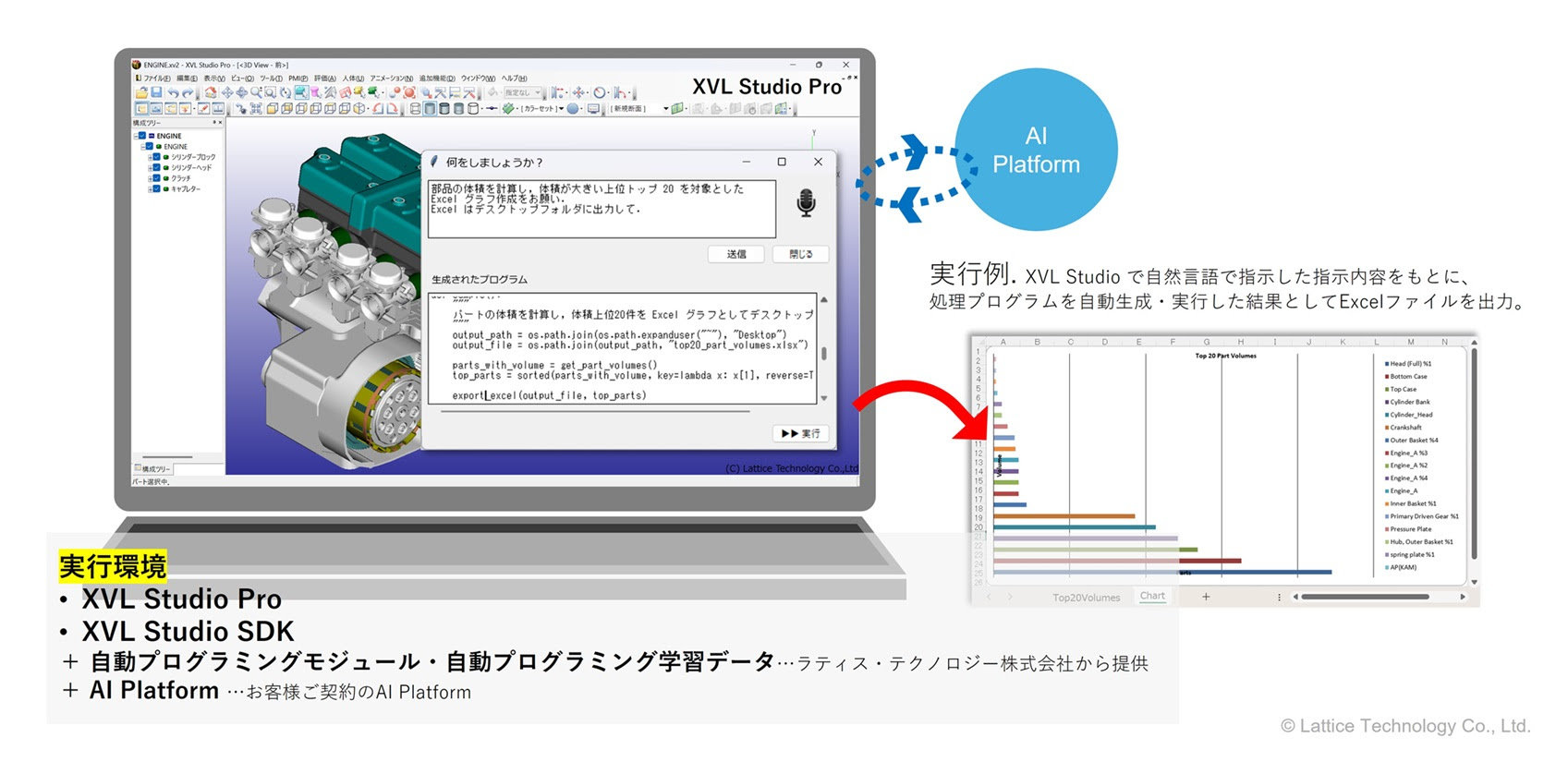
💡GenAI auto-codes XVL Studio SDK—natural lang customizes 3D tools instantly
⚡ 30-Second TL;DR
What Changed
Generative AI for natural language processing instructions
Why It Matters
Lowers barrier for 3D engineers to customize XVL Studio, potentially speeding up 3D data workflows in manufacturing. Expands AI's role in specialized CAD/PLM tools.
What To Do Next
Test XVL Studio's natural language input to auto-generate a simple 3D processing script.
Key Points
- •Generative AI for natural language processing instructions
- •Auto-generates XVL Studio SDK programs
- •Direct execution of generated code in the software
- •Targets 3D data customization workflows
🧠 Deep Insight
AI-generated analysis for this event — not the original article.
🔑 Enhanced Key Takeaways
- •The integration leverages Lattice Technology's existing XVL kernel, which is known for its ultra-lightweight 3D data representation, allowing the GenAI to manipulate complex assemblies without performance degradation.
- •This feature specifically targets the automation of repetitive manufacturing process planning (MPP) tasks, such as generating assembly sequence animations or bill-of-process reports from 3D CAD data.
- •The implementation includes a 'human-in-the-loop' validation layer where the AI-generated SDK code is sandboxed for syntax and safety checks before execution within the XVL Studio environment.
📊 Competitor Analysis▸ Show
| Feature | Lattice Technology (XVL Studio) | Siemens (Teamcenter/NX) | Dassault Systèmes (CATIA/DELMIA) |
|---|---|---|---|
| GenAI Integration | Natural language to SDK automation | AI-assisted design/generative engineering | AI-driven process planning/optimization |
| Primary Focus | Lightweight 3D data/Interoperability | PLM/End-to-end manufacturing | Integrated 3DEXPERIENCE platform |
| Customization | SDK-based via GenAI | API/Scripting (Journaling) | Scripting/Automation APIs |
🛠️ Technical Deep Dive
- •The system utilizes a fine-tuned Large Language Model (LLM) specifically trained on the XVL Studio SDK documentation and API library to minimize hallucinated function calls.
- •The architecture employs a Retrieval-Augmented Generation (RAG) pipeline that queries the user's specific XVL project metadata to provide context-aware code generation.
- •Generated code is output in the native scripting language supported by the XVL Studio SDK (typically C# or C++ bindings), which is then compiled or interpreted in real-time within the application's runtime environment.
🔮 Future ImplicationsAI analysis grounded in cited sources
⏳ Timeline
Weekly AI Recap
Read this week's curated digest of top AI events →
👉Related Updates
AI-curated news aggregator. All content rights belong to original publishers.
Original source: ITmedia AI+ (日本) ↗
This is a summary, not the original. Read the source, or get the weekly briefing.
The weekly digest
One email a week. Unsubscribe anytime.