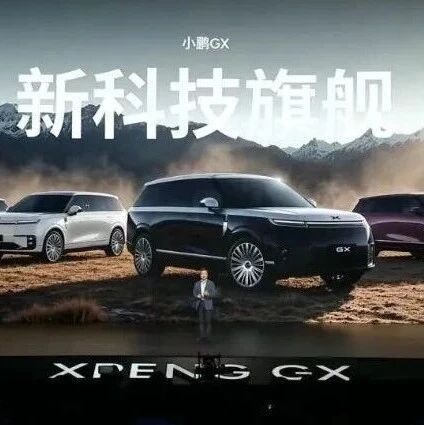
XPeng Launches GX Flagship SUV Starting at 269,800 RMB
Check the latest hardware platform for XPeng's AI-driven autonomous driving features.
30-Second TL;DR
What Changed
The GX is positioned as a flagship SUV model.
Why It Matters
The launch of the GX flagship SUV reinforces XPeng's commitment to integrating advanced AI-based ADAS features into premium vehicle segments. This expansion directly impacts the competitive landscape of AI-enabled smart EVs.
What To Do Next
Monitor the XNGP performance benchmarks in the new GX model to evaluate the latest advancements in real-world AI driving capabilities.
Key Points
- •The GX is positioned as a flagship SUV model.
- •The lineup includes eight distinct variants to cater to different market segments.
- •Pricing starts at 269,800 RMB, targeting the competitive mid-to-high-end EV market.
Deep Insight
Background and context from public sources — not the original article. 10 sources cited.
Enhanced Key Takeaways
- •The XPeng GX is offered in both Battery Electric Vehicle (BEV) and Extended-Range Electric Vehicle (EREV) variants, providing consumers with diverse powertrain options.
- •It is positioned as China's first mass-produced vehicle engineered from the outset around a Robotaxi-ready architecture, developed to meet L4 autonomous driving standards, highlighting XPeng's dual strategy for consumer and autonomous mobility markets.
- •The official launch price of 269,800 RMB, available with limited-time entitlements, represents a significant reduction from its initial pre-sale price of 399,800 RMB, indicating an aggressive pricing strategy to capture market share in the competitive mid-to-high-end EV segment.
- •The GX features a pure vision-based perception system for its advanced driver assistance, utilizing four proprietary Turing AI chips to deliver up to 3,000 TOPS of computing power, without relying on LiDAR.
- •Safety is a key focus, with the GX incorporating a 16,000-tonne integrated die-casting structure, 11 airbags, and aviation-grade six-layer redundancy systems covering critical functions like steering, braking, and propulsion.
Competitor Analysis
- XPeng GX
- 269,800 (with entitlements)
- Onvo L90
- 265,800
- Li Auto L9
- 459,800 (Ultra)
- AITO M9
- 469,800 (5-seat)
- NIO ES8
- 406,800 (or 298,800 with BaaS)
- XPeng GX
- BEV, EREV
- Onvo L90
- BEV (implied, Nio sub-brand)
- Li Auto L9
- EREV
- AITO M9
- BEV, EREV
- NIO ES8
- BEV
- XPeng GX
- 6-seat (2+2+2)
- Onvo L90
- 3-row SUV (implied)
- Li Auto L9
- 6-seat
- AITO M9
- 4, 5, or 6-seat
- NIO ES8
- 6-seat, 7-seat
- XPeng GX
- Pure Vision-based (no LiDAR)
- Onvo L90
- Not specified
- Li Auto L9
- Four LiDARs (high-spec)
- AITO M9
- Four LiDARs (updated version)
- NIO ES8
- Not specified (radar/camera likely)
- XPeng GX
- 3,000
- Onvo L90
- Not specified
- Li Auto L9
- 2,560 (Livis trim)
- AITO M9
- Not specified
- NIO ES8
- Not specified
- XPeng GX
- Steer-by-wire, Rear-wheel steering, Dual-chamber air suspension, CDC adaptive damping
- Onvo L90
- Not specified
- Li Auto L9
- 800V active suspension, wire-controlled mechanical brake (Livis trim)
- AITO M9
- 800-volt high-voltage platform
- NIO ES8
- 900-volt architecture, Adaptive dual-chamber air suspension
- XPeng GX
- BEV: 750 km; EREV: 1,585 km
- Onvo L90
- Not specified
- Li Auto L9
- EREV: 1,650 km
- AITO M9
- BEV: 630 km; EREV: 1,474 km
- NIO ES8
- BEV: 635 km
| Feature / Model | XPeng GX | Onvo L90 | Li Auto L9 | AITO M9 | NIO ES8 |
|---|---|---|---|---|---|
| Starting Price (RMB) | 269,800 (with entitlements) | 265,800 | 459,800 (Ultra) | 469,800 (5-seat) | 406,800 (or 298,800 with BaaS) |
| Powertrain Options | BEV, EREV | BEV (implied, Nio sub-brand) | EREV | BEV, EREV | BEV |
| Seating Layout | 6-seat (2+2+2) | 3-row SUV (implied) | 6-seat | 4, 5, or 6-seat | 6-seat, 7-seat |
| ADAS Perception | Pure Vision-based (no LiDAR) | Not specified | Four LiDARs (high-spec) | Four LiDARs (updated version) | Not specified (radar/camera likely) |
| Max ADAS Compute (TOPS) | 3,000 | Not specified | 2,560 (Livis trim) | Not specified | Not specified |
| Key Chassis Tech | Steer-by-wire, Rear-wheel steering, Dual-chamber air suspension, CDC adaptive damping | Not specified | 800V active suspension, wire-controlled mechanical brake (Livis trim) | 800-volt high-voltage platform | 900-volt architecture, Adaptive dual-chamber air suspension |
| Max CLTC Range (BEV/EREV Combined) | BEV: 750 km; EREV: 1,585 km | Not specified | EREV: 1,650 km | BEV: 630 km; EREV: 1,474 km | BEV: 635 km |
Technical Deep Dive
- Dimensions: The XPeng GX measures 5,265 mm in length, 1,999 mm in width, and 1,800 mm in height, with a wheelbase of 3,115 mm.
- Aerodynamics: It boasts a drag coefficient of just 0.255, impressive for a full-size SUV.
- Seating Configuration: The interior features a versatile six-seat 2+2+2 layout, with a power-folding third row that allows cargo capacity to expand up to 1,748 liters.
- Powertrain Options:
- Battery Electric Vehicle (BEV): Available in rear-wheel-drive (270 kW / 362 hp) and all-wheel-drive configurations (total 430 kW / 577 hp).
- Extended-Range Electric Vehicle (EREV): Utilizes a 1.5T engine (110 kW / 148 hp) as a range extender, paired with a dual-motor all-wheel-drive system delivering a total of 430 kW (577 hp).
- Battery Technology: The GX offers various battery options from CALB, including Lithium Iron Phosphate (LFP) packs (63.3 kWh for EREV, 91.9 kWh for BEV) and a 110 kWh Nickel Manganese Cobalt (NMC) pack for BEV variants.
- Charging: The BEV version supports 5C ultra-fast charging.
- Chassis and Suspension: All variants come standard with dual-chamber air suspension systems and CDC adaptive damping technology. It also features rear-wheel steering and steer-by-wire technology, enabling a compact 5.4-meter turning radius.
- Advanced Driver Assistance Systems (ADAS): Equipped with XPeng's second-generation VLA 6.2.0 driver assistance platform, the GX is designed to meet L4 autonomous driving standards. It uses a pure vision-based perception system, powered by up to four proprietary Turing AI chips delivering an effective computing power of 3,000 TOPS.
- Interior Technology: The cabin features a 17.3-inch 120Hz infotainment display, a roof-mounted 21.4-inch 3K entertainment screen, a 33-speaker audio system, a frost-free in-car refrigerator, and six AI-controlled privacy glass panels capable of changing opacity in 0.16 seconds.
- Safety Features: The vehicle incorporates a 16,000-tonne integrated die-casting structure, 11 airbags, and aviation-grade six-layer redundancy systems for critical vehicle functions.
Future ImplicationsAI analysis grounded in cited sources
Timeline
- 2014-06XPeng company founded in Guangzhou, China.
- 2017First beta version of the XPeng G3 SUV revealed.
- 2018-12XPeng G3 officially launched, marking its entry into the EV market.
- 2019-04XPeng P7 electric sports sedan premiered.
- 2020-08XPeng completed its Initial Public Offering (IPO) on the New York Stock Exchange.
- 2023Volkswagen announces strategic investment and partnership with XPeng.
- 2026-03XPeng GX production began.
- 2026-05-20XPeng GX flagship SUV officially launched in China.
Sources (10)
Factual claims are grounded in the sources below. Forward-looking analysis is AI-generated interpretation.
Weekly AI Recap
Read this week's curated digest of top AI events →
Related Updates



AI-curated news aggregator. All content rights belong to original publishers.
Original source: Pandaily ↗
This is a summary, not the original. Read the source, or get the weekly briefing.
The weekly digest
One email a week. Unsubscribe anytime.