Xiaomi SU7 New-Gen Launches vs Tesla
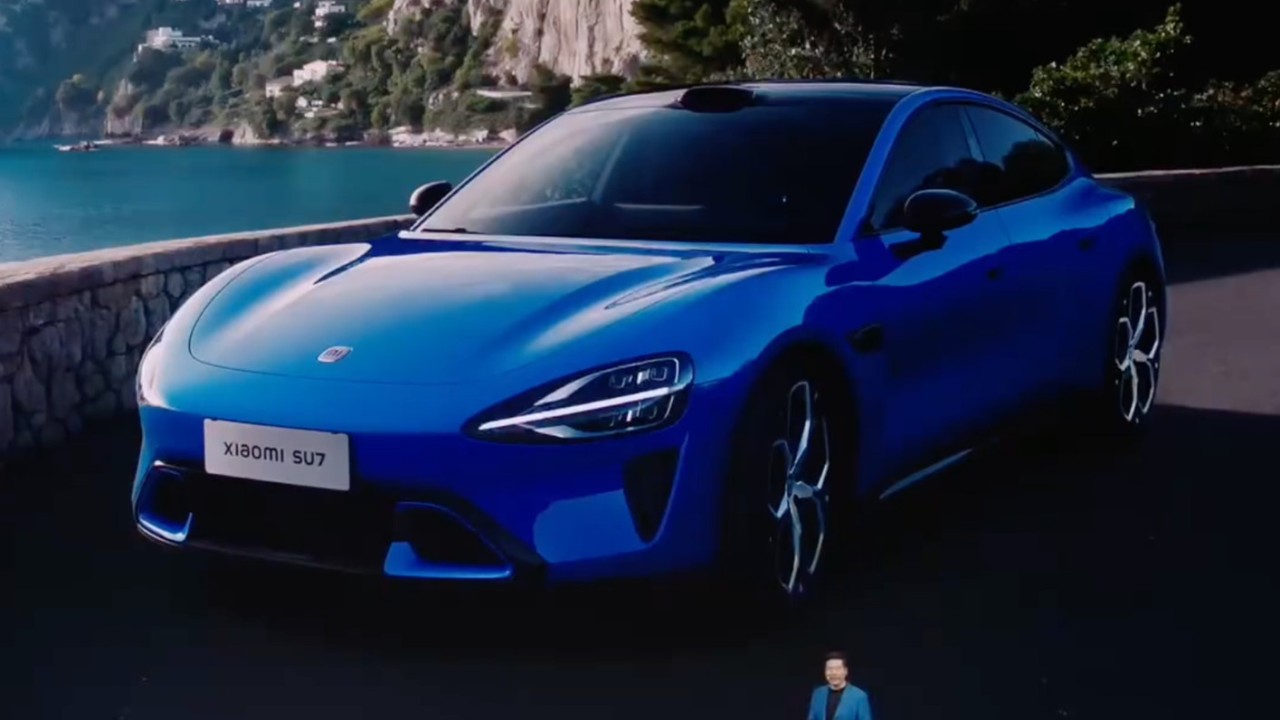
💡Xiaomi SU7 price cut threatens Tesla China dominance, key for EV AI strategy shifts.
⚡ 30-Second TL;DR
What Changed
Standard SU7 priced at 219,900 yuan (US$31,900)
Why It Matters
Xiaomi's lower pricing intensifies EV competition in China, potentially eroding Tesla's market share and forcing price adjustments. This could impact Tesla's revenue for AI and autonomous driving investments amid softening demand.
What To Do Next
Monitor Tesla's China FSD rollout updates for competitive responses to Xiaomi pricing pressure.
Key Points
- •Standard SU7 priced at 219,900 yuan (US$31,900)
- •Pro variant at 249,900 yuan, Max at 303,900 yuan
- •10,000 yuan below pre-sale estimates
- •Targets Tesla's market share in weakening China EV market
- •Announced by CEO Lei Jun on Thursday
🧠 Deep Insight
Background and context from public sources — not the original article. 9 sources cited.
🔑 Enhanced Key Takeaways
- •The 2026 SU7 features a standardized 752V architecture across Standard/Pro variants (up from 400V), enabling 15-minute DC charging for 670 km of range on the Max model—a 31% improvement over the previous 510 km capability[2][3].
- •All SU7 variants now use the new V6s Plus motor with increased power: Standard/Pro at 320 hp (up from 299 hp) and Max at 690 hp (up from 673 hp), paired with a new silicon carbide platform that improves efficiency without increasing battery size[2][3][7].
- •The Pro variant achieves 902 km CLTC range (560 miles), surpassing Tesla Model 3 Long Range AWD (629 km) and Polestar 3 Long Range (706 km) in theoretical range, though real-world WLTP figures are estimated around 750 km[3][7].
- •Xiaomi added 700 TOPS of AI computing power for autonomous driving (38% increase from 508 TOPS), integrated LiDAR as standard, and expanded passive safety with nine airbags and 2200 MPa steel roll cage structure[2][3].
📊 Competitor Analysis▸ Show
| Feature | Xiaomi SU7 Standard (2026) | Tesla Model 3 Long Range AWD | Polestar 3 Long Range | VW ID.7 |
|---|---|---|---|---|
| Price (USD equivalent) | ~$31,900 | ~$43,990 | ~$73,900 | ~$38,995 |
| CLTC/EPA Range | 720 km (447 mi) | 629 km (391 mi) | 706 km (439 mi) | ~550 km (342 mi) |
| Power Output | 320 hp | 346 hp | 402 hp | 295 hp |
| 0-60 mph | ~6.2 s | 5.8 s | 5.1 s | ~7.5 s |
| Battery Architecture | 752V LFP | 400V NCA/NMC | 800V NMC | 82V modular |
| DC Charging (15 min gain) | ~450 km (Max model) | ~275 km | ~300 km | ~250 km |
| Key Differentiator | Aggressive pricing, LiDAR standard | Supercharger network | Performance focus | European market strength |
🛠️ Technical Deep Dive
Powertrain Architecture:
- V6s Plus synchronous motor (rear-mounted, transverse orientation) replaces V6/V6s units
- Standard: 235 kW (320 hp), Pro/Max: 507 kW (690 hp) peak output
- Rear tire width increased to 265 mm across all models for improved traction
Electrical System:
- Standard/Pro: 752V platform (up from 400V); Max: 897V (up from 871V)
- Silicon carbide (SiC) power electronics enable higher efficiency without larger batteries
- Max DC charging power: 300 kW capability
Battery Options:
- Standard: 73.6 kWh LiFePO₄ (LFP) — 720 km CLTC range, 12.3 kWh/100 km consumption
- Pro: 96.3 kWh (mixed chemistry) — 902 km CLTC range
- Max: 101.7 kWh NMC — 835 km range, 897V system
- All batteries mounted below floor with reinforced underbody protection
Autonomous Driving:
- 700 TOPS AI computing power (38% increase from Gen-1)
- LiDAR sensor now standard across lineup
- Nine airbags (including two new rear side airbags)
- Body reinforced with 2200 MPa ultra-high-strength steel forming integrated roll cage
Aerodynamics & Dimensions:
- Drag coefficient: 0.195 Cd
- Length: 4.997 m; Ground clearance: 120 mm
- Turning diameter: 11.4 m
- Kerb weight (Standard): 2,055 kg
🔮 Future ImplicationsAI analysis grounded in cited sources
⏳ Timeline
📎 Sources (9)
Factual claims are grounded in the sources below. Forward-looking analysis is AI-generated interpretation.
- auto-data.net — Xiaomi Su7 Facelift 2026 Standard 73.6 Kwh 320hp 56670
- notebookcheck.net — Xiaomi Su7 Gets Upgrade 902 Km Range Lidar 700 Tops and High Voltage Technology Now Standard.1205157.0
- eletric-vehicles.com — Xiaomi 2026 Su7 to Offer Higher Range Ev Maker Stops Gen 1 Production
- carwikihub.com — Xiaomi Su7 2026 Electric Sedan Launch
- greencarscompare.com — Specs
- go-electra.com — Xiaomi Electric Car the Complete Range Coming to Europe
- carsguide.com.au — Over 900km of Range 2026 Xiaomi Su7 Breaks the Ev Range Barrier As Hyped Chinese Porsche
- mi.com — Article
- youtube.com — Watch
Weekly AI Recap
Read this week's curated digest of top AI events →
👉Related Updates

AI-curated news aggregator. All content rights belong to original publishers.
Original source: SCMP Technology ↗
This is a summary, not the original. Read the source, or get the weekly briefing.
The weekly digest
One email a week. Unsubscribe anytime.