Xiaomi Stock Volatility Reflects Hardware Business Challenges
💡Understand the financial risks and market sentiment surrounding hardware-heavy AI product launches.
⚡ 30-Second TL;DR
What Changed
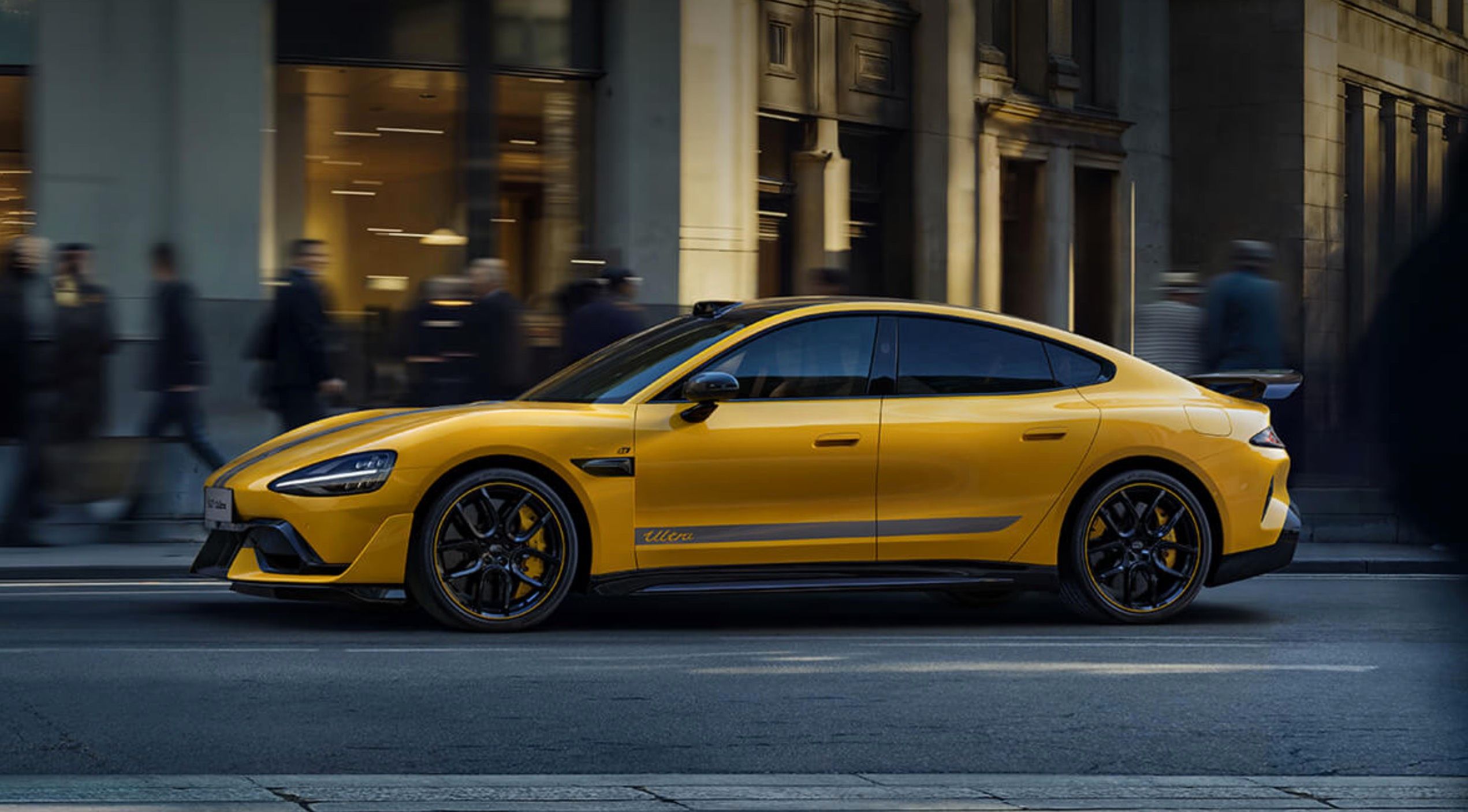
Xiaomi stock surged to 60 HKD post-SU7 launch
Why It Matters
The market's reaction suggests that investors are cautious about the long-term profitability of hardware-heavy AI-integrated products compared to pure software plays.
What To Do Next
Analyze the profit margins of hardware-integrated AI products to better understand the sustainability of your own business model.
Key Points
- •Xiaomi stock surged to 60 HKD post-SU7 launch
- •Current price corrected to 28 HKD
- •Hardware-centric models face structural scaling limits
🧠 Deep Insight
Background and context from public sources — not the original article. 18 sources cited.
🔑 Enhanced Key Takeaways
- •Xiaomi's SU7 received over 70,000 locked-in orders within the first month of its March 2024 launch, quickly moving towards its initial sales target of 100,000 units for that year.
- •By February 2026, the SU7 series had delivered over 381,000 vehicles since April 2024, demonstrating rapid market acceptance and exceeding initial expectations.
- •Xiaomi's EV factory in Beijing boasts a highly automated production line, capable of producing a new vehicle every 76 seconds, utilizing over 700 robots and 100% automation in more than 200 key processes.
- •The company's 'Human x Car x Home' strategy aims to deeply integrate its electric vehicles with its existing smartphone and smart home ecosystem, leveraging its strong brand loyalty and user base to potentially lower customer acquisition costs.
- •Xiaomi's EV division achieved quarterly profitability in just 19 months, significantly faster than Tesla, by monetizing cloud services and premium features within its HyperOS ecosystem.
📊 Competitor Analysis▸ Show
| Feature | Xiaomi SU7 Standard (2026 Facelift) | Xiaomi SU7 Pro (2026 Facelift) | Xiaomi SU7 Max (2026 Facelift) | Tesla Model 3 (China, estimated) |
|---|---|---|---|---|
| Price (CNY) | 219,900 | 249,900 | 303,900 | ~235,500 (base) |
| Battery (kWh) | 73.6 LFP | 94.3 LFP | 101.7 NMC | ~60 LFP |
| Range (CLTC km) | 720 | 902 | 835 | ~606 (RWD) |
| 0-100 km/h (s) | 5.28 | 5.7 | 2.78-3.08 | 6.1 (RWD) |
| Drivetrain | RWD | RWD | AWD | RWD (Standard), AWD (Long Range/Performance) |
| ADAS Computing Power | 700 TOPS (all models) | 700 TOPS (all models) | 700 TOPS (all models) | (Not specified in search results) |
| High Voltage Architecture | 752V | 400V | 897V | 400V |
🛠️ Technical Deep Dive
- Platform: Built on Xiaomi's Modena platform.
- Battery Technology: Utilizes Cell-to-Body (CTB) Integrated Battery Technology, achieving 77.8% integration efficiency, which is claimed to be world-leading for CTB batteries, resulting in a 24.4% performance boost and 17mm height reduction.
- Battery Suppliers & Capacities:
- SU7 Standard: 73.6 kWh LFP blade battery (FinDreams-supplied).
- SU7 Pro: 94.3 kWh LFP pack (CATL-supplied).
- SU7 Max: 101 kWh NMC Qilin battery (CATL-supplied), operating at 800V.
- SU7 Ultra: 93.7 kWh Qilin 2.0 NMC battery.
- Electric Motors (HyperEngine):
- HyperEngine V6 (220 kW / 299 PS / 295 hp, 400 N⋅m) for RWD models.
- HyperEngine V6s (275 kW / 374 PS / 369 hp, 500 N⋅m) for rear of Max, and V6s Plus for 2026 facelift.
- HyperEngine V8s (425 kW / 578 PS / 570 hp, 635 N⋅m), with a maximum speed of 27,200 rpm, planned for mass production in 2025.
- SU7 Ultra combines two HyperEngine V8s and one HyperEngine V6s for a total of 1,138 kW (1,547 PS / 1,526 hp) and 1,770 N⋅m.
- Charging: Supports fast DC charging, with the SU7 Max achieving a maximum power of 529 kW, capable of 10-80% charge in about 18 minutes.
- Autonomous Driving: Features Xiaomi Pilot options (Pro and Max) with full-stack self-developed algorithms. Both use an 11-camera combination and NVIDIA DRIVE Orin computing platform. The 2026 facelift models all feature 700 TOPS of computing power for ADAS.
- Manufacturing: Utilizes a highly automated factory in Beijing with over 700 robots and a 9,100-ton clamping force die-casting machine to consolidate 72 parts into a single structural unit.
🔮 Future ImplicationsAI analysis grounded in cited sources
⏳ Timeline
📎 Sources (18)
Factual claims are grounded in the sources below. Forward-looking analysis is AI-generated interpretation.
Weekly AI Recap
Read this week's curated digest of top AI events →
👉Related Updates
AI-curated news aggregator. All content rights belong to original publishers.
Original source: Pandaily ↗
This is a summary, not the original. Read the source, or get the weekly briefing.
The weekly digest
One email a week. Unsubscribe anytime.