Xiaomi Launches Battery Upgrade Service for Older Devices
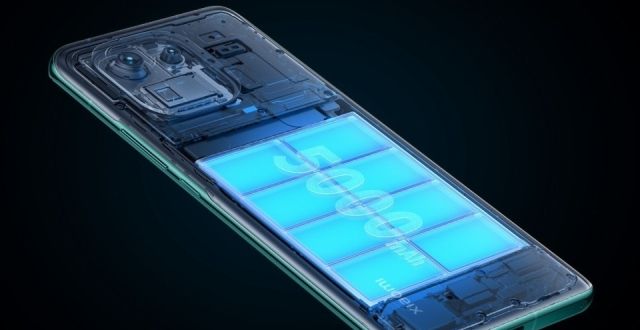
💡Hardware retention trends affect the addressable market for on-device AI features.
⚡ 30-Second TL;DR
What Changed
Service targets older Xiaomi smartphone models to extend usability.
Why It Matters
Extending the lifecycle of older hardware may impact the adoption rate of new AI-capable devices, as users hold onto existing phones longer.
What To Do Next
Analyze if your AI application's power consumption profile is optimized for older hardware, as users are keeping devices longer.
Key Points
- •Service targets older Xiaomi smartphone models to extend usability.
- •Focuses on device retention and sustainable hardware management.
- •Addresses consumer demand for longer-lasting hardware performance.
🧠 Deep Insight
Background and context from public sources — not the original article. 23 sources cited.
🔑 Enhanced Key Takeaways
- •Xiaomi's battery upgrade service frequently includes a 20% discount during promotional 'Service Weeks' in China, with prices for battery replacements starting as low as 47.2 yuan (approximately $7 USD).
- •The program supports a broad spectrum of devices, encompassing over 70 smartphone models from various generations, including older flagships like the Xiaomi 10 series (launched in 2020) and newer devices up to the Xiaomi 15 series, as well as Redmi and Mix lineups.
- •For specific models, such as the Xiaomi 13 series (Xiaomi 13, 13 Pro, and 13 Ultra), the service offers replacement batteries with higher capacities than their original counterparts, providing an increase of up to 541mAh.
- •Beyond professional replacement, Xiaomi also offers a 'Self-Repair' service in regions like the EU and UK, allowing users to purchase original parts and access repair instructions for various Xiaomi devices, including smartphones.
- •Xiaomi's initiative is part of a broader commitment to sustainable hardware management, complementing its extended software support policy which now offers up to six years of updates for some flagship and mid-range devices.
📊 Competitor Analysis▸ Show
Competitor Analysis: Smartphone Repair & Longevity Initiatives
| Feature/Brand | Xiaomi (Battery Upgrade Service) | Apple (Self Repair Program) | Samsung (Repairability Improvements) | Google Pixel (Repair-Friendly Design) | Fairphone (Modular Design) |
|---|---|---|---|---|---|
| Service Type | Discounted battery replacement, higher-capacity upgrades for some models, professional service, self-repair option in some regions. | Self-repair program with original parts, tools, and manuals; professional service. | Professional service, easier battery pull-tab systems, widely available parts. | Professional service, modular internal design, easier battery access. | User-swappable batteries and components, no special tools needed. |
| Pricing (Battery) | Starts from 47.2 yuan ( | Generally higher cost for replacements. | Costs vary, parts widely available. | Costs vary, parts widely available. | Cost of replacement battery. |
| Supported Models | Over 70 models, including Xiaomi 10-15 series, Redmi, Mix. | iPhone 12, 13, and newer models. | Many newer Galaxy devices. | Recent Pixel generations. | Fairphone 4, 5, 6. |
| Software Support | Up to 6 years for some flagship and mid-range devices. | 5-7 years of software updates. | Up to 5 years for flagships. | Strong software support lifespan. | Long-term software support. |
| Repairability Score (iFixit) | Not explicitly found for Xiaomi's general lineup. | Improving, but still challenging (e.g., iPhone 6.1/10). | Improving (e.g., Galaxy S 4.4/10). | High (e.g., Pixel 9 Pro 8/10). | Very high (e.g., Nokia G22 8/10, Fairphone is designed for it). |
| Geographic Availability | Primarily China for discounted service weeks; Self-Repair in EU, UK. | Select regions (e.g., US, Europe). | Global service centers. | Global service centers. | Global, but niche market. |
🛠️ Technical Deep Dive
- Smartphone batteries are predominantly Lithium-ion, which inherently degrade over time and have a finite number of charge cycles before their capacity significantly diminishes.
- Battery calibration is a software-level process aimed at recalibrating the Battery Management System (BMS) to ensure the displayed battery percentage accurately reflects the actual charge level.
- The calibration procedure typically involves fully charging the device to 100%, allowing it to completely discharge until it shuts off, and then recharging it fully to 100% to enable the system to relearn the true full and empty states.
- When upgrading to higher-capacity batteries, as offered for the Xiaomi 13 series, users may experience longer charging times and potentially temporary increases in device temperature as the system adjusts and recalibrates.
- Installation of these upgraded batteries may necessitate specific software updates to accommodate the new battery's capacity and charging characteristics.
🔮 Future ImplicationsAI analysis grounded in cited sources
⏳ Timeline
📎 Sources (23)
Factual claims are grounded in the sources below. Forward-looking analysis is AI-generated interpretation.
Weekly AI Recap
Read this week's curated digest of top AI events →
👉Related Updates


AI-curated news aggregator. All content rights belong to original publishers.
Original source: Pandaily ↗
This is a summary, not the original. Read the source, or get the weekly briefing.
The weekly digest
One email a week. Unsubscribe anytime.