World Models: The 2026 AI Capital Race
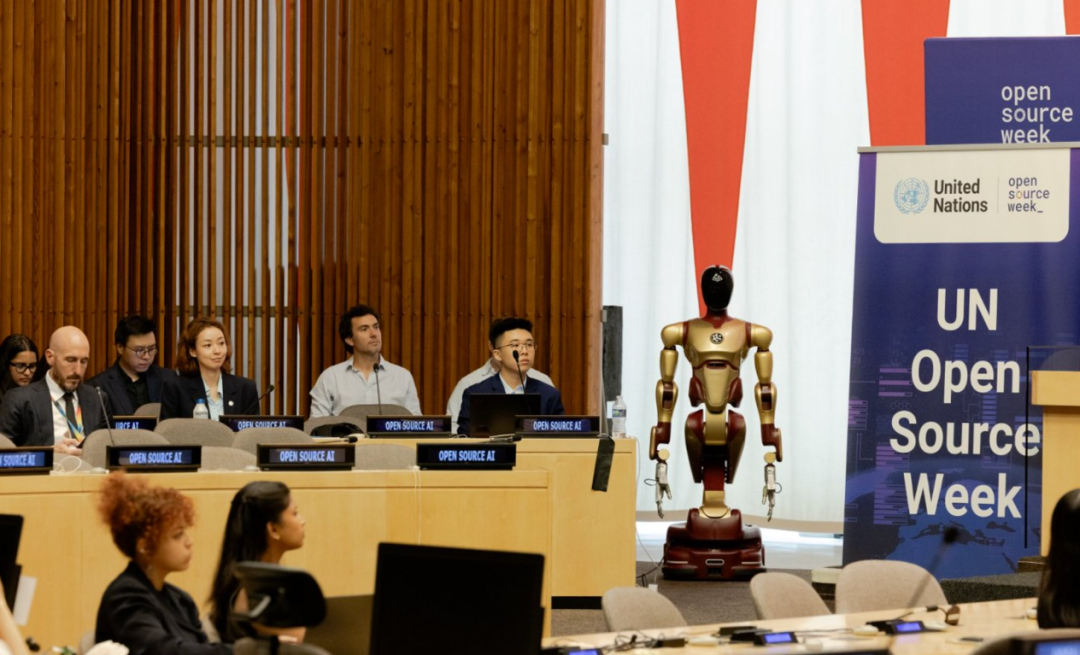
💡Discover the two competing technical paths for World Models and why physical-world data is the new gold.
⚡ 30-Second TL;DR
What Changed
Significant capital is flowing into world model startups like Qianxun Intelligence and Zifang Robot.
Why It Matters
The shift toward world models signals a move from digital-only AI to physical-world intelligence, which could revolutionize robotics and autonomous systems.
What To Do Next
If building embodied AI, prioritize developing robust data pipelines that capture 'failure cases' to improve causal reasoning.
Key Points
- •Significant capital is flowing into world model startups like Qianxun Intelligence and Zifang Robot.
- •Two main technical routes: generative/simulation-based vs. end-to-end embodied interaction.
- •The biggest barrier is the lack of standardized physical world benchmarks and the difficulty of handling 'failure data'.
- •Commercialization remains the ultimate test for these high-valuation AI companies.
🧠 Deep Insight
AI-generated analysis for this event — not the original article.
🔑 Enhanced Key Takeaways
- •The 'World Model' paradigm in 2026 has shifted focus toward 'Video-to-Action' (V2A) architectures, where models predict future physical states based on visual tokens rather than just text-based prompts.
- •Major cloud providers are now offering 'Embodied-as-a-Service' (EaaS) APIs, allowing startups to offload the heavy compute requirements of training world models on high-fidelity physics engines.
- •Recent industry data indicates that 'Sim-to-Real' transfer success rates have improved by 40% due to the integration of synthetic data generated by diffusion-based world models.
- •Regulatory bodies in major markets are beginning to draft safety standards specifically for 'autonomous physical agents,' focusing on the predictability of world models in unstructured environments.
- •The talent war has moved beyond LLM researchers to include specialists in control theory and robotics-specific reinforcement learning (RL), as pure transformer architectures struggle with long-horizon physical planning.
📊 Competitor Analysis▸ Show
| Feature | Qianxun Intelligence | Zifang Robot | Industry Standard (Baseline) |
|---|---|---|---|
| Primary Route | End-to-End Embodied | Generative Simulation | Hybrid/Modular |
| Pricing Model | Enterprise Licensing | Hardware-as-a-Service | API/Token-based |
| Physical Benchmarks | Proprietary Lab Tests | Synthetic Simulation | Open-source (e.g., ManiSkill) |
🛠️ Technical Deep Dive
- Architecture: Transitioning from standard Transformer blocks to Spatio-Temporal Latent Diffusion Models (ST-LDMs) to better capture physical causality.
- Data Handling: Implementation of 'Hindsight Experience Replay' (HER) to mitigate the scarcity of failure data by re-labeling unsuccessful trajectories as successful outcomes for alternative goals.
- Training Paradigm: Utilization of 'World Model Pre-training' where agents learn to predict the next frame of a video sequence before fine-tuning on specific robotic manipulation tasks.
- Compute: Heavy reliance on FP8 precision training to handle the massive context windows required for multi-modal sensor fusion (LiDAR, RGB-D, and tactile feedback).
🔮 Future ImplicationsAI analysis grounded in cited sources
⏳ Timeline
Weekly AI Recap
Read this week's curated digest of top AI events →
👉Related Updates

AI-curated news aggregator. All content rights belong to original publishers.
Original source: 虎嗅 ↗
This is a summary, not the original. Read the source, or get the weekly briefing.
Weekly AI briefing
One email a week. Unsubscribe anytime.