WorkBuddy Adds Built-In Agent Safety Controls
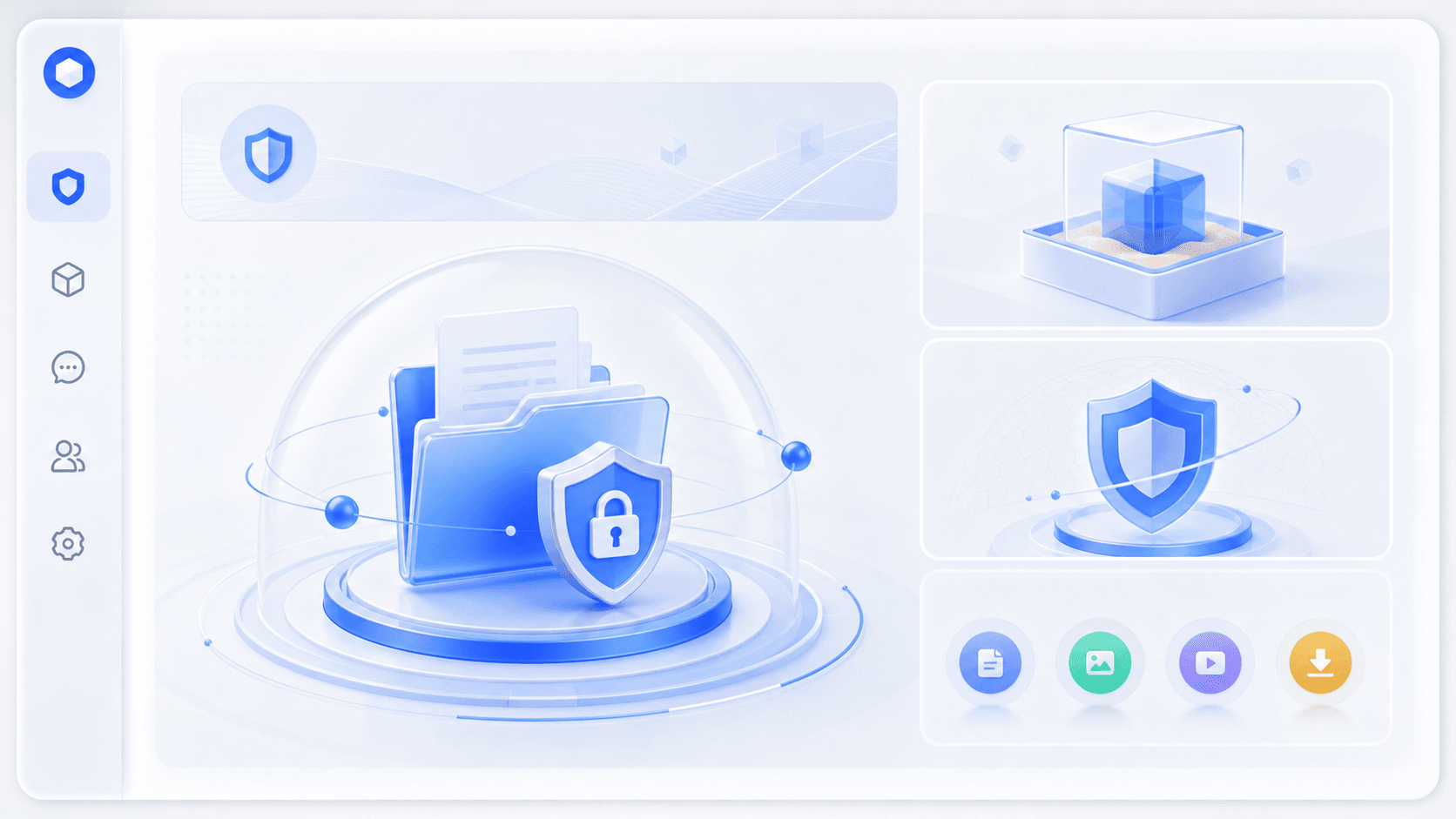
See how WorkBuddy turns sandboxing and rollback into default protections for desktop agents.
30-Second TL;DR
What Changed
OS API-layer sandboxing is enabled by default to restrict agent actions.
Why It Matters
These controls could make enterprise users more comfortable granting agents access to local files and operating-system functions. For AI builders, the update reinforces that rollback and constrained execution should be baseline features rather than optional add-ons.
What To Do Next
Test WorkBuddy 5.0 with a controlled project directory and verify sandbox boundaries, file recovery, and version rollback before enabling broader agent permissions.
Key Points
- •OS API-layer sandboxing is enabled by default to restrict agent actions.
- •Deleted files are recoverable through a recycle-bin workflow.
- •Edits can be restored to earlier versions when an agent makes a mistake.
- •The release positions safety defaults as part of everyday agent productivity.
Deep Insight
AI-generated analysis for this event — not the original article.
Enhanced Key Takeaways
- •Tencent's implementation utilizes a 'Human-in-the-Loop' (HITL) verification layer that triggers mandatory user approval for high-risk API calls involving external network requests.
- •The sandboxing architecture leverages a lightweight containerization approach specifically optimized for Tencent's proprietary Hunyuan large language model integration.
- •WorkBuddy 5.0 introduces a 'Safety Audit Log' that provides users with a natural language explanation of why an agent's action was blocked or flagged by the system.
- •The update includes a new 'Agent Permission Scoping' feature, allowing enterprise administrators to define granular access controls for agents based on specific file directories or system processes.
- •Tencent has integrated a real-time anomaly detection engine that monitors agent behavior patterns to identify and halt potential 'hallucination-driven' destructive loops before they execute.
Competitor Analysis
- WorkBuddy 5.0
- Default/Native
- Microsoft Copilot Studio
- Policy-based
- Anthropic Claude Computer Use
- Environment-dependent
- WorkBuddy 5.0
- Native Recycle Bin
- Microsoft Copilot Studio
- Dependent on OS/Cloud
- Anthropic Claude Computer Use
- Manual/External
- WorkBuddy 5.0
- Built-in
- Microsoft Copilot Studio
- Via SharePoint/OneDrive
- Anthropic Claude Computer Use
- None (External)
- WorkBuddy 5.0
- Enterprise Tier
- Microsoft Copilot Studio
- Per User/Consumption
- Anthropic Claude Computer Use
- Consumption-based
| Feature | WorkBuddy 5.0 | Microsoft Copilot Studio | Anthropic Claude Computer Use |
|---|---|---|---|
| OS-Level Sandboxing | Default/Native | Policy-based | Environment-dependent |
| File Recovery | Native Recycle Bin | Dependent on OS/Cloud | Manual/External |
| Version Control | Built-in | Via SharePoint/OneDrive | None (External) |
| Pricing | Enterprise Tier | Per User/Consumption | Consumption-based |
Technical Deep Dive
- OS API-layer sandboxing is implemented via a kernel-level hook that intercepts system calls (syscalls) before they reach the host operating system.
- Version-restorable edits utilize a differential storage mechanism (delta-encoding) to minimize the storage overhead of maintaining file history.
- The anomaly detection engine operates on a local inference model to ensure low-latency safety checks without requiring cloud round-trips for every action.
- The recycle-bin workflow is integrated directly into the WorkBuddy virtual file system (VFS) layer, allowing for atomic restoration of file states.
Future ImplicationsAI analysis grounded in cited sources
Timeline
- 2023-09Tencent officially launches the Hunyuan foundation model, laying the groundwork for agentic capabilities.
- 2024-05WorkBuddy 3.0 released, introducing basic task automation and integration with Tencent Meeting.
- 2025-02Tencent announces the 'Agentic Enterprise' initiative, focusing on secure AI deployment in corporate environments.
- 2025-11WorkBuddy 4.5 update introduces initial support for multi-agent collaboration and workflow orchestration.
- 2026-08WorkBuddy 5.0 launches with integrated OS-layer safety controls and sandboxing.
Weekly AI Recap
Read this week's curated digest of top AI events →
Related Updates




AI-curated news aggregator. All content rights belong to original publishers.
Original source: Pandaily ↗
This is a summary, not the original. Read the source, or get the weekly briefing.
The weekly digest
One email a week. Unsubscribe anytime.