Why the FDE model struggles in the Chinese market
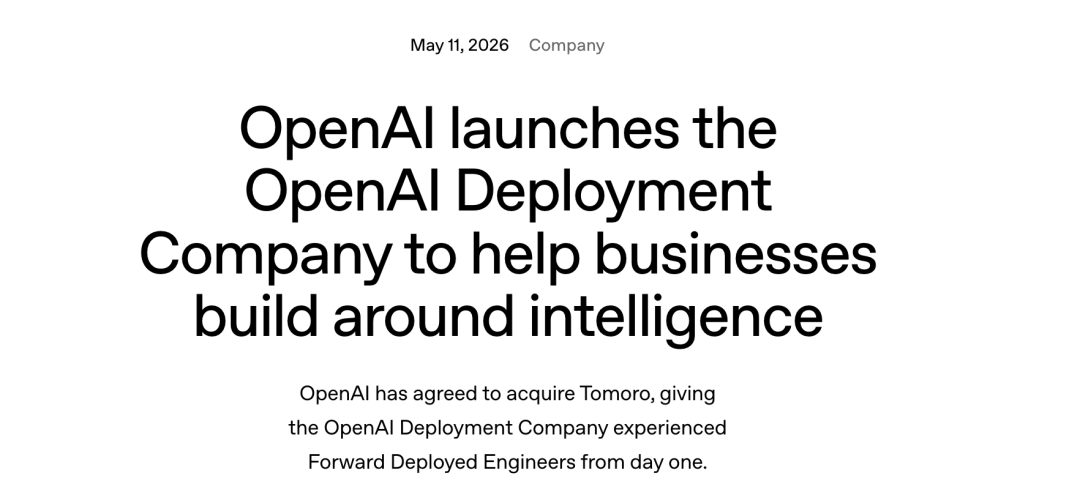
💡Understand the structural barriers preventing the successful adoption of the Palantir-style FDE model in China.
⚡ 30-Second TL;DR
What Changed
FDE relies on 'acquire-expand-scale' cycles which require long-term, high-cost on-site integration.
Why It Matters
This highlights a major friction point for AI startups attempting to sell B2B solutions in China, suggesting that pure FDE models may need significant localization or hybrid approaches.
What To Do Next
If selling AI to Chinese enterprises, shift from a pure FDE model to a product-led approach with modular, easily deployable components to minimize on-site dependency.
Key Points
- •FDE relies on 'acquire-expand-scale' cycles which require long-term, high-cost on-site integration.
- •Chinese procurement often uses 'lowest-bidder' models that do not pay for the 'exploration' or 'business understanding' phases.
- •The lack of Time and Materials (T&M) contract culture in China makes the FDE business model financially unsustainable for most vendors.
- •AI companies face a mismatch between the need for iterative, on-site development and client demands for 'perfect' out-of-the-box solutions.
🧠 Deep Insight
AI-generated analysis for this event — not the original article.
🔑 Enhanced Key Takeaways
- •Chinese state-owned enterprises (SOEs) often mandate 'localized' or 'air-gapped' deployment requirements that conflict with the cloud-native, continuous-update nature of the FDE model.
- •The 'Project-Based' accounting standard prevalent in China forces vendors to capitalize software development costs, making the recurring, high-margin subscription revenue model of FDE difficult to reconcile with local tax and audit regulations.
- •Data sovereignty laws, specifically the Personal Information Protection Law (PIPL) and Data Security Law (DSL), impose strict cross-border data transfer limitations that prevent FDE teams from leveraging global centralized model training data.
- •Chinese enterprise clients frequently demand 'source code escrow' or full IP transfer as a prerequisite for large-scale digital transformation contracts, which directly contradicts the proprietary SaaS-plus-services model used by Palantir-style firms.
- •The 'System Integrator' (SI) ecosystem in China acts as a powerful gatekeeper; these SIs often prefer commoditized hardware-plus-software bundles over the high-touch, consultative FDE approach, effectively squeezing out foreign AI service providers.
📊 Competitor Analysis▸ Show
| Feature | FDE Model (Palantir/OpenAI) | Traditional Chinese SI Model | Local AI SaaS Providers |
|---|---|---|---|
| Pricing | High-touch, T&M/Subscription | Fixed-bid, Milestone-based | Tiered Subscription |
| Deployment | Continuous, On-site/Cloud | One-time, Air-gapped | Cloud-native/Hybrid |
| Customization | High (Consultative) | High (Hard-coded) | Low (Configurable) |
| IP Ownership | Vendor-retained | Client-owned | Vendor-retained |
🛠️ Technical Deep Dive
- FDE relies on 'Ontology' layers that map disparate data silos into a unified semantic model, requiring deep API integration with legacy ERP/MES systems.
- The model architecture typically utilizes a 'Hub-and-Spoke' data ingestion pipeline where edge nodes perform local inference while the central 'Foundry' instance manages global state and policy enforcement.
- Implementation requires a 'Forward Deployed' engineer to maintain a persistent CI/CD pipeline directly within the client's secure environment, often necessitating custom container orchestration (e.g., K8s) configurations to bypass strict firewall restrictions.
🔮 Future ImplicationsAI analysis grounded in cited sources
⏳ Timeline
Weekly AI Recap
Read this week's curated digest of top AI events →
👉Related Updates

AI-curated news aggregator. All content rights belong to original publishers.
Original source: 虎嗅 ↗
This is a summary, not the original. Read the source, or get the weekly briefing.
Weekly AI briefing
One email a week. Unsubscribe anytime.