Why Supercomputer Rankings Are Losing AI Relevance
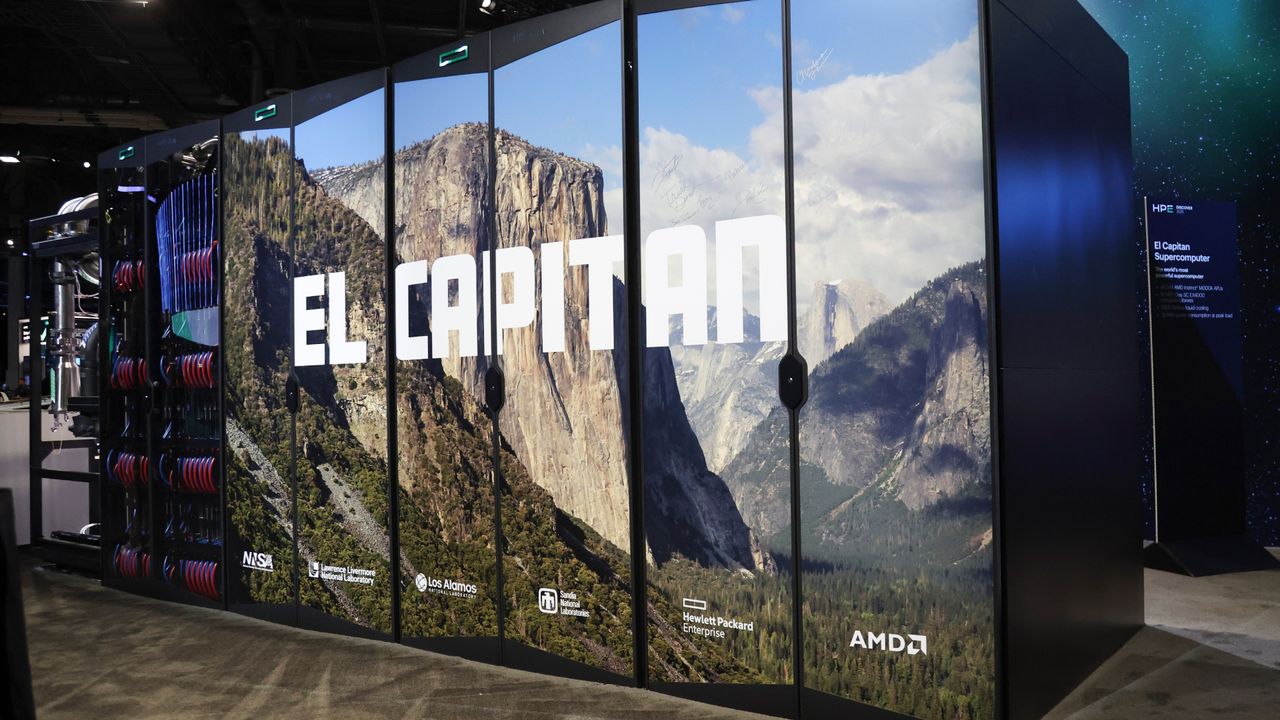
💡HPL rankings may miss the private clusters and workload metrics that actually determine AI performance.
⚡ 30-Second TL;DR
What Changed
Traditional rankings may not capture privately operated AI compute clusters
Why It Matters
AI practitioners should be cautious when using traditional supercomputer rankings to evaluate infrastructure providers or national capabilities. Workload-specific measures such as model-training throughput, inference efficiency, networking, and utilization may offer more practical signals.
What To Do Next
Benchmark your candidate AI cluster with MLPerf-style training or inference workloads instead of relying on its HPL or TOP500 position alone.
Key Points
- •Traditional rankings may not capture privately operated AI compute clusters
- •HPL performance can be a distraction from real AI workloads
- •The article reviews the current state of high-performance supercomputing
- •Experts from GWDG provide perspective on the changing competitive landscape
🧠 Deep Insight
Web-grounded analysis with 23 cited sources.
🔑 Enhanced Key Takeaways
- •The traditional High-Performance Linpack (HPL) benchmark, while a long-standing standard for supercomputer rankings, is criticized for not accurately reflecting the performance of modern AI workloads, which often prioritize different computational patterns and precision levels.
- •Alternative benchmarks like HPL-AI and HPL-MxP have been introduced to address the limitations of traditional Linpack by incorporating mixed-precision arithmetic, which is more representative of machine learning and converged HPC-AI tasks.
- •MLPerf benchmarks, developed by MLCommons, offer a distinct approach by using real AI workloads for training and inference, providing unbiased evaluations of hardware, software, and services, and are considered a better measure of end-to-end AI application performance.
- •The ownership of leading AI compute clusters has significantly shifted from public sector institutions to private corporations, with the private sector's share of global AI computing capacity growing from 40% in 2019 to 80% in 2025.
- •AI supercomputers exhibit rapid growth, with computational performance doubling approximately every nine months, and their hardware costs and power requirements doubling annually, indicating a distinct and accelerated development trajectory compared to traditional HPC systems.
🛠️ Technical Deep Dive
- Computational Precision: Traditional HPC workloads for scientific simulations typically demand high-precision (FP64 or 64-bit) calculations for accuracy. In contrast, AI training is often resilient to lower precision, commonly utilizing FP16 (half precision), BF16, TF32, FP4, or INT8/INT4 to achieve higher throughput and speed.
- Core Hardware Focus: AI infrastructure is heavily reliant on GPU clusters and specialized AI accelerators like Tensor Processing Units (TPUs) and NVIDIA's Tensor Cores, optimized for matrix multiplications and tensor operations. Traditional HPC, while increasingly incorporating GPUs, historically relied more on CPU-based computing.
- Networking Architecture: HPC environments require ultra-fast, low-latency networks such as InfiniBand to ensure rapid data exchange between compute nodes for large-scale parallel processing. AI data centers prioritize high-speed data pipelines to efficiently move vast datasets from storage to processing units, often benefiting from multi-plane fat trees to accelerate collective communication patterns prevalent in AI training.
- Storage Solutions: AI workloads frequently utilize node-local SSDs for performance and capacity, as the high ratio of compute to I/O during training makes local storage more efficient than relying on shared parallel file systems, which are common in traditional HPC.
- Workload Characteristics: Traditional HPC focuses on deterministic scientific simulations involving the solution of complex systems of partial differential equations (PDEs). AI workloads, particularly for model training, involve iterative and repetitive linear algebra operations, primarily matrix multiplications, on massive datasets.
- Power and Cooling: Both AI and traditional HPC supercomputers demand substantial power and sophisticated cooling systems due to the dense packing of high-performance components like GPUs and CPUs, which generate significant heat.
🔮 Future ImplicationsAI analysis grounded in cited sources
⏳ Timeline
📎 Sources (23)
Factual claims are grounded in the sources below. Forward-looking analysis is AI-generated interpretation.
Weekly AI Recap
Read this week's curated digest of top AI events →
👉Related Updates
AI-curated news aggregator. All content rights belong to original publishers.
Original source: Tom's Hardware ↗
Weekly AI briefing
One email a week. Unsubscribe anytime.