Why SoftBank chooses NVIDIA for its AI supercomputer
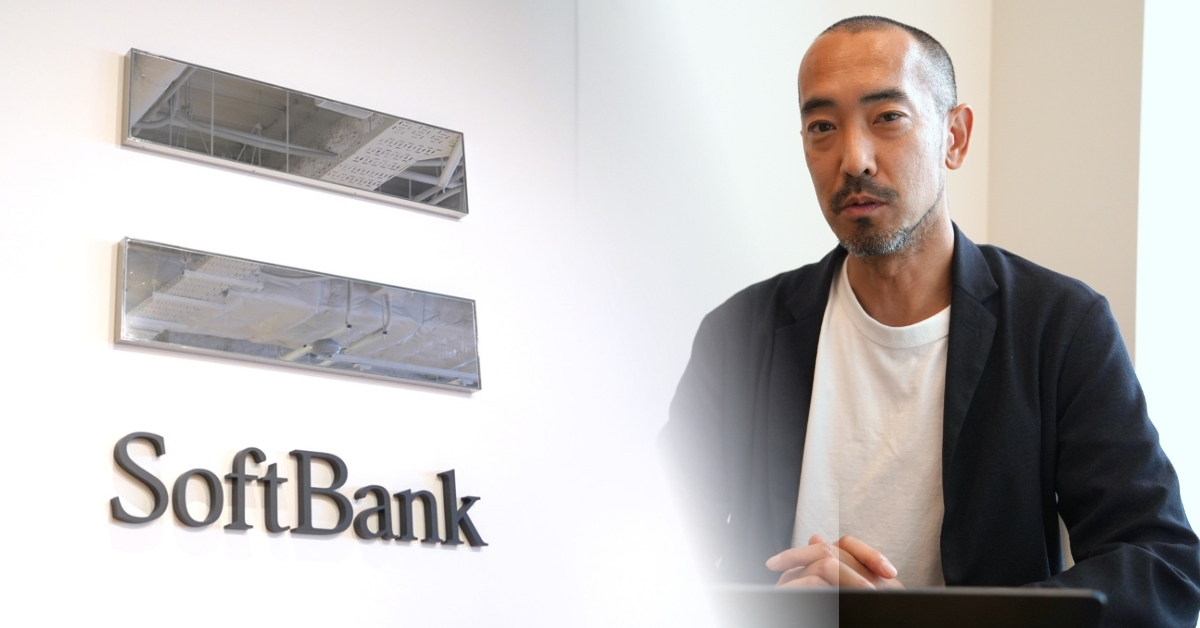
Understand the real-world engineering trade-offs behind building a 122 billion yen AI supercomputer.
30-Second TL;DR
What Changed
SoftBank invested 122 billion yen in AI infrastructure
Why It Matters
Reinforces NVIDIA's dominance in the high-performance computing market. It provides insight into the trade-offs between cost and performance for large-scale AI infrastructure.
What To Do Next
Evaluate the long-term maintenance and ecosystem support costs when selecting hardware for large-scale AI clusters.
Key Points
- •SoftBank invested 122 billion yen in AI infrastructure
- •NVIDIA GPUs selected for superior ecosystem and reliability
- •Developers address initial hardware stability concerns
Deep Insight
AI-generated analysis for this event — not the original article.
Enhanced Key Takeaways
- •SoftBank's supercomputer project is part of a broader strategic initiative to build a sovereign AI infrastructure in Japan, reducing reliance on overseas cloud providers.
- •The infrastructure utilizes NVIDIA's Blackwell architecture, specifically leveraging the GB200 NVL72 platform to handle massive parameter counts for large language models.
- •SoftBank is integrating its proprietary AI models, such as the 'SBCM' (SoftBank Corp Model), directly into this hardware stack to optimize inference performance.
- •The investment includes a significant focus on liquid cooling technology to manage the thermal output of high-density GPU clusters, which was a primary driver for the initial hardware stability challenges.
- •This initiative aligns with the Japanese government's 'AI and Software-Defined Infrastructure' policy, which provides subsidies for domestic companies building large-scale compute clusters.
Competitor Analysis
- SoftBank (NVIDIA-based)
- NVIDIA GB200 NVL72
- Competitor (e.g., AWS/Google)
- Custom Silicon (Trainium/TPU)
- Local Japanese Cloud Providers
- NVIDIA H100/H200 Clusters
- SoftBank (NVIDIA-based)
- Sovereign/Private
- Competitor (e.g., AWS/Google)
- Public Cloud/Shared
- Local Japanese Cloud Providers
- Sovereign/Shared
- SoftBank (NVIDIA-based)
- Ultra-low (Dedicated)
- Competitor (e.g., AWS/Google)
- Variable (Network dependent)
- Local Japanese Cloud Providers
- Low (Regional)
| Feature | SoftBank (NVIDIA-based) | Competitor (e.g., AWS/Google) | Local Japanese Cloud Providers |
|---|---|---|---|
| Primary Hardware | NVIDIA GB200 NVL72 | Custom Silicon (Trainium/TPU) | NVIDIA H100/H200 Clusters |
| Control | Sovereign/Private | Public Cloud/Shared | Sovereign/Shared |
| Latency | Ultra-low (Dedicated) | Variable (Network dependent) | Low (Regional) |
Technical Deep Dive
- Architecture: Utilizes NVIDIA GB200 NVL72, connecting 72 Blackwell GPUs and 36 Grace CPUs in a single rack.
- Interconnect: Employs 5th Gen NVLink for 1.8TB/s bidirectional bandwidth per GPU.
- Cooling: Implementation of direct-to-chip liquid cooling systems to support high TDP (Thermal Design Power) per rack.
- Software Stack: Integration of NVIDIA AI Enterprise software suite for orchestration, including NeMo for model training and TensorRT-LLM for inference optimization.
Future ImplicationsAI analysis grounded in cited sources
Timeline
- 2023-11SoftBank announces plans to build a large-scale generative AI computing platform in Japan.
- 2024-05SoftBank confirms the expansion of its AI compute infrastructure, targeting the deployment of NVIDIA's latest GPU architectures.
- 2025-02SoftBank begins initial testing of high-density liquid-cooled server racks to address thermal management issues.
- 2026-01SoftBank officially integrates the 122 billion yen supercomputer cluster into its production environment.
Weekly AI Recap
Read this week's curated digest of top AI events →
Related Updates
AI-curated news aggregator. All content rights belong to original publishers.
Original source: ITmedia AI+ (日本) ↗
This is a summary, not the original. Read the source, or get the weekly briefing.
The weekly digest
One email a week. Unsubscribe anytime.