Why most AI companion products fail by day 30
💡Essential insights for AI hardware builders on why 'chatting' isn't enough and how to solve the 30-day churn problem.
⚡ 30-Second TL;DR
What Changed
Retention crisis: Most AI companion devices see high churn after 30 days.
Why It Matters
Developers must move beyond LLM-wrapper products and focus on deep integration into user workflows to ensure long-term stickiness.
What To Do Next
Implement a 'proactive engagement' feature in your AI agent using long-term memory storage to increase user retention beyond the first month.
Key Points
- •Retention crisis: Most AI companion devices see high churn after 30 days.
- •Shift from 'chatting' to 'active, memory-based engagement' is critical.
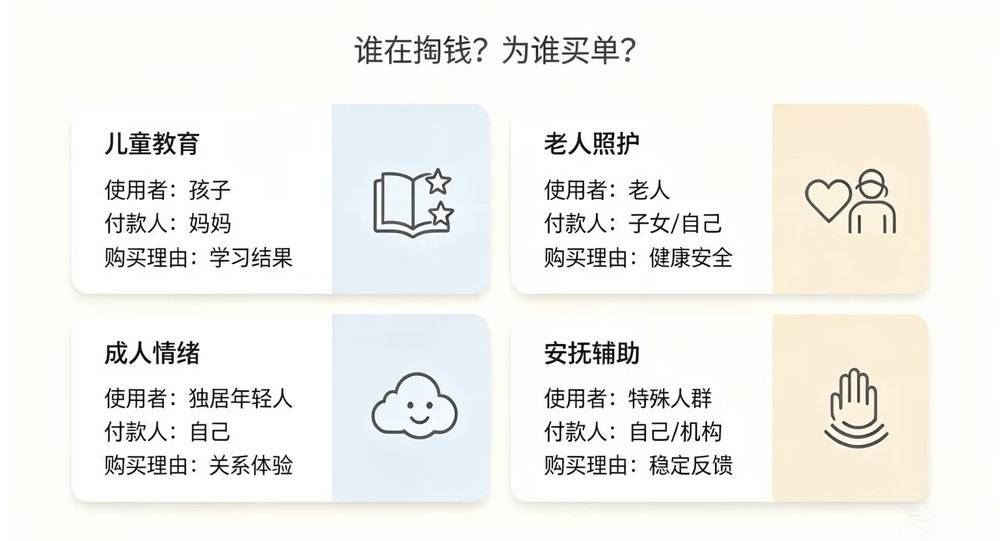
- •Differentiation by scenario: Education, health, and emotional support require distinct business models.
- •Hardware is just an entry point; long-term value lies in personalized services and proactive interaction.
🧠 Deep Insight
AI-generated analysis for this event — not the original article.
🔑 Enhanced Key Takeaways
- •The 'Day 30' churn phenomenon is increasingly linked to the 'uncanny valley of utility,' where users perceive AI companions as lacking agency to perform real-world tasks despite high conversational fluency.
- •Edge-cloud hybrid architectures are becoming the industry standard to reduce latency in voice-based interactions, which is a primary driver of user abandonment in early-stage hardware.
- •Data privacy concerns regarding persistent audio/video recording in domestic environments have emerged as a significant barrier to long-term adoption, forcing companies to implement local-only processing for sensitive interactions.
- •The transition from 'generalist' LLMs to 'specialized' Small Language Models (SLMs) is being prioritized to reduce operational costs and improve response relevance for specific companion personas.
- •Regulatory scrutiny regarding the psychological impact of parasocial relationships with AI companions is beginning to influence product design, specifically regarding 'forced' engagement features.
🛠️ Technical Deep Dive
- Implementation of RAG (Retrieval-Augmented Generation) frameworks to manage long-term memory, allowing devices to recall user-specific context across sessions.
- Utilization of multimodal models that process visual cues (e.g., facial expressions) alongside audio to improve emotional resonance.
- Integration of local vector databases on device hardware to enable sub-100ms retrieval of personal user history.
- Adoption of asynchronous processing pipelines to allow the AI to initiate proactive interactions based on time-of-day or environmental triggers.
🔮 Future ImplicationsAI analysis grounded in cited sources
Weekly AI Recap
Read this week's curated digest of top AI events →
👉Related Updates


AI-curated news aggregator. All content rights belong to original publishers.
Original source: 虎嗅 ↗
This is a summary, not the original. Read the source, or get the weekly briefing.
Weekly AI briefing
One email a week. Unsubscribe anytime.