Why China’s AI Talent Clusters Matter
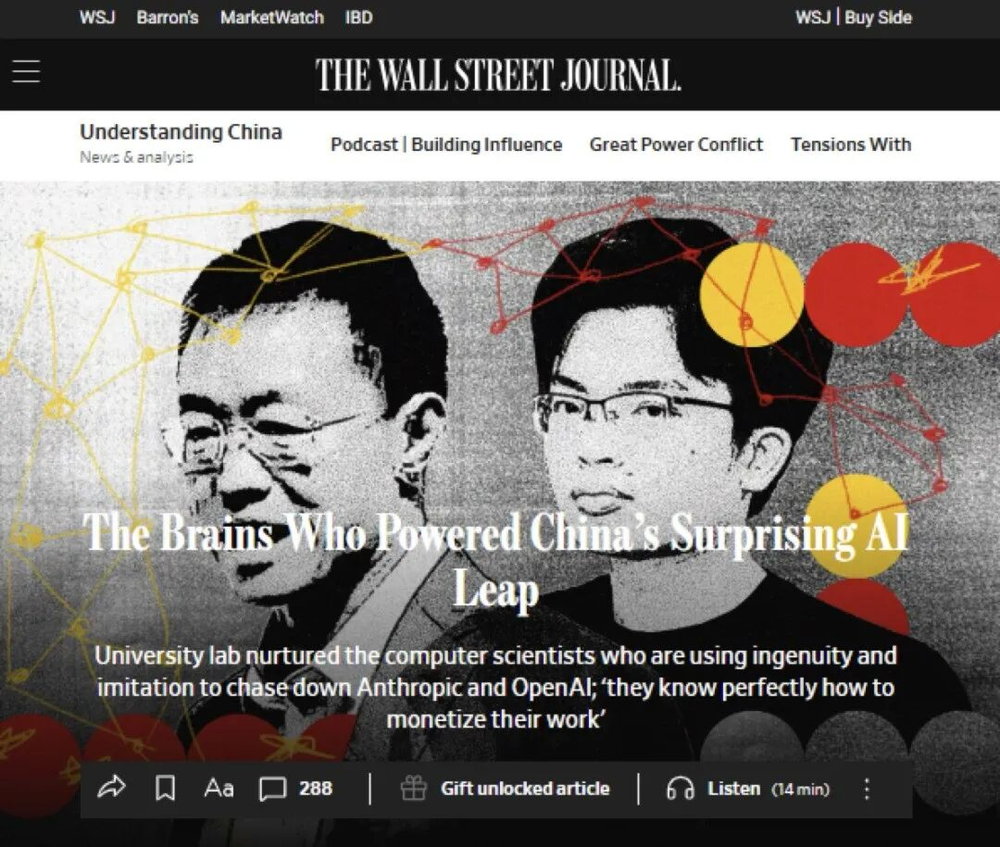
💡了解清华AI集群如何降低人才与信任成本,帮助你设计更强的创业网络。
⚡ 30-Second TL;DR
What Changed
清华知识工程组及其师生网络孕育了智谱、月之暗面等头部AI公司。
Why It Matters
For AI founders and investors, the article suggests that access to trusted technical talent and domain reputation can matter as much as capital or compute. It also highlights a potential business-model divergence between infrastructure/API companies and firms monetizing private deployments.
What To Do Next
Map your local AI talent network and establish recurring technical working sessions to build trusted cofounder and hiring relationships before fundraising.
Key Points
- •清华知识工程组及其师生网络孕育了智谱、月之暗面等头部AI公司。
- •创新集群通过内部信任网络降低联合创始人招聘、能力判断和合作谈判的交易成本。
- •长期共同经历失败,比短期论坛、路演或加微信更能形成高质量信任。
- •集群优势具有复利效应,需要数十年的人才传承、声誉积累和高频偶遇,难以快速复制。
- •中国AI公司的商业化收入部分来自国企私有化部署,API业务的利润率可能较低。
🧠 Deep Insight
Background and context from public sources — not the original article. 12 sources cited.
🔑 Enhanced Key Takeaways
- •China currently accounts for 42.72% of the world's young AI scientists, creating a massive domestic talent pipeline that sustains the high-density clustering observed in Beijing.
- •As of March 2026, the performance gap between leading U.S. and Chinese AI models has narrowed to 2.7%, indicating that talent clusters are successfully bridging the technological divide despite hardware constraints.
- •China's intelligent computing capacity reached 2,185 EFLOPS by mid-2026, a 177% year-on-year increase, providing the necessary infrastructure for the rapid scaling of models developed within these academic-industrial clusters.
- •The focus of these clusters has shifted toward algorithmic efficiency and engineering ingenuity, a strategic response to restricted access to advanced foreign AI chips.
- •The AI sector remains the highest-paying industry for Chinese university graduates, with average monthly salaries reaching approximately 18,592 yuan, further incentivizing top talent to remain within the domestic ecosystem.
🛠️ Technical Deep Dive
- Focus on algorithmic efficiency and model architecture optimization to compensate for hardware limitations.
- Utilization of high-density domestic computing infrastructure reaching 2,185 EFLOPS.
- Emphasis on indigenous model development to achieve parity with international benchmarks (within 2.7% performance gap).
🔮 Future ImplicationsAI analysis grounded in cited sources
⏳ Timeline
📎 Sources (12)
Factual claims are grounded in the sources below. Forward-looking analysis is AI-generated interpretation.
Weekly AI Recap
Read this week's curated digest of top AI events →
👉Related Updates


AI-curated news aggregator. All content rights belong to original publishers.
Original source: 虎嗅 ↗
This is a summary, not the original. Read the source, or get the weekly briefing.
Weekly AI briefing
One email a week. Unsubscribe anytime.