Who Watches AI Realistic Dramas?
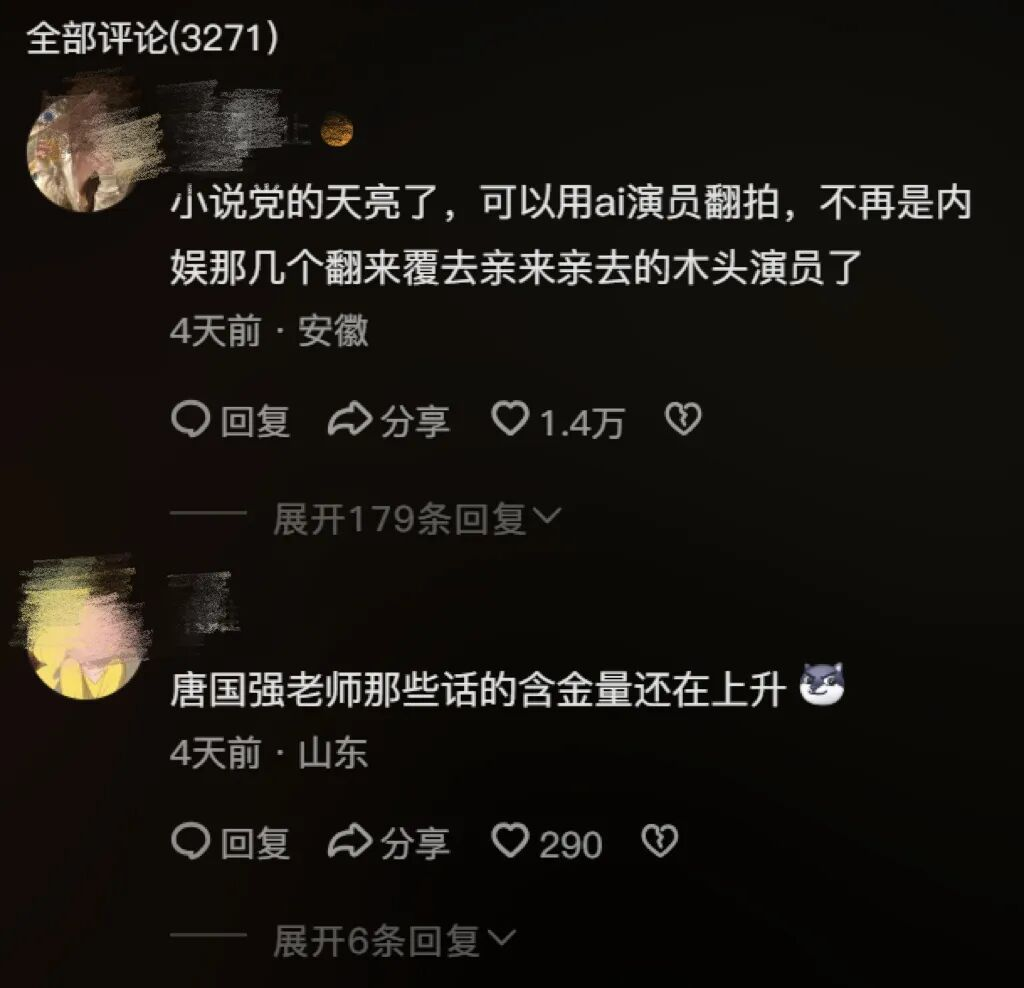
💡Unveils AI short drama boom: audiences, platforms, and revival of old tropes via tools like Seedance 2.0
⚡ 30-Second TL;DR
What Changed
Female AI dramas excel by recycling proven tropes like revenge and cute kids with flawless male/female leads.
Why It Matters
AI video tools like Seedance enable low-cost content creation, reviving banned tropes and capturing novel fans, potentially disrupting traditional short drama markets.
What To Do Next
Test Seedance 2.0 API for generating female-oriented ancient romance short clips.
Key Points
- •Female AI dramas excel by recycling proven tropes like revenge and cute kids with flawless male/female leads.
- •Seedance 2.0 praised for action scenes but used mainly for simple female-oriented plots.
- •Story consumers prioritize fast emotional hits over realism; atmosphere consumers brain-supplement from novels.
- •Douyin favors AI for short-form; Bilibili sees AI yaoi and ghost remixes thrive.
🧠 Deep Insight
AI-generated analysis for this event — not the original article.
🔑 Enhanced Key Takeaways
- •The rise of AI-generated dramas has triggered a significant shift in the MCN (Multi-Channel Network) business model, moving from expensive human talent acquisition to low-cost, high-frequency 'AI influencer' matrix operations that bypass traditional casting and production cycles.
- •Regulatory scrutiny in China is intensifying regarding AI-generated content (AIGC) in media, with platforms now requiring mandatory watermarking and 'AI-generated' labels to mitigate risks of deepfake-related misinformation and copyright infringement.
- •The 'uncanny valley' effect is being actively leveraged as a stylistic choice rather than a technical failure; creators are finding that audiences increasingly associate slightly artificial, hyper-perfect aesthetics with the 'dreamlike' or 'fantasy' genre, effectively turning a technical limitation into a brand identity.
🛠️ Technical Deep Dive
- •Production pipelines typically utilize a multi-stage workflow: LLMs (e.g., Kimi, DeepSeek) for script generation, followed by text-to-video models like Seedance 2.0 or Kling for visual synthesis.
- •Character consistency is maintained through LoRA (Low-Rank Adaptation) fine-tuning on stable diffusion models, allowing creators to lock in specific facial features and costumes across multiple video segments.
- •Lip-syncing and emotional expression are achieved via specialized audio-to-video animation tools (e.g., SadTalker or LivePortrait) that map vocal tracks to facial landmarks, reducing the need for manual keyframe animation.
🔮 Future ImplicationsAI analysis grounded in cited sources
⏳ Timeline
Weekly AI Recap
Read this week's curated digest of top AI events →
👉Related Updates

AI-curated news aggregator. All content rights belong to original publishers.
Original source: 虎嗅 ↗
This is a summary, not the original. Read the source, or get the weekly briefing.
Weekly AI briefing
One email a week. Unsubscribe anytime.