WHO declares Ebola emergency in DRC and Uganda
Understand the limitations of current Ebola countermeasures against emerging viral strains.
30-Second TL;DR
What Changed
The outbreak involves the Bundibugyo Ebola virus, which is distinct from the more common Zaire strain.
Why It Matters
The lack of effective medical countermeasures for this specific strain poses a significant challenge for global health security. It highlights the critical need for rapid-response R&D platforms that can adapt to different viral strains.
What To Do Next
If working in bioinformatics or vaccine design, review the genomic sequences of the Bundibugyo strain to identify potential conserved epitopes for cross-reactive therapeutic development.
Key Points
- •The outbreak involves the Bundibugyo Ebola virus, which is distinct from the more common Zaire strain.
- •Existing FDA-approved vaccines and monoclonal antibody treatments are ineffective against the Bundibugyo strain.
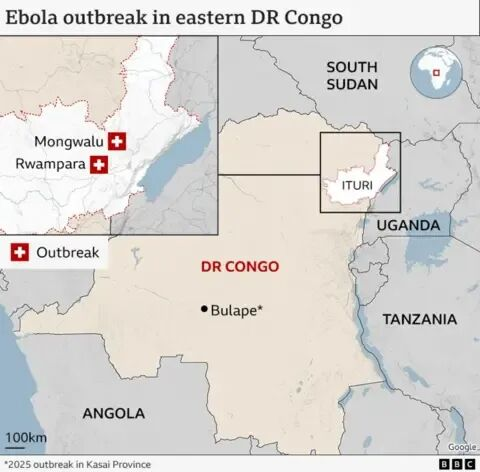
- •The outbreak is centered in the Ituri province, a region currently suffering from significant armed conflict and instability.
Deep Insight
Background and context from public sources — not the original article. 19 sources cited.
Enhanced Key Takeaways
- •The current outbreak marks only the third time the Bundibugyo virus has been reported, despite being the 17th Ebola Disease outbreak in the Democratic Republic of Congo (DRC).
- •The case fatality rate for Bundibugyo virus disease (BVD) in previous outbreaks has ranged from 30% to 50%, which is generally lower than the Zaire strain (up to 90%) and Sudan strain (around 50%).
- •Initial laboratory samples in the current outbreak tested negative because early field diagnostics were primarily designed to detect the Zaire strain, leading to a delay in confirming the Bundibugyo variant.
- •The outbreak originated in Mongbwalu health zone, a high-traffic mining area in Ituri province, with subsequent spread to other health zones as infected individuals sought medical care.
- •The ongoing armed conflict in Ituri province has resulted in over 920,000 displaced people as of early 2026, severely hampering humanitarian access, disrupting healthcare infrastructure, and complicating critical response efforts like contact tracing.
Technical Deep Dive
- Bundibugyo ebolavirus (BDBV) is one of six identified species within the genus Ebolavirus, which belongs to the family Filoviridae.
- The virus forms filamentous virions and shares a close genetic relationship with Zaire ebolavirus (EBOV).
- Its genome is characterized by three gene overlaps (VP35/VP40, GP/VP30, VP24/L) and exhibits a genomic sequence divergence of at least 30% from Zaire ebolavirus.
- Fruit bats are suspected to be the natural reservoir host for BDBV, a common characteristic among filoviruses.
- Research indicates that BDBV infection might elicit a stronger humoral immune response compared to EBOV, with survival potentially linked to early activation of adaptive immunity and reduced myeloid-derived suppressor cell signaling.
Future ImplicationsAI analysis grounded in cited sources
Timeline
- 1976Ebola virus first discovered near the Ebola River in what is now the Democratic Republic of Congo.
- 2007-08First known outbreak of Bundibugyo ebolavirus identified in Bundibugyo District, Uganda, with 149 cases and 37 deaths.
- 2012Second outbreak of Bundibugyo ebolavirus reported in Isiro, Democratic Republic of Congo, with 57 cases and 29 deaths.
- 2026-05-05WHO alerted of a high-mortality outbreak of unknown illness in Mongbwalu Health Zone, Ituri Province, Democratic Republic of Congo.
- 2026-05-15Bundibugyo virus disease confirmed in Ituri Province, DRC, leading to the official declaration of the 17th Ebola Disease outbreak in DRC and an imported case confirmed in Uganda.
- 2026-05-16WHO Director-General declared the Ebola disease caused by Bundibugyo virus in DRC and Uganda a Public Health Emergency of International Concern (PHEIC).
Sources (19)
Factual claims are grounded in the sources below. Forward-looking analysis is AI-generated interpretation.
Weekly AI Recap
Read this week's curated digest of top AI events →
AI-curated news aggregator. All content rights belong to original publishers.
Original source: 虎嗅 ↗
This is a summary, not the original. Read the source, or get the weekly briefing.
The weekly digest
One email a week. Unsubscribe anytime.