White House Drops AI Regulation Framework
💡US AI policy blueprint emerges—essential for regulatory compliance planning
⚡ 30-Second TL;DR
What Changed
White House releases national AI regulation framework
Why It Matters
Could standardize US AI rules, affecting development, deployment, and compliance for all practitioners.
What To Do Next
Review the White House AI framework document for compliance impacts on your models.
Key Points
- •White House releases national AI regulation framework
- •Aims for Congress to create federal AI standard
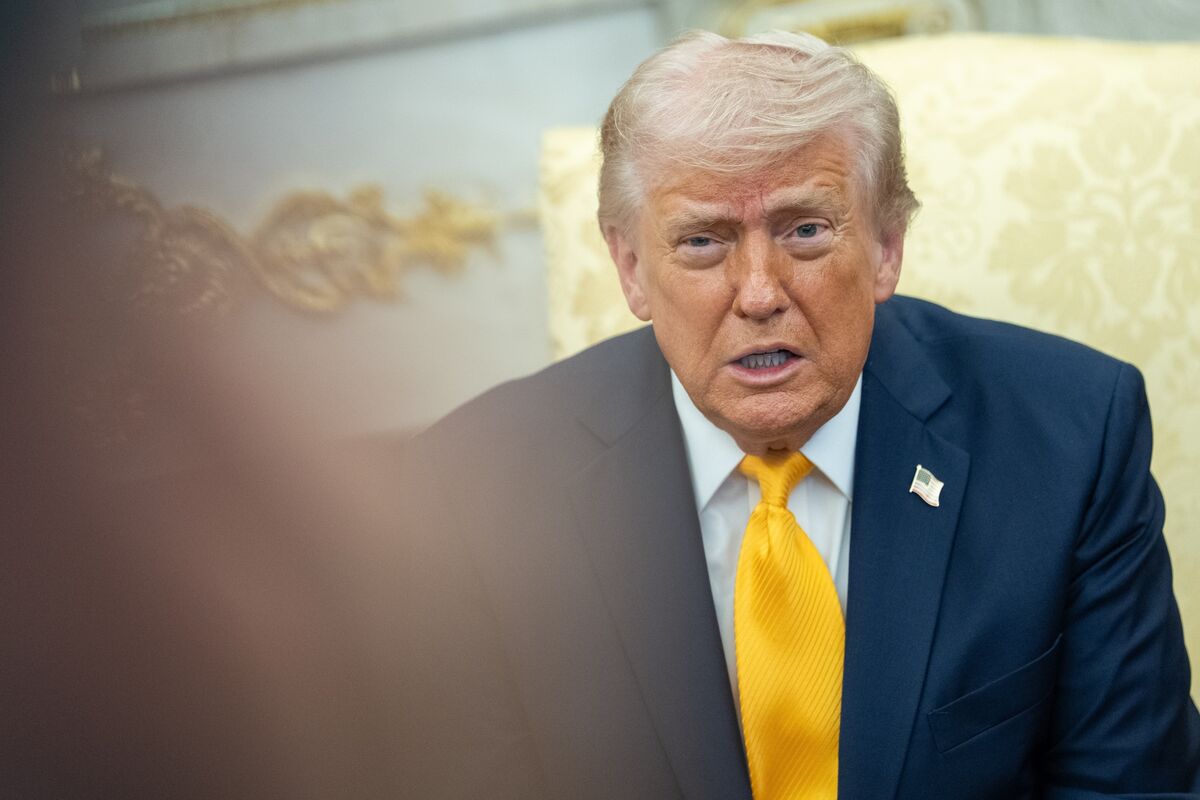
- •Released by President Trump on Friday
🧠 Deep Insight
Background and context from public sources — not the original article. 12 sources cited.
🔑 Enhanced Key Takeaways
- •The framework is anchored by the 'TRUMP AMERICA AI Act,' a legislative proposal designed to preempt a 'patchwork' of state-level regulations, specifically targeting laws in California and Colorado that the administration deems 'burdensome' to innovation.
- •It mandates 'ideological neutrality' and 'truth-seeking' for AI models, prohibiting federal agencies from procuring systems that utilize DEI-influenced filtering or 'woke' algorithmic bias.
- •The plan proposes a sunset of Section 230 immunity for AI developers, establishing a private right of action that allows individuals to sue for harms related to defective design, failure to warn, or exploitation of minors.
- •It tasks NIST with developing mandatory cybersecurity standards for AI content watermarking and provenance, moving away from voluntary safety commitments toward enforceable technical benchmarks for 'frontier' models.
📊 Competitor Analysis▸ Show
| Feature | US Framework (TRUMP AMERICA AI Act) | EU AI Act (2024) | China AI Measures (2023-25) |
|---|---|---|---|
| Primary Goal | Global Dominance & Deregulation | Fundamental Rights & Safety | State Security & Social Control |
| Regulatory Logic | Sector-specific / Innovation-led | Horizontal / Risk-based (Prohibited to Low) | Content-centric / Registration-based |
| Enforcement | AI Litigation Task Force / Federal Agencies | EU AI Office / National Authorities | Cyberspace Administration of China (CAC) |
| Liability | Sunsets Section 230; Private Right of Action | Strict liability for high-risk systems | Joint liability for providers and users |
| Bias Focus | Prohibits 'Ideological/Woke' bias | Targets 'Algorithmic Discrimination' | Mandates 'Socialist Core Values' |
🛠️ Technical Deep Dive
The framework integrates several specific technical mandates and NIST-led standards:
- NIST Cyber AI Profile (NIST IR 8596): Establishes a 'Secure, Defend, Thwart' architecture for AI-enabled cyber defense and system resilience.
- Provenance Standards: Mandates the implementation of C2PA-compliant watermarking for all synthetic media generated by frontier models to ensure 'truth-seeking' authenticity.
- Compute Thresholds: Maintains reporting requirements for models trained using more than 10^26 integer or floating-point operations, though with reduced 'red-teaming' oversight compared to previous administrations.
- Bias Auditing: Requires third-party audits specifically for 'political affiliation bias' and 'historical accuracy' in Large Language Model (LLM) outputs.
- Data Center Permitting: Streamlines federal permitting for AI infrastructure, prioritizing high-voltage transmission and nuclear energy integration for 'Qualifying Projects.'
🔮 Future ImplicationsAI analysis grounded in cited sources
⏳ Timeline
📎 Sources (12)
Factual claims are grounded in the sources below. Forward-looking analysis is AI-generated interpretation.
Weekly AI Recap
Read this week's curated digest of top AI events →
👉Related Updates
AI-curated news aggregator. All content rights belong to original publishers.
Original source: Bloomberg Technology ↗
This is a summary, not the original. Read the source, or get the weekly briefing.
The weekly digest
One email a week. Unsubscribe anytime.