WeRide Beats Estimates on Ride-Hailing Surge
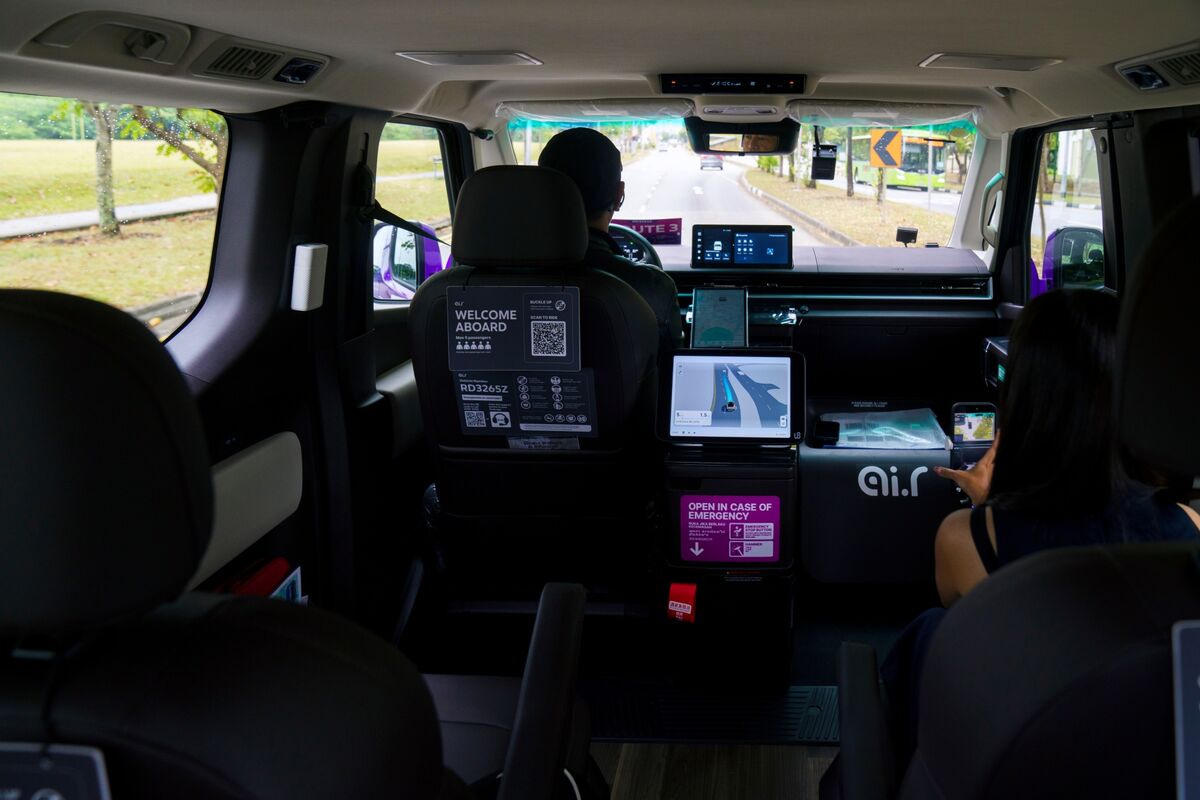
💡WeRide’s beat shows where autonomous mobility demand is translating into commercial growth.
⚡ 30-Second TL;DR
What Changed
WeRide’s sales exceeded expectations.
Why It Matters
Stronger ride-hailing demand can improve the commercial case for autonomous driving deployments and fleet operations. European expansion may also create additional markets for testing, partnerships, and regulatory learning.
What To Do Next
Track WeRide’s European deployments and review any published safety or API documentation before evaluating it as an autonomous-mobility partner.
Key Points
- •WeRide’s sales exceeded expectations.
- •Domestic ride-hailing demand was the main growth driver.
- •The company accelerated its expansion in Europe.
🧠 Deep Insight
AI-generated analysis for this event.
🔑 Enhanced Key Takeaways
- •WeRide's recent financial performance was bolstered by the successful commercial deployment of its Robotaxi fleet in Tier-1 Chinese cities, achieving higher utilization rates than previous quarters.
- •The European expansion strategy focuses on strategic partnerships with local public transit operators to integrate autonomous shuttles into existing urban mobility frameworks.
- •Regulatory approvals in key European markets have been secured for pilot testing, marking a shift from pure R&D to commercial-ready operations in the region.
- •The company has successfully diversified its revenue streams by scaling its autonomous driving software solutions for logistics and sanitation vehicles alongside passenger services.
- •WeRide's proprietary sensor fusion architecture has undergone significant optimization, reducing hardware costs while improving perception accuracy in complex urban environments.
📊 Competitor Analysis▸ Show
| Feature | WeRide | Waymo | Pony.ai |
|---|---|---|---|
| Primary Market | China/Global | North America | China/US |
| Vehicle Type | Multi-modal (Taxi/Bus/Van) | Passenger Robotaxi | Passenger/Logistics |
| Tech Focus | Sensor Fusion/Modular | End-to-End AI | Full-stack Autonomous |
| Expansion Strategy | Aggressive Global | Incremental/Regional | Strategic Partnerships |
🛠️ Technical Deep Dive
- WeRide utilizes a multi-sensor fusion system combining LiDAR, cameras, and millimeter-wave radar to achieve 360-degree perception.
- The company employs a modular software architecture that allows for rapid adaptation across different vehicle platforms including Robotaxis, Robobuses, and Robovans.
- Recent updates include the integration of advanced transformer-based models for trajectory prediction, enhancing decision-making in high-density traffic scenarios.
- The system leverages cloud-based simulation platforms to train models on edge cases, significantly reducing the need for physical road testing for every software iteration.
🔮 Future ImplicationsAI analysis grounded in cited sources
⏳ Timeline
Weekly AI Recap
Read this week's curated digest of top AI events →
👉Related Updates


AI-curated news aggregator. All content rights belong to original publishers.
Original source: Bloomberg Technology ↗