🌍The Next Web (TNW)•Recentcollected in 61m
Wearable Robotics Raises €5M for Arm Exoskeleton
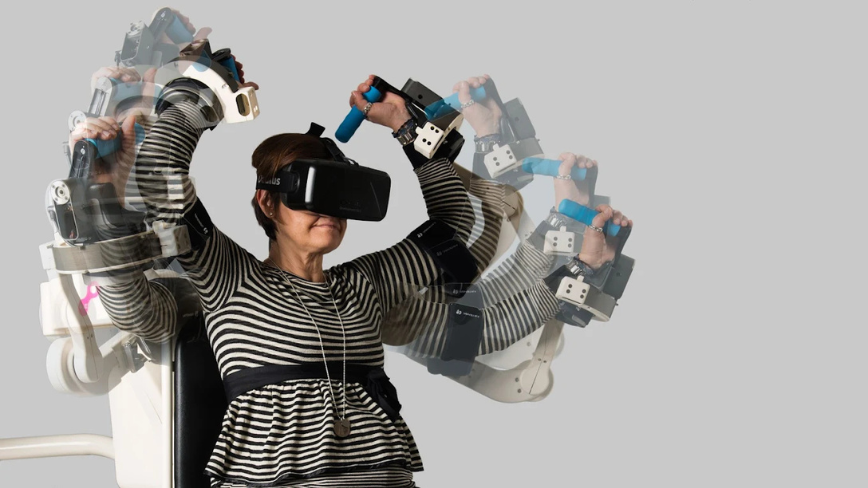
💡€5M boosts arm exoskeleton in 20+ countries—key for embodied AI rehab advances
⚡ 30-Second TL;DR
What Changed
€5M Series A led by CDP Venture Capital
Why It Matters
Accelerates rehab robotics adoption, enhancing AI-driven physical therapy accessibility worldwide.
What To Do Next
Test ALEX RS integration for embodied AI in rehabilitation prototypes.
Who should care:Researchers & Academics
🧠 Deep Insight
AI-generated analysis for this event.
🔑 Enhanced Key Takeaways
- •The ALEX RS (Advanced Lower-limb Exoskeleton - Robotic System, despite the 'RS' often being associated with upper-limb in this context) utilizes a patented 'soft' or 'compliant' actuation technology designed to mimic human muscle behavior, reducing the risk of injury during rehabilitation.
- •Wearable Robotics S.r.l. maintains a strong academic lineage, originating from the PERCRO (Perceptual Robotics) Laboratory at the Sant’Anna School of Advanced Studies in Pisa, which is a globally recognized hub for haptics and robotics research.
- •The funding round includes participation from existing investors, signaling strong confidence in the company's transition from a research-heavy spin-off to a commercially scalable medical device manufacturer.
📊 Competitor Analysis▸ Show
| Competitor | Primary Focus | Key Differentiator |
|---|---|---|
| Hocoma (Armeo) | Clinical Rehab | Established global market share and comprehensive software suite |
| Myomo (MyoPro) | Myoelectric Orthotics | Focus on daily living assistance rather than just clinical rehab |
| Ekso Bionics | Industrial/Medical | Broader portfolio including lower-limb and industrial exoskeletons |
🛠️ Technical Deep Dive
- Actuation: Employs series elastic actuators (SEAs) to provide force control and inherent mechanical compliance.
- Control Architecture: Features a bilateral control scheme that allows for synchronized movement between the impaired and healthy limb (or therapist-guided movement).
- Degrees of Freedom (DoF): Typically supports 3-4 active DoFs for the shoulder and elbow to facilitate naturalistic reaching and grasping motions.
- Connectivity: Integrated data logging for clinical assessment, allowing therapists to track patient progress via objective kinematic metrics.
🔮 Future ImplicationsAI analysis grounded in cited sources
Wearable Robotics will expand into the home-care market by 2027.
The current focus on international expansion and the need for cost-effective rehabilitation solutions suggests a shift from clinical-only settings to home-based therapy.
The company will integrate AI-driven predictive analytics into the ALEX RS platform.
The influx of capital is typically allocated toward software enhancements, and predictive modeling is the industry standard for optimizing patient recovery trajectories.
⏳ Timeline
2014-01
Wearable Robotics S.r.l. is founded as a spin-off of the Sant’Anna School of Advanced Studies.
2014-05
Initial deployment and clinical validation of the ALEX exoskeleton platform begins.
2022-11
Company secures strategic partnerships to enhance international distribution networks.
2026-04
Wearable Robotics closes €5M Series A funding round led by CDP Venture Capital.
📰
Weekly AI Recap
Read this week's curated digest of top AI events →
👉Related Updates
AI-curated news aggregator. All content rights belong to original publishers.
Original source: The Next Web (TNW) ↗