Wayve and Uber Win London Self-Driving Taxi Licences
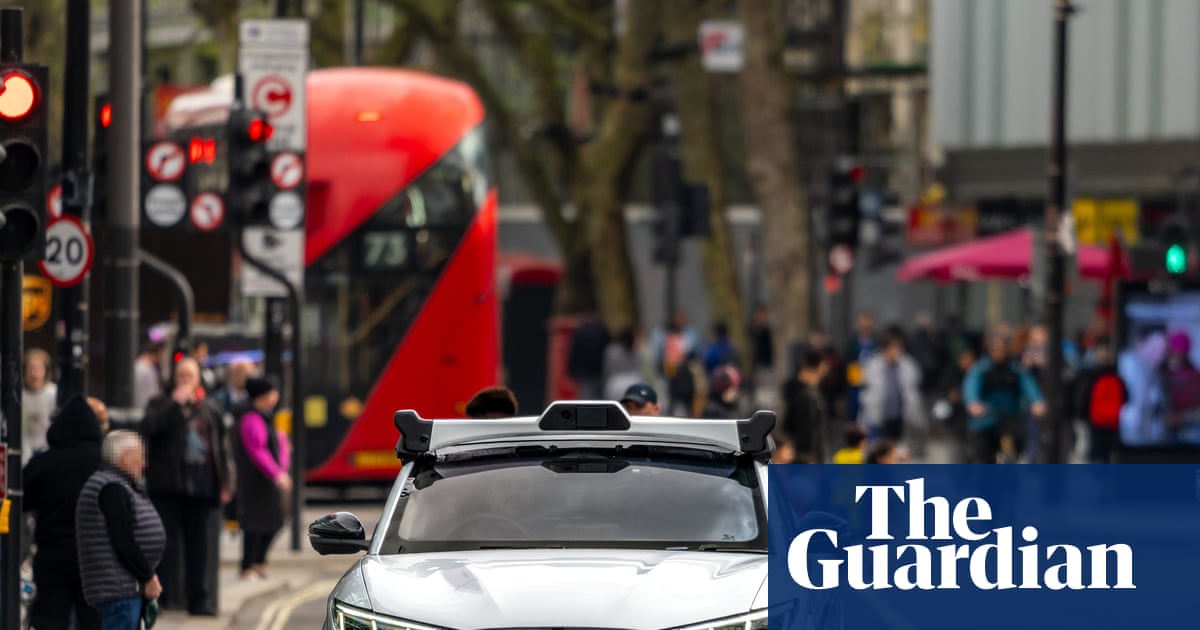
Wayve and Uber just secured London’s first licence for paid autonomous taxi rides.
30-Second TL;DR
What Changed
Wayve and Uber received the first London minicab licences permitting paid autonomous taxi rides.
Why It Matters
The approval marks a practical step toward commercial autonomous mobility in a major global city. It also provides AI and robotics teams with a real-world deployment path where safety validation, operational monitoring, and regulatory compliance will be critical.
What To Do Next
Review TfL’s autonomous-vehicle licensing and safety-driver requirements before designing a London pilot for your own embodied-AI mobility product.
Key Points
- •Wayve and Uber received the first London minicab licences permitting paid autonomous taxi rides.
- •Initial passenger trips will include a human safety driver, so the service is not yet fully driverless.
- •The companies plan to begin UK operations later this summer ahead of the wider public launch.
Deep Insight
AI-generated analysis for this event — not the original article.
Enhanced Key Takeaways
- •Wayve’s autonomous technology utilizes end-to-end deep learning, known as 'AV2.0,' which differs from traditional rule-based mapping systems by learning to drive through observation and imitation.
- •The licensing approval follows a strategic partnership established in 2024 where Uber invested in Wayve’s $1.05 billion Series C funding round to accelerate the deployment of autonomous vehicles.
- •Transport for London (TfL) has implemented a rigorous safety framework for these trials, requiring operators to provide comprehensive risk assessments and incident reporting protocols before carrying paying passengers.
- •Wayve’s fleet in London will utilize a multi-modal sensor suite, including high-resolution cameras and radar, to navigate the city's complex, non-grid street layouts without relying on high-definition (HD) maps.
- •This initiative aligns with the UK government's Automated Vehicles Act, which provides the legal framework for liability and insurance requirements for autonomous vehicles operating on public roads.
Competitor Analysis
- Wayve/Uber
- End-to-end AI (AV2.0)
- Waymo
- Sensor-fusion/HD Maps
- Zoox
- Purpose-built robotaxi
- Wayve/Uber
- UK/London
- Waymo
- USA (Major Cities)
- Zoox
- USA (Select Cities)
- Wayve/Uber
- Safety driver (Initial)
- Waymo
- Fully driverless
- Zoox
- Fully driverless
- Wayve/Uber
- Ride-hailing integration
- Waymo
- Ride-hailing/Delivery
- Zoox
- Ride-hailing
| Feature | Wayve/Uber | Waymo | Zoox |
|---|---|---|---|
| Technology Approach | End-to-end AI (AV2.0) | Sensor-fusion/HD Maps | Purpose-built robotaxi |
| Primary Market | UK/London | USA (Major Cities) | USA (Select Cities) |
| Driver Status | Safety driver (Initial) | Fully driverless | Fully driverless |
| Business Model | Ride-hailing integration | Ride-hailing/Delivery | Ride-hailing |
Technical Deep Dive
- Wayve utilizes an end-to-end deep learning model that processes raw sensor data directly into driving commands, bypassing the need for hand-coded rules or pre-mapped environments.
- The system employs a transformer-based architecture capable of interpreting complex urban scenarios, such as roundabouts and unpredictable pedestrian behavior, by leveraging large-scale driving data.
- The vehicle hardware stack is designed to be 'hardware-agnostic,' allowing the software to be integrated into various vehicle platforms rather than requiring a proprietary vehicle design.
- The system incorporates a 'learned' safety layer that acts as a monitor to ensure the AI's outputs remain within defined safety constraints during real-time operation.
Future ImplicationsAI analysis grounded in cited sources
Timeline
- 2017-05Wayve is founded in Cambridge, UK, by Alex Kendall and Amar Shah.
- 2021-03Wayve completes the first autonomous delivery trial in London using its end-to-end AI.
- 2024-05Wayve secures $1.05 billion in Series C funding, with Uber and SoftBank as lead investors.
- 2026-05The UK Automated Vehicles Act receives Royal Assent, establishing the legal framework for autonomous taxi operations.
- 2026-08Wayve and Uber are granted the first minicab licences for autonomous taxi services in London.
Weekly AI Recap
Read this week's curated digest of top AI events →
Related Updates


AI-curated news aggregator. All content rights belong to original publishers.
Original source: The Guardian Technology ↗
This is a summary, not the original. Read the source, or get the weekly briefing.
The weekly digest
One email a week. Unsubscribe anytime.