Waymo’s Baby-Blue Ojai Joins Seattle Test Fleet
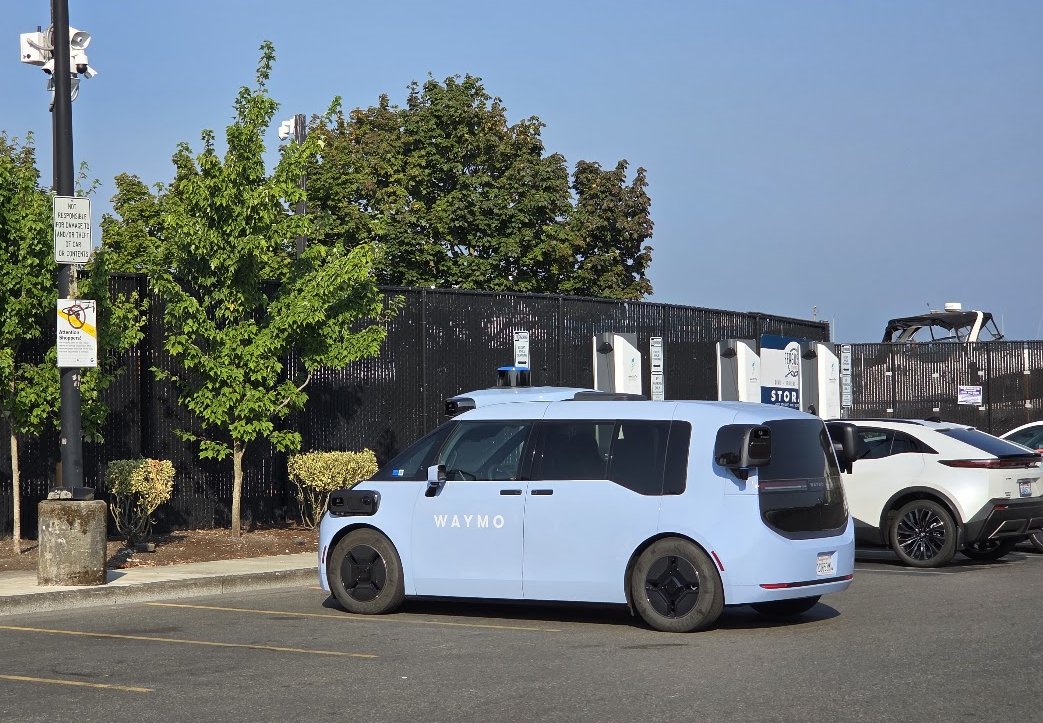
A new Waymo vehicle sighting may reveal how the company is scaling robotaxi testing in Seattle.
30-Second TL;DR
What Changed
A baby-blue, boxy Waymo Ojai was spotted in Seattle’s Ballard neighborhood.
Why It Matters
Additional test vehicles could help Waymo gather more operational data across Seattle’s roads and conditions. For autonomous-driving teams, the sighting is a signal that Waymo may be broadening local deployment or evaluation activity.
What To Do Next
Add Waymo Ojai sightings and Seattle fleet expansion to your autonomy-competitor tracker, noting vehicle design, location, and deployment timing.
Key Points
- •A baby-blue, boxy Waymo Ojai was spotted in Seattle’s Ballard neighborhood.
- •The vehicle was parked at a Fred Meyer store during the reported sighting.
- •Ojai appears to be expanding Waymo’s robotaxi testing fleet in Seattle.
Deep Insight
AI-generated analysis for this event — not the original article.
Enhanced Key Takeaways
- •The 'Ojai' vehicle platform is Waymo's internal designation for the purpose-built autonomous vehicle developed in partnership with Zeekr, designed specifically for ride-hailing without traditional driver controls.
- •Waymo's expansion into Seattle involves navigating complex urban topography and weather conditions, which serves as a critical testing ground for the sixth-generation Waymo Driver hardware suite.
- •The deployment of the Ojai platform in Seattle marks a shift from retrofitting existing passenger vehicles (like the Jaguar I-PACE) to utilizing a dedicated, modular robotaxi architecture.
- •Local regulatory filings in Washington state indicate that Waymo has been incrementally increasing its testing permit scope to include more diverse neighborhoods beyond the initial downtown corridors.
- •The Ojai platform features a unique 'no-steering-wheel' cabin design, necessitating specific safety certifications from the National Highway Traffic Safety Administration (NHTSA) for operation on public roads.
Competitor Analysis
- Waymo (Ojai/Zeekr)
- Purpose-built Robotaxi
- Zoox (Amazon)
- Purpose-built Robotaxi
- Cruise (GM)
- Retrofitted/Custom
- Waymo (Ojai/Zeekr)
- None
- Zoox (Amazon)
- None
- Cruise (GM)
- Variable (Model dependent)
- Waymo (Ojai/Zeekr)
- Ride-hailing
- Zoox (Amazon)
- Ride-hailing
- Cruise (GM)
- Ride-hailing/Delivery
- Waymo (Ojai/Zeekr)
- Testing/Limited Deployment
- Zoox (Amazon)
- Testing/Limited Deployment
- Cruise (GM)
- Testing/Paused/Restarting
| Feature | Waymo (Ojai/Zeekr) | Zoox (Amazon) | Cruise (GM) |
|---|---|---|---|
| Vehicle Type | Purpose-built Robotaxi | Purpose-built Robotaxi | Retrofitted/Custom |
| Steering Wheel | None | None | Variable (Model dependent) |
| Primary Market | Ride-hailing | Ride-hailing | Ride-hailing/Delivery |
| Operational Status | Testing/Limited Deployment | Testing/Limited Deployment | Testing/Paused/Restarting |
Technical Deep Dive
- The Ojai platform utilizes the 6th Generation Waymo Driver, which features a reduced sensor count compared to previous generations while maintaining or exceeding perception range.
- The vehicle architecture is built on a modular EV platform that allows for rapid ingress and egress, specifically optimized for high-density urban ride-hailing.
- Sensor suite integration includes long-range LiDAR, high-resolution cameras, and radar units embedded into the vehicle body to eliminate blind spots without external sensor pods.
- The compute stack is centralized, utilizing custom-designed silicon to handle real-time sensor fusion and path planning with lower power consumption than previous Jaguar I-PACE iterations.
Future ImplicationsAI analysis grounded in cited sources
Timeline
- 2021-12Waymo and Zeekr announce partnership to develop a purpose-built autonomous ride-hailing vehicle.
- 2022-11Waymo unveils the design of the Zeekr-based robotaxi, later referred to as the Ojai platform.
- 2024-05Waymo begins initial mapping and testing operations in Seattle using Jaguar I-PACE vehicles.
- 2025-09Waymo receives expanded testing permits from Washington state regulators for autonomous operations.
- 2026-08Waymo Ojai platform spotted in Seattle, marking the introduction of purpose-built hardware to the region.
Weekly AI Recap
Read this week's curated digest of top AI events →
Related Updates
AI-curated news aggregator. All content rights belong to original publishers.
Original source: GeekWire ↗
This is a summary, not the original. Read the source, or get the weekly briefing.
The weekly digest
One email a week. Unsubscribe anytime.