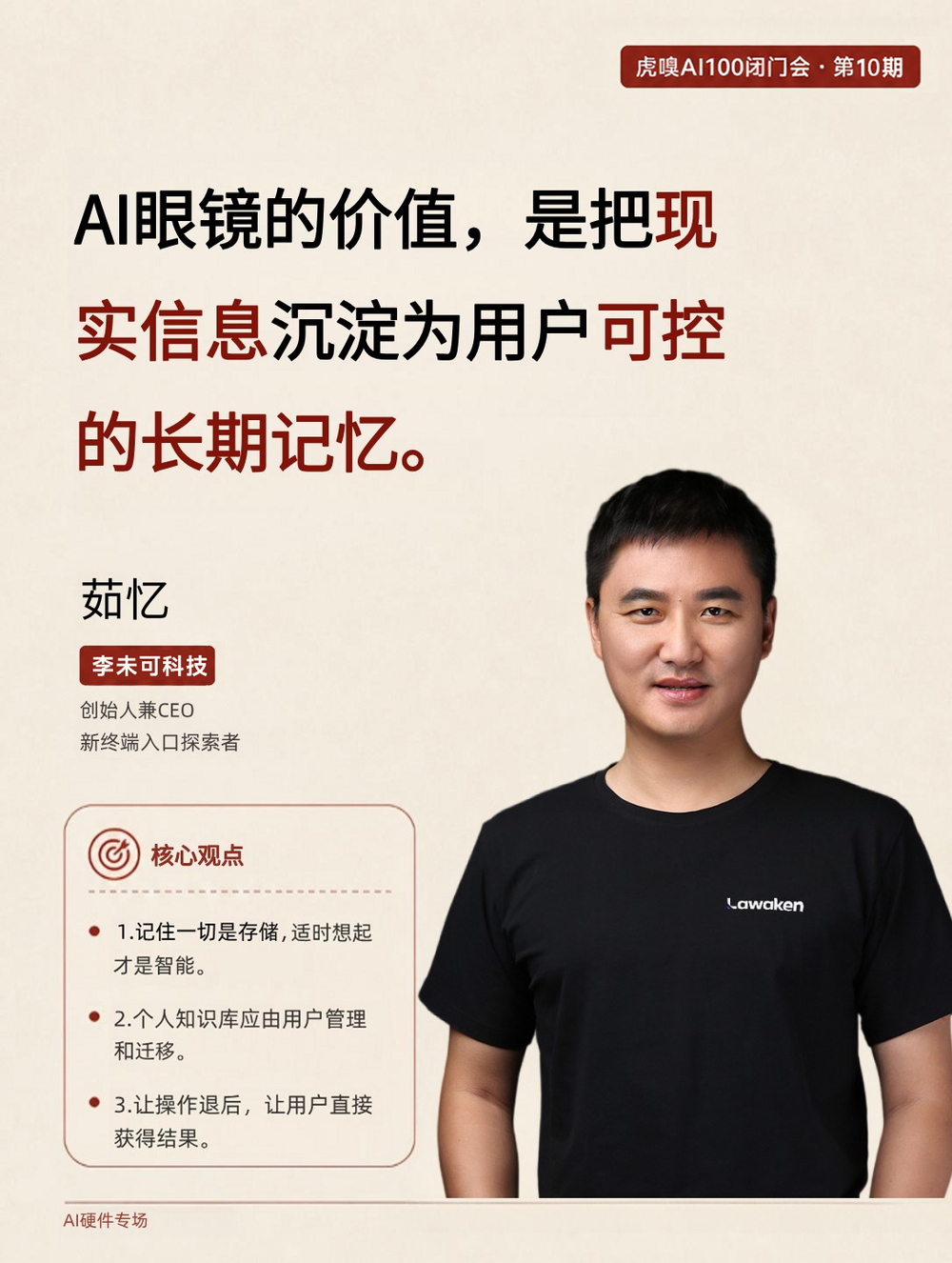
VC Perspectives on the First AI Agent Smartphone
💡Explore the VC perspective on whether AI agent smartphones are a viable business model or just a marketing trend.
⚡ 30-Second TL;DR
What Changed
Uses a cloud-edge model matrix: edge for 'fast response', cloud for 'deep thinking'.
Why It Matters
This marks a shift where AI moves from a 'guest' feature to a system 'native', forcing a re-evaluation of how hardware and software value is captured in the AI era.
What To Do Next
Monitor the 'Agent-to-User' interaction latency and error handling protocols in new agent-based hardware releases.
Key Points
- •Uses a cloud-edge model matrix: edge for 'fast response', cloud for 'deep thinking'.
- •Business model uncertainty: hardware as a gateway vs. service-based revenue models.
- •Trust and safety: defining responsibility for AI-driven actions and data privacy.
- •Industry tension: model companies moving up the stack to challenge traditional hardware margins.
🧠 Deep Insight
AI-generated analysis for this event — not the original article.
🔑 Enhanced Key Takeaways
- •The integration of 'Agentic OS' layers allows for cross-app intent execution, moving beyond simple chatbot interfaces to autonomous task completion across third-party applications.
- •Hardware manufacturers are increasingly adopting NPU-specific quantization techniques to run 7B-parameter models locally, reducing latency for real-time voice interaction to under 200ms.
- •Regulatory bodies in major markets have begun drafting 'Agent Liability Frameworks' to determine if the device manufacturer or the model provider is liable for autonomous AI actions.
- •The shift toward 'Agent-as-a-Service' (AaaS) subscription models is forcing a transition in hardware accounting, where devices are increasingly subsidized by long-term AI feature revenue.
- •Privacy-preserving computation, specifically Trusted Execution Environments (TEEs), is being mandated to isolate personal context data from the cloud-based 'deep thinking' model layers.
📊 Competitor Analysis▸ Show
| Feature | AI Agent Smartphone (Lead) | Standard Flagship (Non-Agent) | Specialized AI Phone |
|---|---|---|---|
| Agentic Autonomy | Full Cross-App Control | Limited/None | Task-Specific Only |
| On-Device Model | 7B+ Parameters | < 2B Parameters | 3B-5B Parameters |
| Pricing Strategy | Premium + Subscription | Hardware Margin | Mid-Range + Ads |
| Latency (Voice) | < 200ms | 500ms+ | 300ms |
🛠️ Technical Deep Dive
- Architecture: Utilizes a hybrid 'Model-Orchestrator' layer that dynamically routes queries between a local 7B parameter SLM (Small Language Model) and a cloud-based MoE (Mixture of Experts) model.
- Memory Management: Implements a 'Long-Term Context Store' (LTCS) that uses vector databases on-device to maintain user preferences across sessions without cloud synchronization.
- Power Efficiency: Employs dynamic voltage and frequency scaling (DVFS) specifically tuned for NPU workloads, allowing for sustained agentic background processing without significant thermal throttling.
- Security: Hardware-level isolation via Secure Enclave for storing API tokens and personal credentials used by the agent to interact with third-party services.
🔮 Future ImplicationsAI analysis grounded in cited sources
⏳ Timeline
Weekly AI Recap
Read this week's curated digest of top AI events →
👉Related Updates

AI-curated news aggregator. All content rights belong to original publishers.
Original source: 虎嗅 ↗
This is a summary, not the original. Read the source, or get the weekly briefing.
The weekly digest
One email a week. Unsubscribe anytime.