Using ChatGPT to recreate nostalgic 1990s action figures
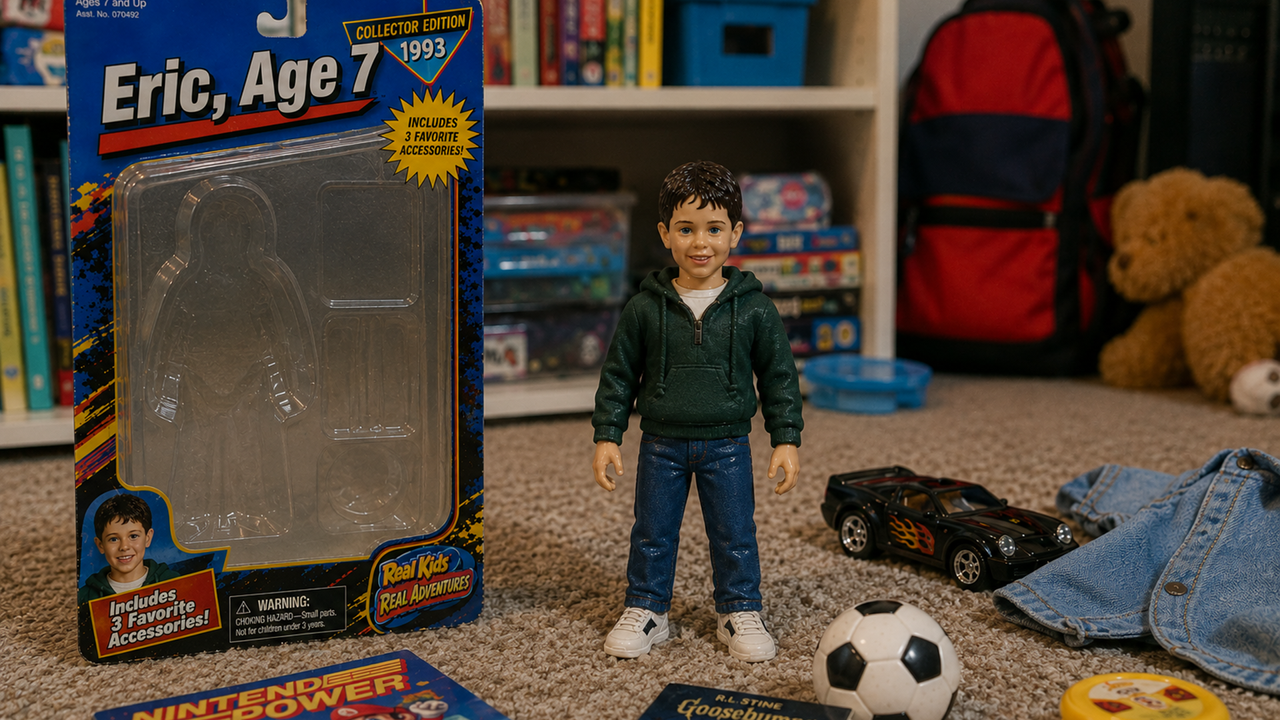
💡See how ChatGPT's contextual memory can be leveraged for creative brainstorming and niche content generation.
⚡ 30-Second TL;DR
What Changed
ChatGPT successfully synthesized specific 1990s cultural aesthetics into character designs.
Why It Matters
This highlights the potential for LLMs to act as sophisticated creative partners in character design and narrative development. It demonstrates how models can bridge the gap between abstract user prompts and detailed, culturally resonant visual concepts.
What To Do Next
Experiment with 'persona-based' prompting by providing specific historical context to see how effectively the model can generate niche, era-specific creative assets.
Key Points
- •ChatGPT successfully synthesized specific 1990s cultural aesthetics into character designs.
- •The model demonstrated an ability to recall and contextualize niche personal memories.
- •The experiment showcases LLMs as effective tools for creative brainstorming and nostalgic content generation.
🧠 Deep Insight
AI-generated analysis for this event — not the original article.
🔑 Enhanced Key Takeaways
- •The integration of multimodal LLMs with 3D printing workflows allows users to transition from ChatGPT-generated text descriptions to physical prototypes using text-to-3D model generators like Meshy or Luma AI.
- •Nostalgic content generation is increasingly being used by independent toy designers to bypass traditional market research, utilizing LLMs to identify 'micro-trends' in 90s pop culture that larger toy manufacturers often overlook.
- •The process relies on 'contextual prompting' where users feed the model specific toy-line metadata—such as articulation styles, plastic finishes, and packaging dimensions—to ensure the output adheres to the physical constraints of 90s-era manufacturing.
📊 Competitor Analysis▸ Show
| Feature | ChatGPT (OpenAI) | Claude (Anthropic) | Gemini (Google) |
|---|---|---|---|
| Creative Brainstorming | High (Versatile) | High (Nuanced) | High (Contextual) |
| Multimodal Integration | Native DALL-E 3 | Vision-focused | Deep Google Ecosystem |
| 3D Asset Generation | Via Plugins/API | Via API/External | Via Vertex AI |
| Pricing | Subscription/Usage | Subscription/Usage | Subscription/Usage |
🛠️ Technical Deep Dive
- The generation process utilizes Chain-of-Thought (CoT) prompting to break down character design into distinct layers: backstory, physical attributes, accessory list, and packaging design.
- Models leverage latent space representations of 90s aesthetic markers (e.g., neon color palettes, exaggerated musculature, 'extreme' branding) trained on large-scale image-text datasets.
- Implementation often involves a two-step pipeline: LLM-based conceptualization followed by image-to-3D mesh generation using NeRF (Neural Radiance Fields) or Gaussian Splatting techniques.
🔮 Future ImplicationsAI analysis grounded in cited sources
⏳ Timeline
Weekly AI Recap
Read this week's curated digest of top AI events →
👉Related Updates
AI-curated news aggregator. All content rights belong to original publishers.
Original source: TechRadar AI ↗
This is a summary, not the original. Read the source, or get the weekly briefing.
Weekly AI briefing
One email a week. Unsubscribe anytime.