US Weather Agency Plans AI Overhaul
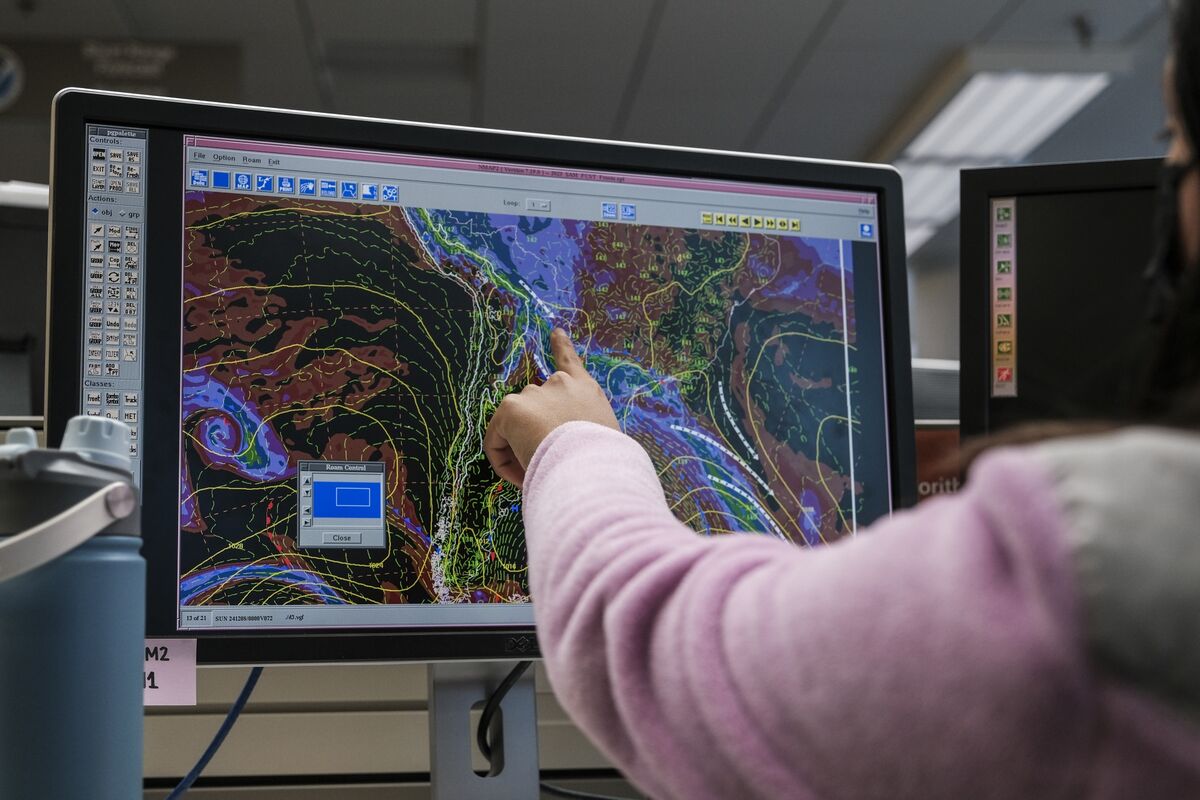
💡Gov't weather agency bets on AI models—public sector opps arise.
⚡ 30-Second TL;DR
What Changed
Prioritizing AI-driven advanced weather models
Why It Matters
Boosts public sector AI adoption, potentially improving forecast accuracy for all. Opportunities for AI firms in government contracts.
What To Do Next
Review NOAA's RFPs for AI weather model development opportunities.
Key Points
- •Prioritizing AI-driven advanced weather models
- •Reorganizing agency for leaner operations
- •Overhaul targets National Weather Service improvements
🧠 Deep Insight
Background and context from public sources — not the original article. 8 sources cited.
🔑 Enhanced Key Takeaways
- •NOAA deployed three operational AI models in January 2026: AIGFS, which generates forecasts using 99.7% less computing resources and completes a 16-day forecast in 40 minutes; AIGEFS, extending forecast skill by 18-24 hours; and HGEFS, a hybrid ensemble outperforming both AI-only and physics-only systems.[1][2][5]
- •These models originated from Project EAGLE, a collaboration between NOAA’s National Weather Service, Oceanic and Atmospheric Research labs, Environmental Modeling Center, and Earth Prediction Innovation Center.[2]
- •The AI models were integrated into NOAA's DESI Version 3.6 in January 2026, enabling forecasters and researchers to evaluate and compare them against traditional models.[1]
🛠️ Technical Deep Dive
- •AIGFS: AI-based deterministic model producing forecasts up to 16 days with 0.3% of traditional GFS computing resources, finishing in ~40 minutes, and reducing tropical cyclone track errors at longer lead times.[5]
- •AIGEFS: 31-member AI ensemble system requiring only 9% of operational GEFS computing resources, with improved performance extending skillful forecasts by 18-24 hours over traditional GEFS.[1][5]
- •HGEFS: 62-member hybrid grand ensemble combining 31 AIGEFS members with 31 physics-based GEFS members, consistently outperforming individual AI and physics ensembles in initial testing.[1][2][5]
🔮 Future ImplicationsAI analysis grounded in cited sources
⏳ Timeline
📎 Sources (8)
Factual claims are grounded in the sources below. Forward-looking analysis is AI-generated interpretation.
- gsl.noaa.gov — New AI Weather Forecast Models Added to Desi
- cdomagazine.tech — Noaa Launches AI Driven Global Weather Models
- nextgov.com — 410954
- epic.noaa.gov — Noaa Deploys New AI Driven Global Weather Models
- carriermanagement.com — 283092
- meritalk.com — Nws Scales Back AI Weather Translations Amid Funding Planning Gaps
- etcjournal.com — The AI Revolution in Weather Forecasting Five Transformative Innovations
- hendersonville.com — Noaa Deploys New Generation of AI Driven Global Weather Models
Weekly AI Recap
Read this week's curated digest of top AI events →
👉Related Updates
AI-curated news aggregator. All content rights belong to original publishers.
Original source: Bloomberg Technology ↗
This is a summary, not the original. Read the source, or get the weekly briefing.
Weekly AI briefing
One email a week. Unsubscribe anytime.