🇨🇳cnBeta (Full RSS)•Freshcollected in 2h
US Military Funds 500kW Laser Weapon System Development
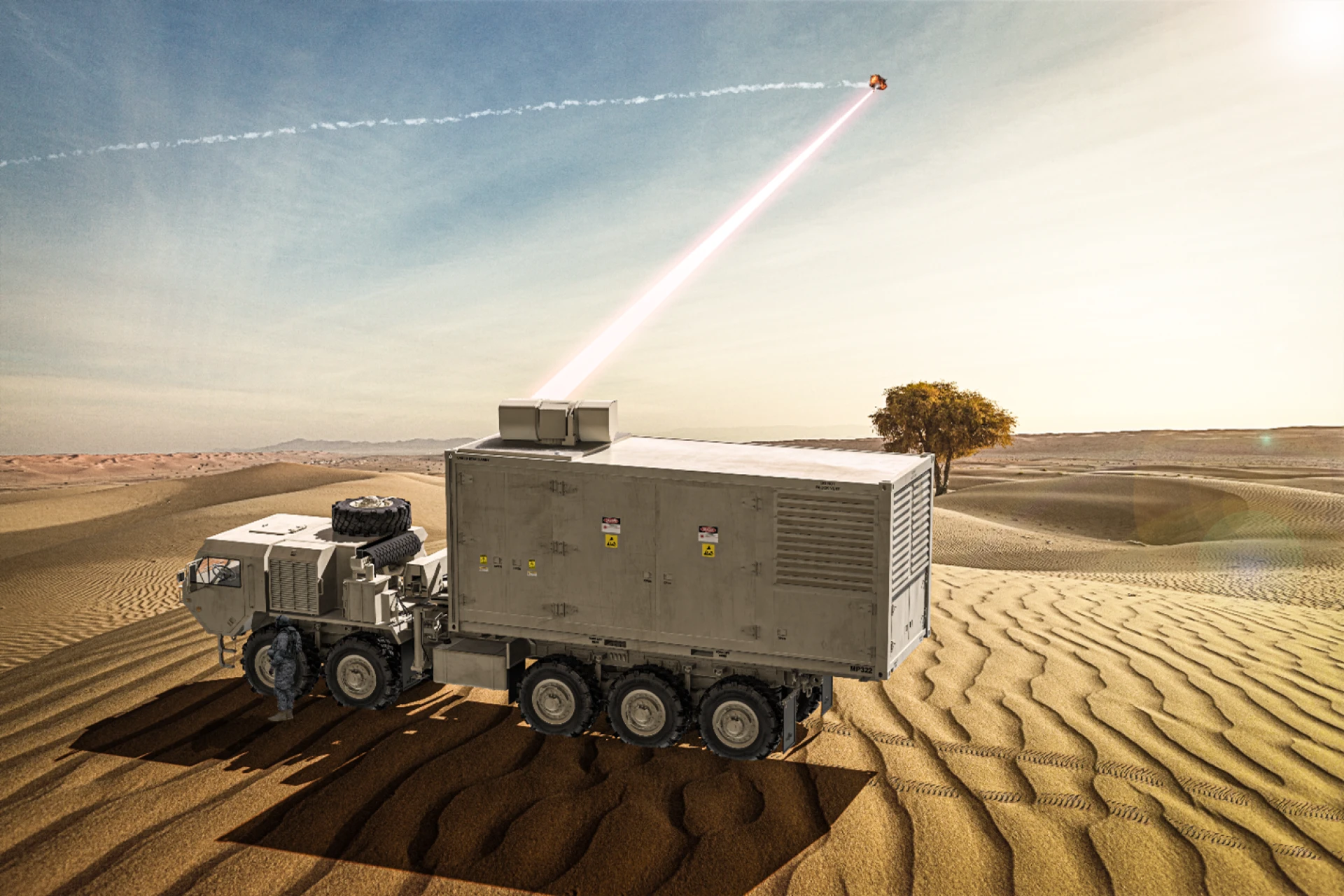
💡High-power laser systems require sophisticated AI for real-time target acquisition and beam stabilization.
⚡ 30-Second TL;DR
What Changed
Awarded $86 million contract for JLWS development
Why It Matters
This represents a significant shift in defense infrastructure toward directed-energy weapons, which rely heavily on AI-driven targeting and beam control systems.
What To Do Next
Research current state-of-the-art computer vision algorithms for high-speed object tracking in defense-grade hardware.
Who should care:Developers & AI Engineers
Key Points
- •Awarded $86 million contract for JLWS development
- •Targeting 500kW output power for high-energy laser
- •Designed to intercept next-generation cruise missiles
🧠 Deep Insight
AI-generated analysis for this event.
🔑 Enhanced Key Takeaways
- •The JLWS program is part of the Pentagon's broader 'Directed Energy Weapon' (DEW) initiative, specifically focusing on scaling power levels beyond the current 100kW-300kW threshold.
- •This contract leverages Spectral Beam Combining (SBC) technology, which allows multiple fiber laser modules to be phased together to achieve the 500kW output without sacrificing beam quality.
- •The system is being designed for integration onto heavy-duty platforms, such as the HEMTT A4 tactical truck, to provide mobile air defense capabilities for ground forces.
- •The project includes a specific requirement for 'deep magazine' capability, allowing the system to engage targets at a significantly lower cost-per-shot compared to traditional kinetic interceptors like the Patriot or AMRAAM missiles.
- •Development efforts are being coordinated with the Office of the Under Secretary of Defense for Research and Engineering (OUSD(R&E)) to ensure interoperability with existing Integrated Air and Missile Defense (IAMD) battle command systems.
📊 Competitor Analysis▸ Show
| System | Developer | Power Output | Primary Platform |
|---|---|---|---|
| HELIOS | Lockheed Martin | 60kW+ | Naval Vessels |
| IFPC-HEL | Dynetics/Lockheed | 300kW | Ground Vehicles |
| Layered Laser Defense | Lockheed Martin | 100kW | Naval/Ground |
| Tactical Fiber Laser | Northrop Grumman | 150kW | Various |
🛠️ Technical Deep Dive
- Architecture: Utilizes a modular fiber laser array architecture that enables field-replaceable units to maintain operational availability.
- Beam Control: Incorporates advanced adaptive optics to compensate for atmospheric turbulence, ensuring high energy density at ranges exceeding 10km.
- Thermal Management: Employs a closed-loop liquid cooling system capable of dissipating the massive heat loads generated by 500kW operation in desert environments.
- Power Source: Integrates high-density lithium-ion battery buffers combined with auxiliary power units to manage the high peak power demands during engagement cycles.
🔮 Future ImplicationsAI analysis grounded in cited sources
The JLWS will achieve initial operational capability (IOC) for field testing by late 2027.
The current $86 million contract structure aligns with a rapid prototyping timeline typical of DoD directed energy acquisition cycles.
Deployment of 500kW systems will reduce the cost-per-intercept for cruise missile defense by over 90%.
Directed energy weapons eliminate the need for expensive kinetic interceptor missiles, relying instead on electricity and fuel.
⏳ Timeline
2022-08
DoD releases updated Directed Energy Strategy focusing on scaling power for ground-based air defense.
2024-03
Initial feasibility studies for 500kW-class fiber laser architectures completed by defense contractors.
2025-11
Successful laboratory demonstration of phased beam combining reaching 450kW output.
2026-07
Department of Defense awards $86 million contract for formal JLWS development.
📰
Weekly AI Recap
Read this week's curated digest of top AI events →
👉Related Updates



AI-curated news aggregator. All content rights belong to original publishers.
Original source: cnBeta (Full RSS) ↗