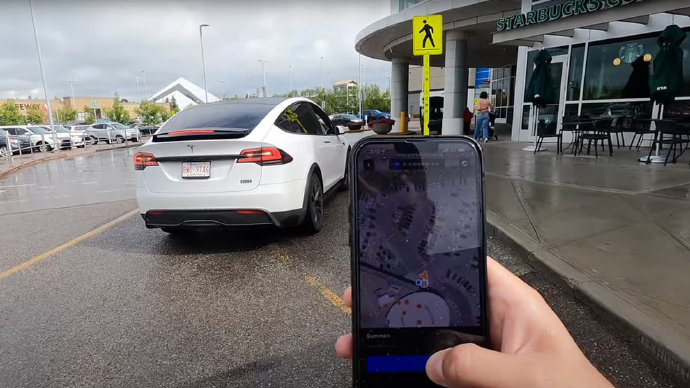
US Ends Tesla Smart Summon Safety Probe
💡Tesla AV safety probe closed: rare low-severity crashes validate autonomy AI progress
⚡ 30-Second TL;DR
What Changed
US agency terminates investigation into Tesla's 'True Smart Summon'
Why It Matters
Eases regulatory pressure on Tesla's Full Self-Driving suite, signaling maturing AV safety data. AI developers in autonomy gain precedent for low-incident features.
What To Do Next
Benchmark your AV parking models against Tesla's low collision rates from the report.
Key Points
- •US agency terminates investigation into Tesla's 'True Smart Summon'
- •Related accidents extremely rare and low-speed only
- •All incidents had non-serious consequences
- •Boosts confidence in Tesla's autonomous parking AI
🧠 Deep Insight
AI-generated analysis for this event — not the original article.
🔑 Enhanced Key Takeaways
- •The National Highway Traffic Safety Administration (NHTSA) investigation specifically focused on the 'Actually Smart Summon' (ASS) update, which utilizes Tesla's end-to-end neural network architecture rather than the legacy Summon code.
- •Tesla implemented several over-the-air (OTA) software updates during the pendency of the probe that improved object detection and path planning, which contributed to the agency's decision to close the case.
- •The closure of this probe does not preclude future regulatory action if new data suggests a pattern of safety issues, as the NHTSA maintains ongoing monitoring of all Advanced Driver Assistance Systems (ADAS).
📊 Competitor Analysis▸ Show
| Feature | Tesla (Actually Smart Summon) | Mercedes-Benz (Intelligent Park Pilot) | Waymo (Valet/Parking) |
|---|---|---|---|
| Architecture | Vision-only (End-to-End AI) | Sensor Fusion (LiDAR/Radar/Camera) | Sensor Fusion (High-Def Mapping) |
| Environment | Unrestricted (Parking lots) | Restricted (Pre-mapped garages) | Restricted (Geofenced areas) |
| Pricing | Included in FSD Package | Subscription/Feature-on-Demand | N/A (Robotaxi service) |
🛠️ Technical Deep Dive
- •Transitioned from heuristic-based code to a vision-based, end-to-end neural network (v12 architecture) that processes raw video input to output steering, braking, and acceleration commands.
- •Utilizes Occupancy Networks to create a real-time 3D representation of the environment, allowing the vehicle to identify and navigate around dynamic obstacles like shopping carts or pedestrians.
- •Incorporates 'Vector Space' mapping, which allows the vehicle to understand lane markings, curbs, and parking spot boundaries without relying on pre-existing high-definition maps.
🔮 Future ImplicationsAI analysis grounded in cited sources
⏳ Timeline
Weekly AI Recap
Read this week's curated digest of top AI events →
👉Related Updates
AI-curated news aggregator. All content rights belong to original publishers.
Original source: cnBeta (Full RSS) ↗
This is a summary, not the original. Read the source, or get the weekly briefing.
The weekly digest
One email a week. Unsubscribe anytime.