US Chip Curbs on China Risk Global Supply Chaos
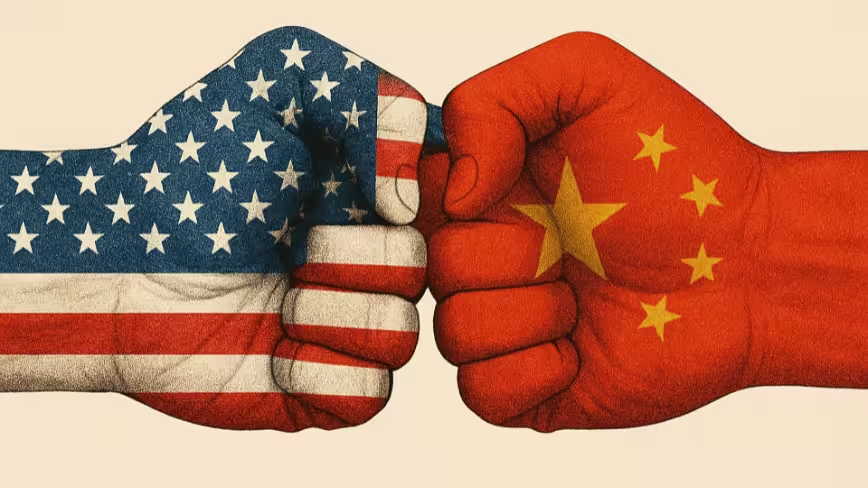
💡US MATCH Act could shatter chip supply for AI GPUs—plan your hardware diversification now
⚡ 30-Second TL;DR
What Changed
MATCH Act passes US Congress to block China chip tools
Why It Matters
Escalating US-China chip restrictions could spike AI hardware costs worldwide and delay GPU/TPU deployments. AI firms may need to diversify suppliers beyond Nvidia and TSMC.
What To Do Next
Evaluate alternative chip suppliers like AMD or domestic fabs for your AI training infrastructure.
Key Points
- •MATCH Act passes US Congress to block China chip tools
- •China warns of severed global semiconductor supply chains
- •Targets multilateral tech controls on hardware exports
- •Threatens international economic and trade stability
🧠 Deep Insight
AI-generated analysis for this event — not the original article.
🔑 Enhanced Key Takeaways
- •The MATCH Act specifically mandates the Department of Commerce to revoke existing export licenses for deep ultraviolet (DUV) lithography equipment to Chinese entities, closing loopholes previously exploited by firms like ASML.
- •The legislation includes a 'reciprocity clause' that threatens to withhold US federal research grants from allied nations if their domestic semiconductor equipment manufacturers continue to supply the Chinese market.
- •Industry analysts estimate the act will force a 15-20% increase in capital expenditure for global chipmakers as they are forced to decouple their supply chains from Chinese-manufactured legacy nodes.
🔮 Future ImplicationsAI analysis grounded in cited sources
⏳ Timeline
Weekly AI Recap
Read this week's curated digest of top AI events →
👉Related Updates


AI-curated news aggregator. All content rights belong to original publishers.
Original source: The Next Web (TNW) ↗
This is a summary, not the original. Read the source, or get the weekly briefing.
The weekly digest
One email a week. Unsubscribe anytime.