US 301 Probe Hits Singapore Chips
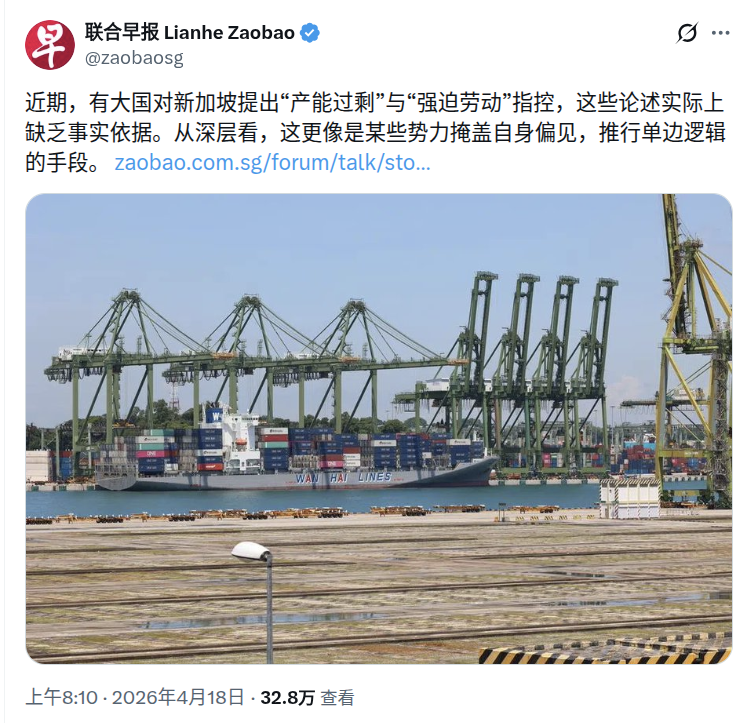
💡US trade probe threatens Singapore's chip hub, impacting AI compute supply
⚡ 30-Second TL;DR
What Changed
Singapore chip capacity at 10% global, hosts TSMC, GlobalFoundries, Micron, Infineon
Why It Matters
Potential tariffs could hike AI chip costs by disrupting Singapore's role in global supply chains, forcing AI firms to diversify sources.
What To Do Next
Assess exposure to Singapore fabs in your AI GPU supply chain via TSMC status updates.
Key Points
- •Singapore chip capacity at 10% global, hosts TSMC, GlobalFoundries, Micron, Infineon
- •US claims overcapacity despite 74.6% utilization matching US levels
- •Singapore reports $270B US trade deficit and zero forced labor detentions
🧠 Deep Insight
Background and context from public sources — not the original article. 6 sources cited.
🔑 Enhanced Key Takeaways
- •The USTR investigation into Singapore is part of a broader, sweeping set of Section 301 probes initiated on March 11, 2026, targeting 16 economies for structural excess capacity and 60 economies for forced labor enforcement, following the invalidation of previous IEEPA-based tariffs.
- •Singapore's Ministry of Trade and Industry (MTI) successfully challenged the USTR's initial claim of a US$27 billion trade surplus with Singapore, forcing the USTR to remove the inaccurate statement from its Federal Register notice; official data confirms the US actually maintains a significant and growing trade surplus with Singapore.
- •Beyond the Section 301 investigations, Singapore has been subject to a 10% tariff on exports to the US since February 24, 2026, under Section 122 of the Trade Act, which remains in effect while the administration seeks to establish new legal grounds for its broader tariff program.
🔮 Future ImplicationsAI analysis grounded in cited sources
⏳ Timeline
📎 Sources (6)
Factual claims are grounded in the sources below. Forward-looking analysis is AI-generated interpretation.
Weekly AI Recap
Read this week's curated digest of top AI events →
👉Related Updates

AI-curated news aggregator. All content rights belong to original publishers.
Original source: 虎嗅 ↗
This is a summary, not the original. Read the source, or get the weekly briefing.
The weekly digest
One email a week. Unsubscribe anytime.