Unpacking Zhipu AI's Trillion-Dollar Valuation
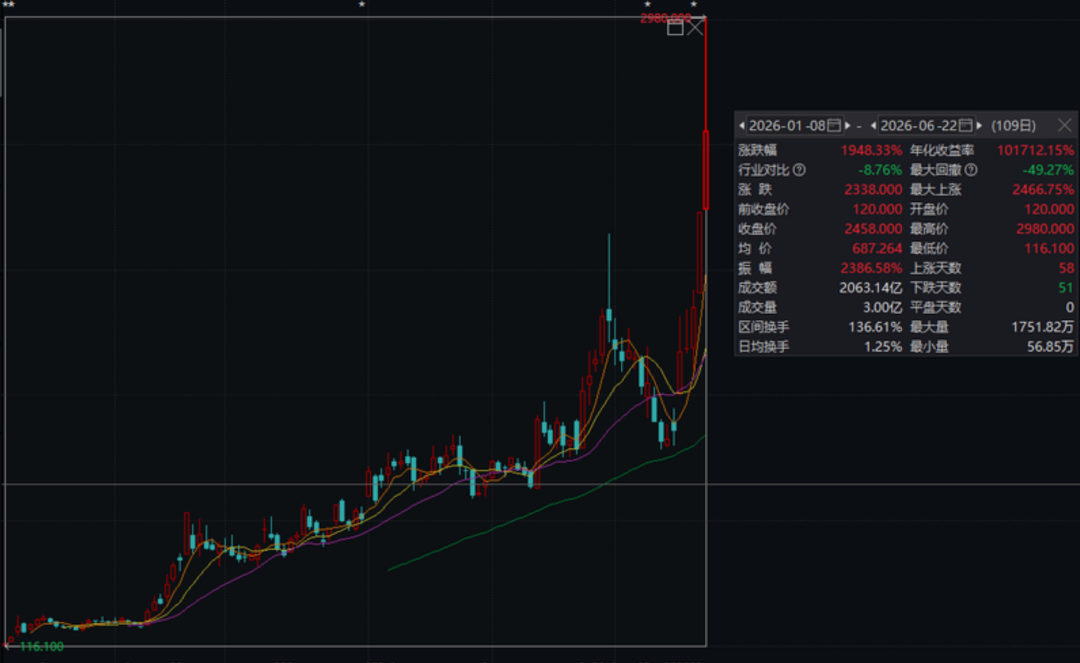
Understand the capital and hardware trends driving China's top-tier LLM development.
30-Second TL;DR
What Changed
Zhipu AI's valuation reflects high market expectations for AGI
Why It Matters
The company's growth trajectory signals a sustained capital inflow into the Chinese AI infrastructure and chip supply chain.
What To Do Next
Monitor Zhipu AI's open-source model releases to benchmark against international LLMs for local deployment.
Key Points
- •Zhipu AI's valuation reflects high market expectations for AGI
- •Strong correlation between LLM development and domestic semiconductor demand
- •Strategic positioning in the Chinese AI ecosystem
Deep Insight
AI-generated analysis for this event — not the original article.
Enhanced Key Takeaways
- •Zhipu AI originated from the Knowledge Engineering Group (KEG) at Tsinghua University, maintaining a unique 'academic-to-industry' pipeline that differentiates its talent acquisition from pure commercial startups.
- •The company has secured significant strategic investment from major Chinese tech conglomerates including Alibaba, Tencent, and Meituan, creating a 'moat' through ecosystem integration rather than just standalone model performance.
- •Zhipu AI's GLM (General Language Model) architecture utilizes a unique bidirectional dense-sparse hybrid approach, which the company claims optimizes inference efficiency compared to standard Transformer architectures.
- •The firm has actively pursued a 'Model-as-a-Service' (MaaS) strategy, focusing on private deployment solutions for state-owned enterprises and government sectors to comply with China's strict data localization regulations.
- •Zhipu AI has been a primary beneficiary of the 'Big Model' subsidy programs in Beijing, which provide computational credits and infrastructure support to accelerate domestic AGI development.
Competitor Analysis
- Zhipu AI (GLM)
- GLM (Hybrid)
- Baidu (Ernie)
- ERNIE (Knowledge-Enhanced)
- Moonshot AI (Kimi)
- Long-Context Transformer
- Zhipu AI (GLM)
- Enterprise/Gov Private Cloud
- Baidu (Ernie)
- Consumer/Search Integration
- Moonshot AI (Kimi)
- Long-Context/Consumer Apps
- Zhipu AI (GLM)
- Reasoning & Coding
- Baidu (Ernie)
- Multimodal/Search
- Moonshot AI (Kimi)
- Context Window Length
| Feature | Zhipu AI (GLM) | Baidu (Ernie) | Moonshot AI (Kimi) |
|---|---|---|---|
| Core Architecture | GLM (Hybrid) | ERNIE (Knowledge-Enhanced) | Long-Context Transformer |
| Primary Market | Enterprise/Gov Private Cloud | Consumer/Search Integration | Long-Context/Consumer Apps |
| Benchmark Focus | Reasoning & Coding | Multimodal/Search | Context Window Length |
Technical Deep Dive
- Architecture: Utilizes the GLM (General Language Model) framework, which combines the advantages of autoregressive and autoencoding models.
- Training Methodology: Employs a multi-stage training process involving supervised fine-tuning (SFT) and reinforcement learning from human feedback (RLHF) specifically tuned for Chinese linguistic nuances.
- Inference Optimization: Implements proprietary quantization techniques to reduce memory footprint, enabling deployment on domestic AI chips like Huawei Ascend series.
- Context Handling: Recent iterations have focused on massive context window expansion, utilizing sparse attention mechanisms to maintain performance over long-form document analysis.
Future ImplicationsAI analysis grounded in cited sources
Timeline
- 2019-09Zhipu AI is officially incorporated as a commercial entity spun out of Tsinghua University.
- 2022-08Release of GLM-130B, a bilingual (Chinese/English) open-source model that gained international attention.
- 2023-06Zhipu AI achieves 'Unicorn' status following a major funding round led by top-tier Chinese venture capital.
- 2024-01Launch of GLM-4, marking a significant leap in multimodal capabilities and reasoning performance.
- 2025-05Company announces strategic partnerships with major domestic semiconductor firms to optimize model performance on local silicon.
Weekly AI Recap
Read this week's curated digest of top AI events →
AI-curated news aggregator. All content rights belong to original publishers.
Original source: 钛媒体 ↗
This is a summary, not the original. Read the source, or get the weekly briefing.
The weekly digest
One email a week. Unsubscribe anytime.