Unitree Robotics navigates hardware success and AI brain gap
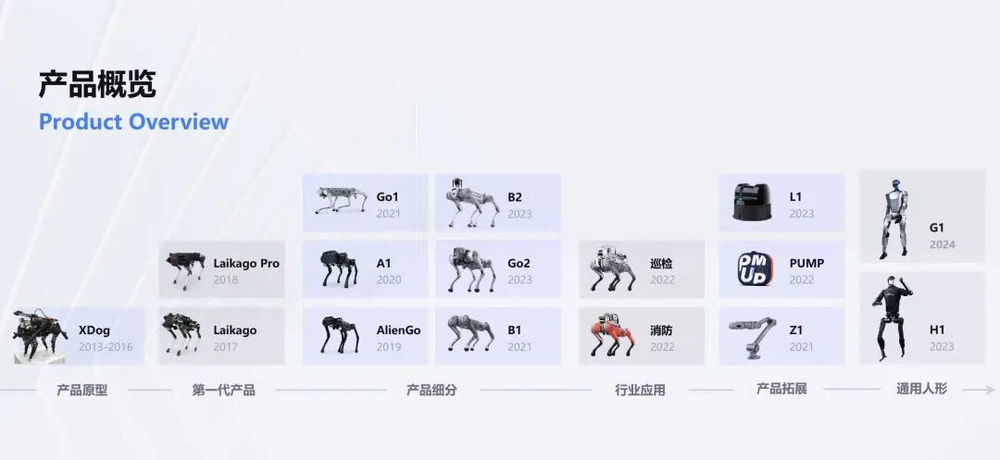
See how a leading robotics firm is pivoting from hardware cost-cutting to AI-model-driven intelligence.
30-Second TL;DR
What Changed
Unitree achieved 60% gross margin by self-producing over 90% of key components like motors.
Why It Matters
Unitree's pivot highlights the industry-wide transition from 'hardware-first' to 'software-defined' robotics, setting a benchmark for other embodied AI startups.
What To Do Next
Evaluate the integration of Nvidia GR00T or similar embodied AI frameworks if you are building robotic control systems.
Key Points
- •Unitree achieved 60% gross margin by self-producing over 90% of key components like motors.
- •Revenue growth slowed to 68% in Q1 2026, with rising R&D costs impacting net profit.
- •Strategic shift toward 'embodied AI' models is now the primary focus for future competitiveness.
Deep Insight
AI-generated analysis for this event — not the original article.
Enhanced Key Takeaways
- •Unitree has expanded its product ecosystem beyond humanoids to include the G1 and H1 series, alongside quadruped robots like the Go2, which serve as data-collection platforms for their embodied AI training.
- •The company has established a dedicated 'Embodied AI Research Institute' in Hangzhou to bridge the gap between hardware control and large-scale foundation models.
- •Unitree's supply chain strategy includes proprietary motor and reducer designs that allow for high torque-to-weight ratios, specifically optimized for the dynamic movements required in bipedal locomotion.
- •Recent partnerships with domestic Chinese automotive manufacturers are being leveraged to test humanoid robots in factory assembly line environments for real-world data acquisition.
- •The company is actively recruiting top-tier talent from global AI labs to implement end-to-end imitation learning and reinforcement learning architectures, moving away from traditional rule-based control systems.
Competitor Analysis
- Unitree (H1/G1)
- Cost-effective hardware
- Tesla (Optimus)
- Full-stack AI integration
- Figure AI (Figure 02)
- Industrial automation
- Unitree (H1/G1)
- ~$16,000 - $90,000
- Tesla (Optimus)
- Projected <$20,000
- Figure AI (Figure 02)
- High (Enterprise)
- Unitree (H1/G1)
- Vertical integration
- Tesla (Optimus)
- FSD/Neural Net scale
- Figure AI (Figure 02)
- Human-like dexterity
| Feature | Unitree (H1/G1) | Tesla (Optimus) | Figure AI (Figure 02) |
|---|---|---|---|
| Primary Focus | Cost-effective hardware | Full-stack AI integration | Industrial automation |
| Pricing | ~$16,000 - $90,000 | Projected <$20,000 | High (Enterprise) |
| Key Strength | Vertical integration | FSD/Neural Net scale | Human-like dexterity |
Technical Deep Dive
- Actuator Architecture: Utilizes high-torque density joint motors with integrated planetary gearboxes designed for high-frequency impact resistance.
- Control Stack: Transitioning from traditional Model Predictive Control (MPC) to hybrid architectures incorporating Transformer-based policy networks for sensorimotor tasks.
- Sensor Suite: Employs 3D LiDAR and depth cameras for SLAM (Simultaneous Localization and Mapping) combined with proprietary visual-language models for object recognition.
- Compute: On-board processing utilizes high-performance edge AI chips capable of handling real-time kinematic calculations and low-latency motor feedback loops.
Future ImplicationsAI analysis grounded in cited sources
Timeline
- 2017-08Unitree Robotics founded by Wang Xingxing.
- 2021-06Launch of the B1 industrial quadruped robot.
- 2023-12Official release of the H1 general-purpose humanoid robot.
- 2024-05Unveiling of the G1 humanoid robot with a focus on mass-market accessibility.
- 2026-01Strategic pivot announced toward embodied AI foundation models.
Event Coverage
Weekly AI Recap
Read this week's curated digest of top AI events →
Related Updates
AI-curated news aggregator. All content rights belong to original publishers.
Original source: 虎嗅 ↗
This is a summary, not the original. Read the source, or get the weekly briefing.
The weekly digest
One email a week. Unsubscribe anytime.