Unitree Robotics IPO approval and market competition

💡Unitree is the first major humanoid robot IPO; essential reading for anyone tracking the embodied AI market.
⚡ 30-Second TL;DR
What Changed
Unitree IPO approved, potentially becoming the first A-share humanoid robot company.
Why It Matters
Unitree's success highlights the rapid commercialization of embodied AI, setting a benchmark for hardware-software integration in the robotics industry.
What To Do Next
Monitor Unitree's public financial disclosures to benchmark your own robotics hardware cost-to-performance ratios.
Key Points
- •Unitree IPO approved, potentially becoming the first A-share humanoid robot company.
- •2025 humanoid robot shipments exceeded 5,500 units with significant revenue growth.
- •Market competition is intensifying with over 140 Chinese humanoid robot manufacturers.
🧠 Deep Insight
Background and context from public sources — not the original article. 25 sources cited.
🔑 Enhanced Key Takeaways
- •Unitree's IPO on the Shanghai STAR Market was approved in an unusually fast 73-day timeline, targeting a $6.2 billion (42 billion yuan) valuation.
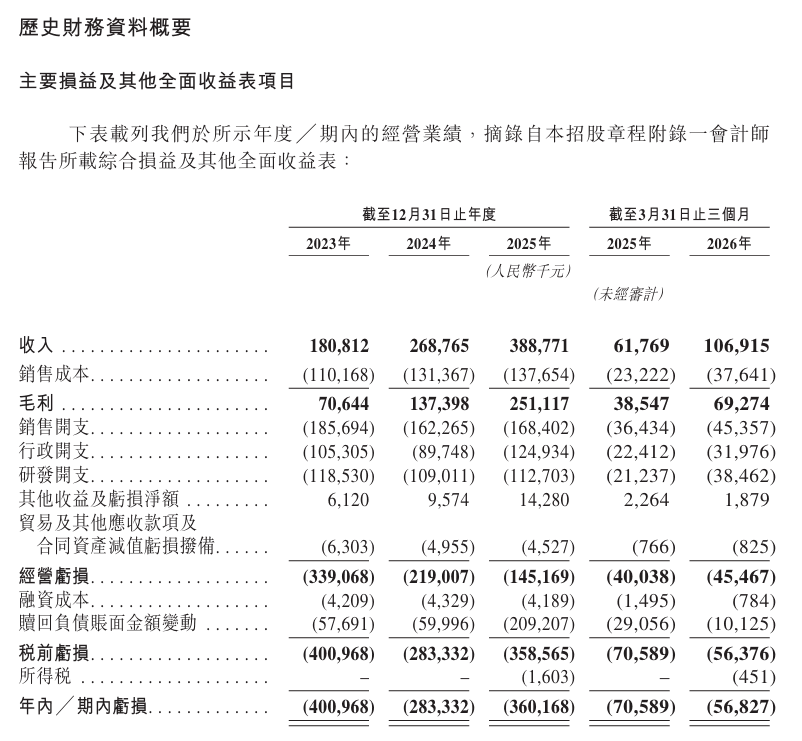
- •The company achieved 1.699 billion yuan ($250.045 million) in revenue in 2025 and has maintained profitability since 2020.
- •Humanoid robots now constitute 51.5% of Unitree's revenue, marking a strategic pivot from its traditional quadruped business, and Chinese firms collectively shipped nearly 90% of global humanoid robots in 2025.
📊 Competitor Analysis▸ Show
| Feature | Unitree H1 | Unitree G1 | Tesla Optimus (Gen 2/3) | Agility Robotics Digit | Apptronik Apollo |
|---|---|---|---|---|---|
| Price (USD) | ~$90,000 | From $16,000 | Not specified (high-end) | ~$250,000+ | Not specified |
| Height | 180 cm (5 ft 11 in) | Not specified | Not specified | Not specified | 173 cm (5 ft 8 in) |
| Weight | 47 kg (104 lbs) | Not specified | Not specified | Not specified | 72.6 kg (160 lbs) |
| Max Speed | 3.3 m/s (running) | Not specified | 0.6 m/s (walking, Gen 2) | Not specified | Not specified |
| Max Joint Torque | 360 N·m (knee) | Not specified | Not specified | Not specified | Not specified |
| Battery/Runtime | 864 Wh (1.5-2 hrs) | Not specified | Not specified (90 min for Atlas) | Not specified | 4 hours |
| Payload | Not specified | 2 kg | Not specified | Not specified | 25 kg (55 lbs) |
| Key Features | ROS2 compatible, 360° 3D perception (LiDAR + depth camera) | AI-driven learning, force control dexterous hand | Human-like movements, mass production focus | Deployed in warehouses | General-purpose, human-like attributes |
🛠️ Technical Deep Dive
- Unitree H1 Humanoid Robot:
- Height: 1.80 m (5 ft 11 in)
- Weight: 47 kg (104 lbs)
- Degrees of Freedom (DOF): 19 total (including body-shoulder, shoulder, upper arm, elbow joints for arms; hip, leg, knee, ankle motions for legs; and a waist joint). The H1-2 variant features 6 DOF per leg and 7 DOF per arm.
- Max Running Speed: 3.3 m/s (7.4 mph / 11.9 km/h), with potential mobility exceeding 5 m/s.
- Max Joint Torque: 360 N·m at the knee joint, with a peak torque density of 189 N·m/kg.
- Battery: 864 Wh capacity (15Ah, 67.2V max), quickly-replaceable, providing approximately 1.5-2 hours of runtime.
- Sensors: 360° 3D perception achieved with a 3D LiDAR (MID-360) and a depth camera (Intel RealSense D435i).
- Computing: Standard configuration includes Intel Core i5 (platform function) and Intel Core i7 (user development) processors, with optional NVIDIA Jetson Orin NX modules (up to 100 TOPS).
- Actuators: Utilizes self-developed M107 joint motors, characterized by low inertia, high-speed internal rotor Permanent Magnet Synchronous Motors (PMSM), and dual encoders for precise control. Joints are supported by industrial-grade crossed roller bearings.
- Software: ROS-compatible, with APIs and SDKs provided for development.
- Unitree B2 Quadruped Robot:
- Weight: Approximately 60 kg (including battery).
- Ingress Protection: Rated at IP67, indicating high resistance to dust and water.
- Max Running Speed: Greater than 6 m/s.
- Max Joint Torque: About 360 N·m.
- Battery: 45Ah (2250 Wh, 58V), providing 4-6 hours of battery life.
- Payload: Capable of carrying over 40 kg while walking and supporting up to 120 kg when standing.
- Sensors: Equipped with 3D LIDAR (RS-Helioshelios 5515) and a depth camera (Intel RealSense D435i).
- Features: Offers an optional wheeled foot configuration for enhanced mobility on varied terrains.
🔮 Future ImplicationsAI analysis grounded in cited sources
⏳ Timeline
📎 Sources (25)
Factual claims are grounded in the sources below. Forward-looking analysis is AI-generated interpretation.
- aiweekly.co
- businesstimes.com.sg
- sse.com.cn
- upmarket.co
- gasgoo.com
- 36kr.com
- visualcapitalist.com
- robozaps.com
- robotshop.com
- usrobotstore.com
- wikipedia.org
- therobotreport.com
- robozaps.com
- youtube.com
- generationrobots.com
- qviro.com
- youtube.com
- robostore.com
- quadruped.de
- quadruped.de
- unitree.com
- westonrobot.com
- robostore.com
- therobotreport.com
- roboticscenter.ai
Weekly AI Recap
Read this week's curated digest of top AI events →
👉Related Updates


AI-curated news aggregator. All content rights belong to original publishers.
Original source: 虎嗅 ↗
This is a summary, not the original. Read the source, or get the weekly briefing.
The weekly digest
One email a week. Unsubscribe anytime.