Unitree, DeepRobotics, and Agibot: The Race for IPOs
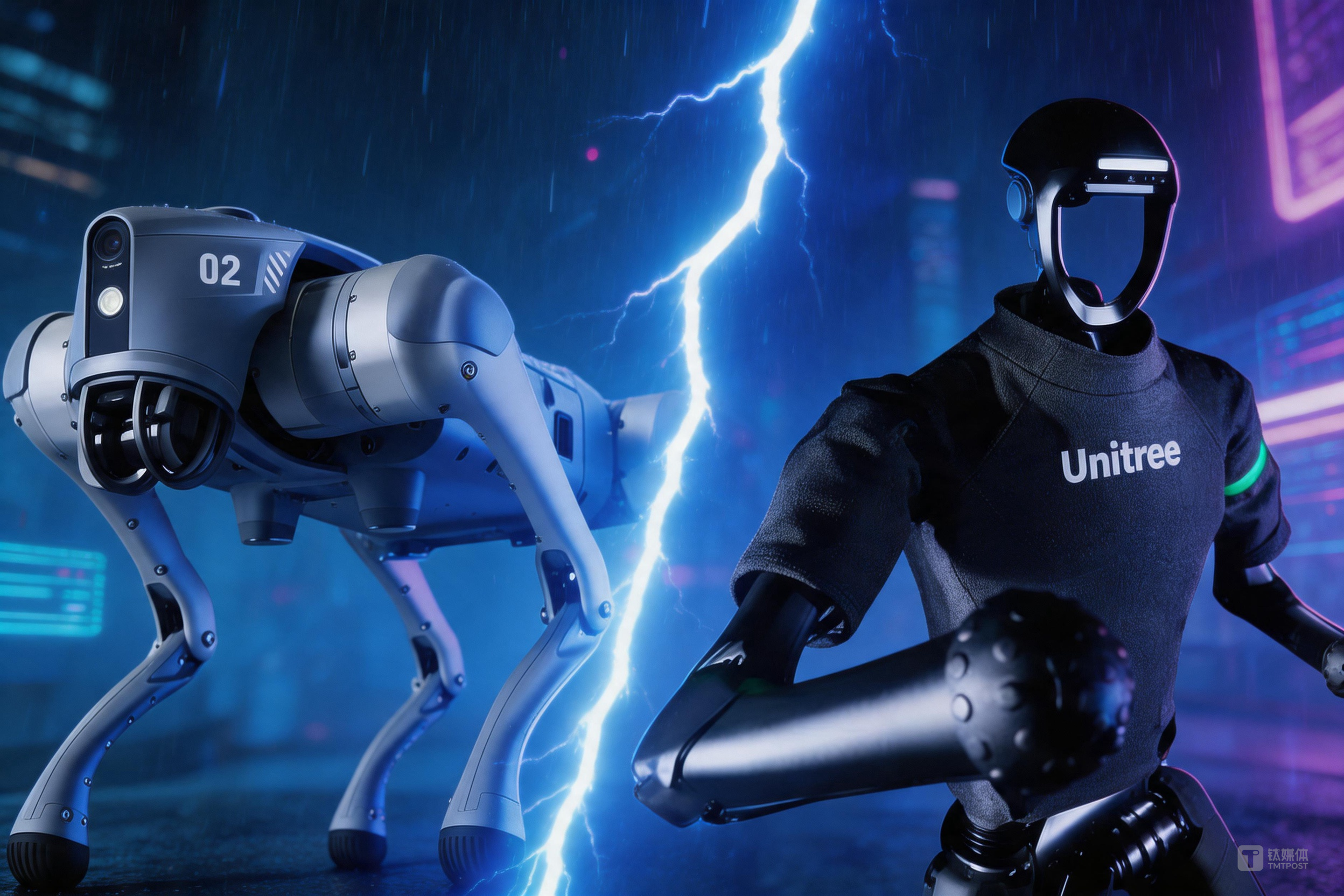
Understand the commercialization roadmap and competitive landscape of China's top humanoid robotics firms.
30-Second TL;DR
What Changed
Unitree, DeepRobotics, and Agibot are all pursuing public listings to secure capital.
Why It Matters
The move toward IPOs signals that the embodied AI industry is maturing, with investors shifting focus from pure research to scalable manufacturing and application deployment.
What To Do Next
Monitor the technical whitepapers and hardware specifications released by these companies to benchmark your own embodied AI integration strategies.
Key Points
- •Unitree, DeepRobotics, and Agibot are all pursuing public listings to secure capital.
- •The humanoid robotics industry is shifting from R&D to commercialization and mass production.
- •Core technological 'moats' are the primary factor determining long-term survival in the sector.
- •Capital market pressure is forcing these companies to demonstrate clear paths to profitability.
Deep Insight
Background and context from public sources — not the original article. 32 sources cited.
Enhanced Key Takeaways
- •Unitree's IPO application for Shanghai's STAR Market was accepted on March 20, 2026, aiming to raise CNY 4.2 billion (USD 608 million) and targeting a post-IPO valuation of USD 3-7 billion, with humanoid robot revenue surpassing quadruped revenue in 2025.
- •Agibot is planning a Hong Kong IPO in 2026, targeting a valuation between US$5.1-6.4 billion, and was the world's largest humanoid robot producer by volume in 2025, shipping over 5,168 units and capturing a 39% global market share.
- •DeepRobotics' IPO application for Shanghai's STAR Market was accepted on May 18, 2026, aiming to raise CNY 2.5 billion (USD 367.4 million), having achieved profitability in 2025 with overseas revenue accounting for almost a fifth of its income.
- •The broader Chinese humanoid robotics market, which shipped 90% of the world's humanoid robots in 2025, faces a reality check as only 23% of surveyed enterprises are satisfied with current products, suggesting a looming industry shake-out despite aggressive pricing and high shipment volumes.
- •Unitree employs a vertically integrated manufacturing and supply chain strategy with over 90% domestic component sourcing, which contributes to cost benefits, supply chain resilience, and a reported 60.27% gross margin in 2025.
Competitor Analysis
- Unitree H1
- ~180 cm
- Agibot A2
- 169 cm
- Unitree H1
- ~47 kg
- Agibot A2
- 69 kg (Standard)
- Unitree H1
- 3.3 m/s (running), potential >5 m/s
- Agibot A2
- Walking speed not explicitly stated for A2, but X1 is 1 m/s (3.6 km/h)
- Unitree H1
- 5 per leg, 4 per arm (expandable)
- Agibot A2
- 40+
- Unitree H1
- Not explicitly stated for H1, but arm joint torque is 75 N·m
- Agibot A2
- 15 kg per arm
- Unitree H1
- 864 Wh
- Agibot A2
- 117 Wh (A2), 2 kWh (A2-W industrial)
- Unitree H1
- ~$90,000
- Agibot A2
- $100,000–$190,000
- Unitree H1
- 5,500+ units (world's top-shipping humanoid)
- Agibot A2
- 5,168+ units (world's largest producer by volume)
| Feature/Benchmark | Unitree H1 | Agibot A2 |
|---|---|---|
| Height | ~180 cm | 169 cm |
| Weight | ~47 kg | 69 kg (Standard) |
| Max Speed | 3.3 m/s (running), potential >5 m/s | Walking speed not explicitly stated for A2, but X1 is 1 m/s (3.6 km/h) |
| Degrees of Freedom (DoF) | 5 per leg, 4 per arm (expandable) | 40+ |
| Max Arm Payload | Not explicitly stated for H1, but arm joint torque is 75 N·m | 15 kg per arm |
| Battery Capacity | 864 Wh | 117 Wh (A2), 2 kWh (A2-W industrial) |
| Estimated Price | ~$90,000 | $100,000–$190,000 |
| 2025 Shipments | 5,500+ units (world's top-shipping humanoid) | 5,168+ units (world's largest producer by volume) |
Technical Deep Dive
-
Unitree H1 Humanoid Robot:
- Height: Approximately 180 cm
- Weight: Approximately 47 kg
- Degrees of Freedom (DoF): 5 per leg (Hip × 3 + Knee × 1 + Ankle × 1), 4 per arm (expandable)
- Moving Speed: Achieved 3.3 m/s (world record for full-size humanoids at the time), with potential mobility exceeding 5 m/s
- Battery: 864 Wh, quick-release, providing approximately 1.5–2 hours of runtime
- Sensors: Equipped with 3D LiDAR (LIVOX-MID360) and Intel RealSense D435i depth camera for 360° perception
- Max Joint Torque: 360 N·m at the knee joint, 220 N·m at the hip joint, 59 N·m at the ankle, and 75 N·m at the arm joint
- Peak Torque Density: 189 N·m/kg
- Computing Power: Standard configuration includes Intel Core i5 (platform function) and Intel Core i7 (user development), with optional Jetson Orin NX
- Software: Supports ROS2 and offers OTA updates
-
AgiBot Humanoid Robots (X1, X2 Ultra, A2 Series):
- AgiBot X1:
- Height: 130 cm
- Weight: 33 kg
- DoF: 34
- Arm Payload: 0.5 kg
- Walking Speed: 3.6 km/h (1 m/s)
- Battery Runtime: 2 hours
- Technology: Features PowerFlow servo tech and quasi-direct-drive joints
- Price: Under US $20,000 (targeted for research and maker communities)
- AgiBot X2 Ultra:
- Height: Approximately 1.31 m (1310 mm)
- Weight: Approximately 39 kg
- DoF: 30, including 1 at the neck, 3 at the waist, 7 per arm, and 6 per leg
- Sensors: Integrates 3D LiDAR, RGB-D camera, interactive RGB cameras, head touch sensor, microphone array, and speaker
- Computing Power: Dual RK3588 boards and a high-performance NVIDIA Orin NX (157 TOPS) board
- Features: Supports autonomous navigation, obstacle avoidance, automatic charging, multimodal interaction (vision, voice, touch, facial expressions), and secondary development
- AgiBot A2 Series (Flagship Bipedal Humanoid):
- Height: 169 cm (5'9")
- Weight: 69 kg (Standard model), with variants up to 85 kg
- DoF: 40+
- Arm Payload: Can carry 15 kg per arm
- Battery: 117 Wh (A2), with a 2 kWh option (A2-W) for industrial use
- Design Philosophy: Based on "One Robotic Body, Three Intelligences" (Motion, Interaction, Task Intelligence), human-scale anthropomorphic design, and industrial-grade construction with an automotive-grade component supply chain
- AgiBot X1:
Future ImplicationsAI analysis grounded in cited sources
Timeline
- 2016Unitree Robotics founded in Hangzhou.
- 2017DeepRobotics founded in Hangzhou.
- 2023-02Agibot founded by Deng Taihua and Peng Zhihui.
- 2025-06Unitree Robotics completed its Series C financing round, pushing its valuation beyond $1 billion.
- 2025-12DeepRobotics raised over CNY 500 million (USD 70 million) in a Series C funding round.
- 2026-03-20Unitree Robotics' IPO application for Shanghai's STAR Market was formally accepted.
Sources (32)
Factual claims are grounded in the sources below. Forward-looking analysis is AI-generated interpretation.
Weekly AI Recap
Read this week's curated digest of top AI events →
AI-curated news aggregator. All content rights belong to original publishers.
Original source: 钛媒体 ↗
This is a summary, not the original. Read the source, or get the weekly briefing.
The weekly digest
One email a week. Unsubscribe anytime.