Unitree and Agibot to Dominate Humanoid Robot Market
💡Understand the market consolidation of China's top two humanoid robot firms and the shift toward mass production.
⚡ 30-Second TL;DR
What Changed
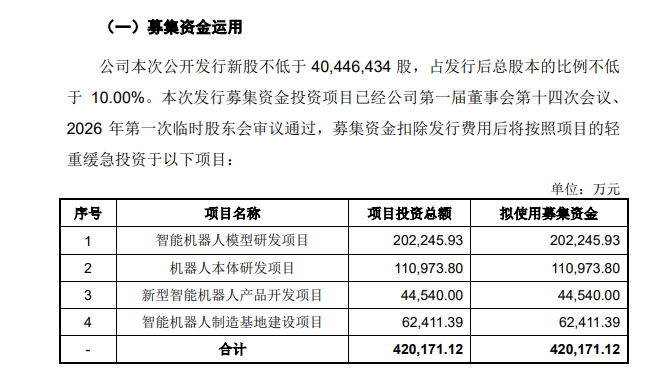
Unitree is set for an IPO on the Shanghai Stock Exchange, aiming to become the first publicly traded humanoid robot company.
Why It Matters
The dominance of these two firms suggests a 'Matthew effect' in the humanoid sector, where capital and production scale create high barriers to entry for smaller startups. Their progress serves as a benchmark for the commercial viability of embodied AI.
What To Do Next
Monitor the hardware specifications and API capabilities of Unitree's latest models to assess their suitability for integration into your own robotic automation workflows.
Key Points
- •Unitree is set for an IPO on the Shanghai Stock Exchange, aiming to become the first publicly traded humanoid robot company.
- •Agibot is accelerating commercialization through the acquisition of Shangwei New Materials, with co-founder Peng Zhihui taking a leadership role.
- •The two companies are projected to account for 80% of global humanoid robot shipments by 2026.
- •Despite rapid growth, the industry faces challenges including high costs, cooling rental demand, and the need for more mature embodied AI technology.
🧠 Deep Insight
Background and context from public sources — not the original article. 30 sources cited.
🔑 Enhanced Key Takeaways
- •Unitree's IPO on the Shanghai Stock Exchange is fast-tracked, aiming for a valuation of approximately 42 billion yuan (US$6.2 billion) and seeking to raise 4.2 billion yuan (US$608 million) primarily for R&D, new product design, and manufacturing expansion.
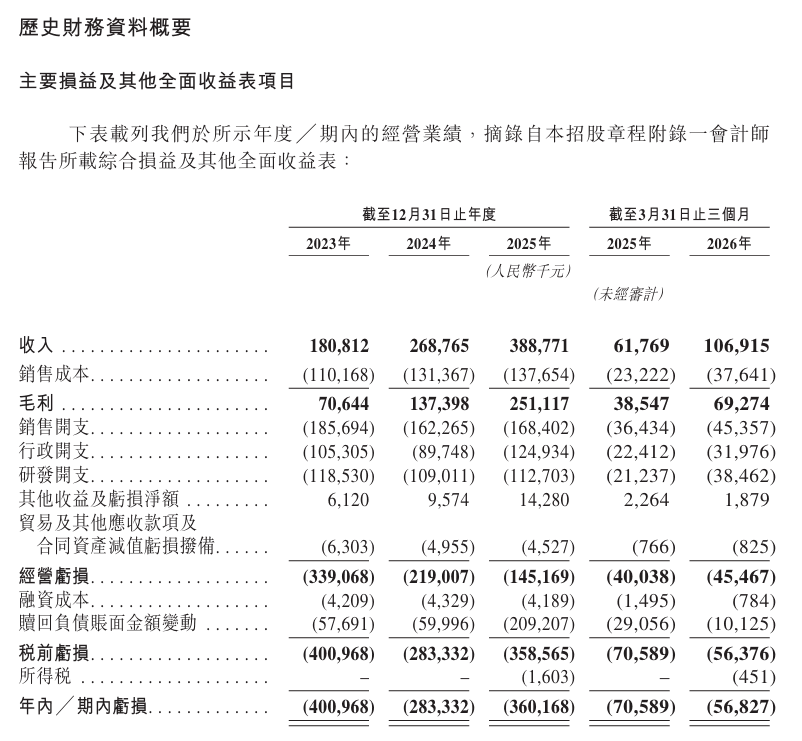
- •Unitree's revenue surged to 1.71 billion yuan (USD 235 million) in 2025, marking a 335% year-over-year growth, with the company achieving profitability in 2024. Humanoid robots became its primary revenue driver in 2025, contributing 51.5% of total revenue in the first nine months.
- •Agibot, founded by Peng Zhihui in February 2023, has rapidly scaled production, rolling out its 1,000th general-purpose embodied robot in January 2025 and surpassing the 10,000-unit production threshold by March 2026.
- •Agibot's acquisition of a controlling stake in Shangwei New Materials for approximately 2.1 billion yuan (US$290 million) is a strategic move to accelerate capitalization and strengthen its presence in public markets, despite the company denying it constitutes a 'backdoor listing'.
- •The broader humanoid robot market is experiencing explosive growth, projected to reach $2.9 billion by 2025 and between $4 billion to $18 billion by 2030, driven by rapid AI advancements, mechanical design improvements, and increasing structural labor shortages.
📊 Competitor Analysis▸ Show
| Company | Key Robot Model(s) | Price Range / Model | Max Speed | Max Payload | Status / Key Feature |
|---|---|---|---|---|---|
| Unitree Robotics | H1, G1 | H1: ~$90,000; G1: $16,000+ | H1: 3.3 m/s (potential >5 m/s) | H1: 47kg (body weight) | Mass production, IPO planned, strong locomotion |
| Agility Robotics | Digit | RaaS model / ~$250,000 (est.) | Not specified, but focused on reliable bipedal locomotion | 16 kg (upgrading to 22.6 kg) | Commercial deployment in warehouses (e.g., GXO Logistics, Toyota) |
| Tesla | Optimus Gen 2 | Target: $20,000-$30,000 | Not specified | Not specified | Pilot / Factory testing, high-profile, leverages FSD AI, 28+ DOF hands |
| Apptronik | Apollo | RaaS model | Not specified | Not specified | Early commercial, industrial automation focus (palletizing, machine tending), swappable batteries |
| Boston Dynamics | Atlas (Electric) | Not yet for sale | Not specified | 25 kg | Pilot, focused on physical strength and range of motion, Google DeepMind AI partnership |
🛠️ Technical Deep Dive
- Unitree H1:
- Height: Approximately 180 cm.
- Weight: About 47 kg.
- Max Moving Speed: 3.3 m/s (world record at launch), with potential mobility exceeding 5 m/s.
- Joint Torque: Peak knee joint torque of 360 N·m, hip joint torque of 220 N·m, arm joint torque of 75 N·m.
- Peak Torque Density: 189 N·m/kg.
- Battery: 864 Wh, quickly replaceable, providing 1.5–2 hours of runtime.
- Perception: Equipped with 3D LiDAR (LIVOX-MID360) and Intel RealSense D435i depth camera for 360° depth sensing.
- Degrees of Freedom (DOF): 19 total (5 per leg: Hip × 3 + Knee × 1 + Ankle × 1; 4 per arm, expandable).
- Motors: Utilizes self-developed M107 joint motors with hollow axle design and dual encoders.
- Computing: Intel Core i5 (platform function) / i7 (user development) standard, with optional Intel Core i7 or Jetson Orin NX.
- Software: Full ROS2 support and OTA update pipeline.
- Agibot (General Approach):
- Full-stack robotics platform integrating "Embodiment + AI".
- Focus on developing embodied intelligent robots that can learn, adapt, and evolve.
- Established a "data collection factory" to gather real-world data from domestic activities like folding clothes and washing dishes.
- Developed a generalist embodied foundation model, GO-1, launched in March 2025.
- Agibot A2 robot holds a Guinness World Record for walking a distance of 106.286 kilometers.
🔮 Future ImplicationsAI analysis grounded in cited sources
⏳ Timeline
📎 Sources (30)
Factual claims are grounded in the sources below. Forward-looking analysis is AI-generated interpretation.
- businesstimes.com.sg
- ehangzhou.gov.cn
- kraneshares.com
- agibot.com
- wikipedia.org
- therobotreport.com
- tmtpost.com
- binance.com
- robozaps.com
- techdogs.com
- uninetworkgroup.com
- robozaps.com
- bidyutinnovation.com
- newmarketpitch.com
- evsint.com
- articsledge.com
- unitree.com
- robotshop.com
- quadruped.de
- agibot.com
- lookingglassxr.com
- agibot.com
- humanoidsdaily.com
- kr-asia.com
- roboticscenter.ai
- robozaps.com
- morganstanley.com
- 36kr.com
- computerweekly.com
- robozaps.com
Weekly AI Recap
Read this week's curated digest of top AI events →
👉Related Updates

AI-curated news aggregator. All content rights belong to original publishers.
Original source: 虎嗅 ↗
This is a summary, not the original. Read the source, or get the weekly briefing.
The weekly digest
One email a week. Unsubscribe anytime.