Understanding precision and accuracy in measurement systems
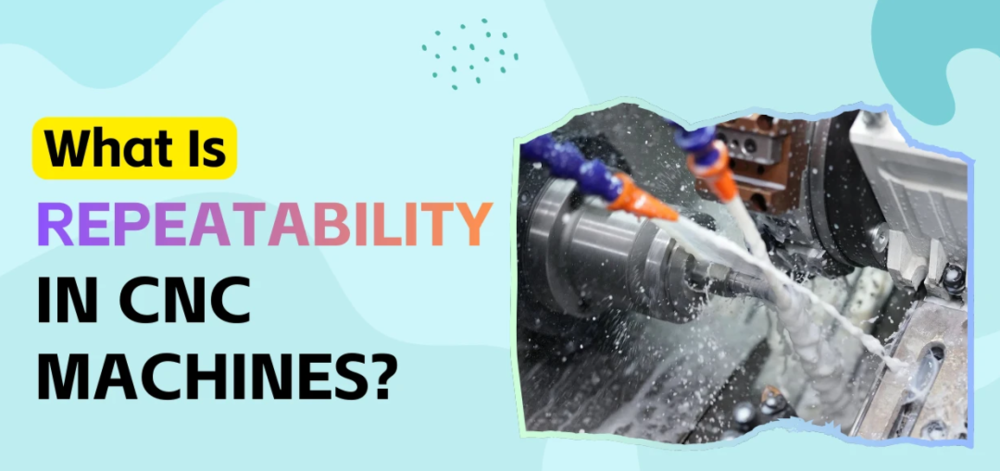
💡Master the core concepts of measurement precision essential for building reliable AI-integrated hardware systems.
⚡ 30-Second TL;DR
What Changed
Distinguishes between positioning accuracy, repeatability, and resolution.
Why It Matters
Provides a foundational understanding for engineers working on AI-driven robotics or automated manufacturing systems where sensor calibration is critical.
What To Do Next
Audit your sensor data pipelines to ensure that repeatability metrics are prioritized over raw accuracy for model training stability.
Key Points
- •Distinguishes between positioning accuracy, repeatability, and resolution.
- •Explains why repeatability is often more critical than absolute accuracy for industrial consistency.
- •Discusses the physical principles and challenges of measurement in high-precision systems.
🧠 Deep Insight
AI-generated analysis for this event — not the original article.
🔑 Enhanced Key Takeaways
- •The integration of AI-driven predictive maintenance allows systems to compensate for thermal drift in real-time, effectively shifting the burden from mechanical precision to software-based error correction.
- •ISO 230-2 standards serve as the global benchmark for testing CNC machine tool accuracy and repeatability, defining specific procedures for bidirectional positioning tests.
- •Metrology-grade sensors now utilize interferometry and laser-based feedback loops to achieve sub-nanometer resolution, far exceeding the mechanical limitations of traditional encoder-based systems.
- •The 'Abbe Principle' remains a fundamental constraint in measurement design, stating that the measuring system should be placed along the axis of the measured dimension to minimize angular error amplification.
- •Digital Twin technology is increasingly used to simulate measurement uncertainty budgets before physical prototyping, reducing the cost of achieving high-precision tolerances.
🛠️ Technical Deep Dive
- Laser Interferometry: Utilizes the wavelength of light as a reference standard to measure displacement with nanometer-level resolution, often used to calibrate CNC axes.
- Capacitive Sensors: Employ changes in electrical capacitance to detect minute variations in distance, commonly used in high-speed, non-contact industrial gauging.
- Thermal Compensation Algorithms: Software models that ingest data from multiple thermistors placed on machine castings to calculate and adjust for structural expansion caused by ambient temperature changes.
- Encoder Resolution: Defined by the number of pulses per revolution (PPR) or counts per millimeter; higher resolution allows for finer control loops but increases susceptibility to electrical noise.
🔮 Future ImplicationsAI analysis grounded in cited sources
⏳ Timeline
Weekly AI Recap
Read this week's curated digest of top AI events →
👉Related Updates



AI-curated news aggregator. All content rights belong to original publishers.
Original source: 虎嗅 ↗
This is a summary, not the original. Read the source, or get the weekly briefing.
Weekly AI briefing
One email a week. Unsubscribe anytime.