Understanding AI Governance: Frameworks, Principles, and Best Practices
💡Learn how to bridge the gap between rapid AI agent deployment and enterprise security requirements.
⚡ 30-Second TL;DR
What Changed
60% of organizations have deployed AI agents in production environments.
Why It Matters
Establishing robust AI governance is becoming a prerequisite for enterprise-scale AI deployment. Organizations that fail to bridge the compliance gap risk stalling their agentic AI initiatives.
What To Do Next
Audit your current AI agent workflows for compliance gaps and implement a centralized logging system to track agent decision-making.
Key Points
- •60% of organizations have deployed AI agents in production environments.
- •40% of organizations identify security and compliance as the primary barrier to scaling AI.
- •AI governance is essential for managing high-stakes decision-making processes.
🧠 Deep Insight
Background and context from public sources — not the original article. 25 sources cited.
🔑 Enhanced Key Takeaways
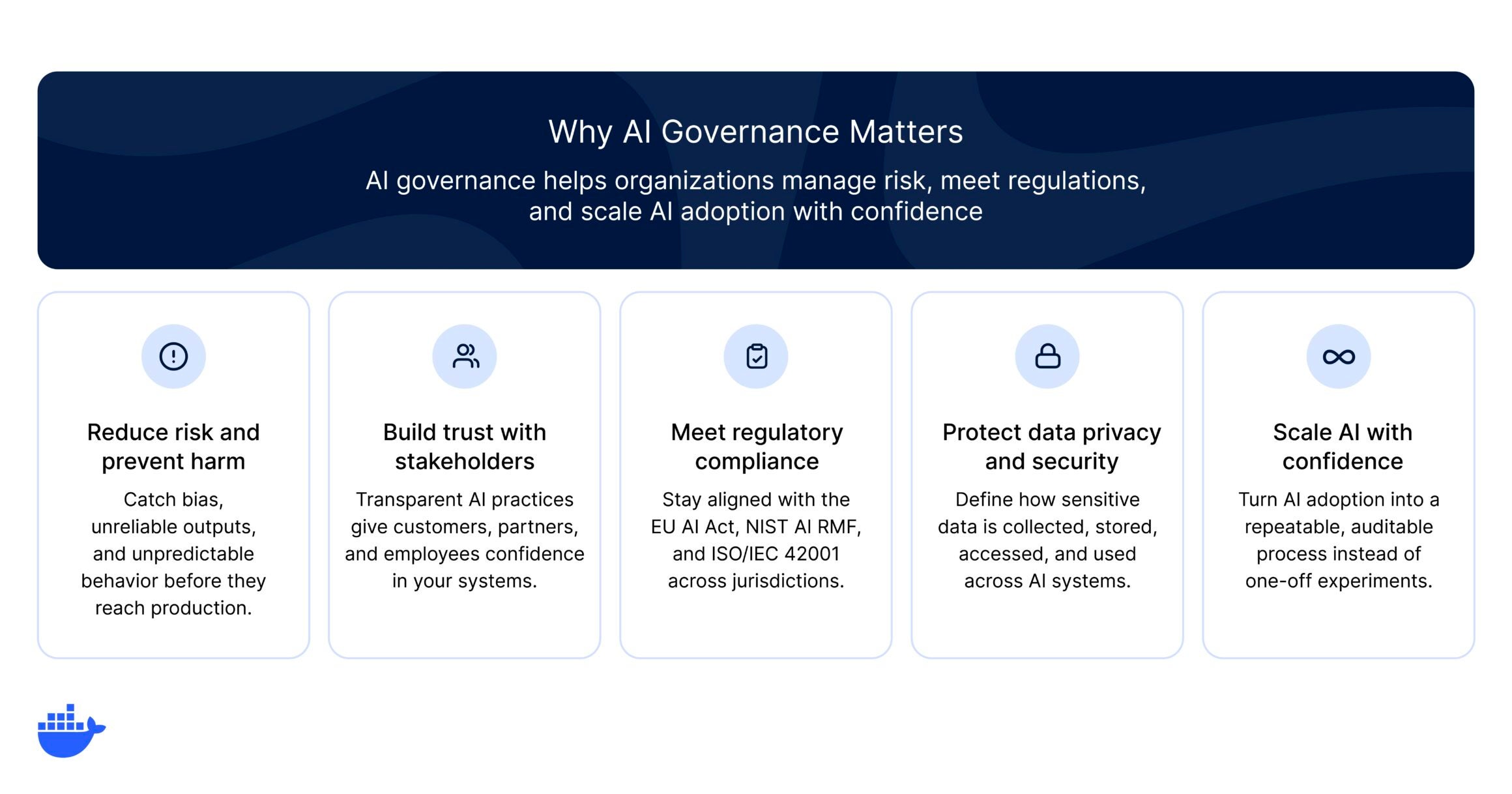
- •The EU AI Act, which entered into force on August 1, 2024, represents the first comprehensive regulatory framework for AI globally, establishing specific obligations based on the risk categories of AI systems.
- •The NIST AI Risk Management Framework (AI RMF), published in January 2023, offers voluntary guidance for organizations to manage AI risks across the entire AI lifecycle, structured around four core functions: Govern, Map, Measure, and Manage.
- •ISO/IEC 42001:2023, introduced in December 2023, is the inaugural international standard for an Artificial Intelligence Management System (AIMS), providing a structured framework to build trust, ensure compliance, and manage AI-related risks.
- •Scaling agentic AI introduces distinct security challenges, including managing dynamic and short-lived AI agent identities, an expanded attack surface, and the critical need to shift security focus from filtering prompts to governing autonomous actions.
- •Effective AI governance necessitates a cross-functional approach, involving collaboration among data and AI teams, legal and compliance, privacy and security, and business stakeholders, often maturing through informal, ad hoc, and formal stages.
🛠️ Technical Deep Dive
- The NIST AI Risk Management Framework (AI RMF) is built around four core functions: Govern, Map, Measure, and Manage, and promotes seven characteristics of trustworthy AI systems: valid and reliable, safe, secure and resilient, explainable and interpretable, privacy-enhanced, and fair with harmful bias managed.
- ISO/IEC 42001 defines core components for an Artificial Intelligence Management System (AIMS), including AI Risk Assessment, AI Impact Assessment, Data Protection, and AI Security, integrated with organizational processes.
- Challenges in scaling AI agents involve managing dynamic identities, short-lived credentials, and the need for automated lifecycle management to prevent security risks and compliance issues.
- Gartner emphasizes that for AI agents, the security focus must shift from filtering prompts to governing autonomous actions, as agents execute multi-step workflows independently and can dynamically invoke external services.
🔮 Future ImplicationsAI analysis grounded in cited sources
⏳ Timeline
📎 Sources (25)
Factual claims are grounded in the sources below. Forward-looking analysis is AI-generated interpretation.
Weekly AI Recap
Read this week's curated digest of top AI events →
👉Related Updates
AI-curated news aggregator. All content rights belong to original publishers.
Original source: Docker Blog ↗
This is a summary, not the original. Read the source, or get the weekly briefing.
The weekly digest
One email a week. Unsubscribe anytime.