Ultrasound Brain Interfaces Enter AI’s Next Era
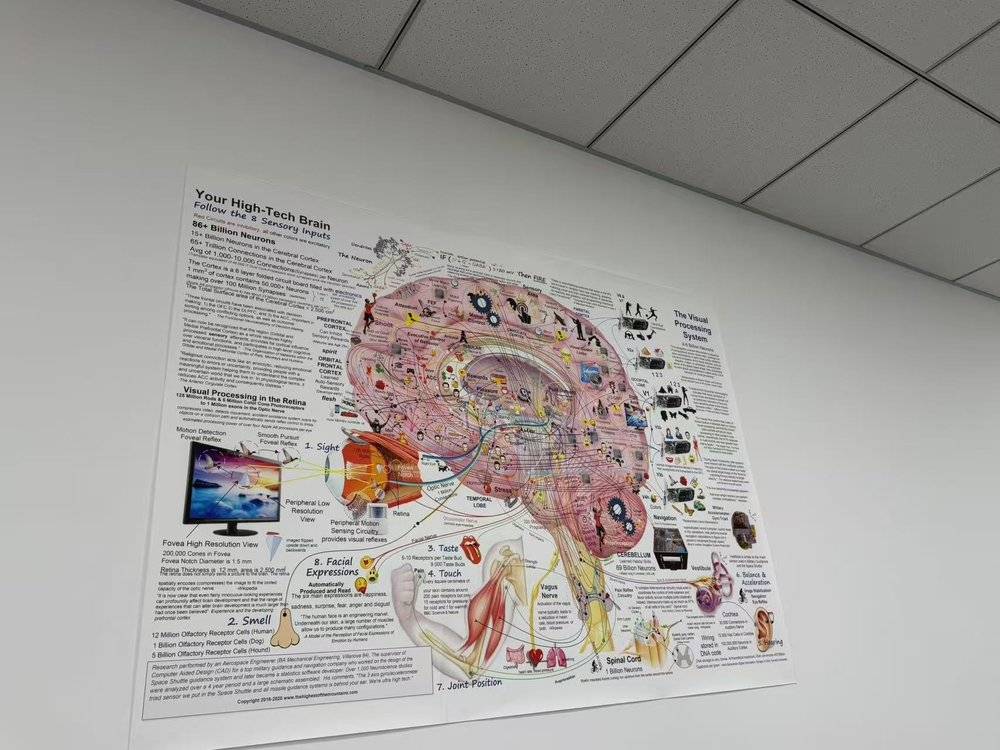
💡Brain-computer interfaces are shifting from medical devices to AI’s next human-intent input layer.
⚡ 30-Second TL;DR
What Changed
华超神控成立不到一年完成亿元级天使轮系列融资,经纬创投等机构参与投资。
Why It Matters
The funding surge indicates that brain-computer interfaces are increasingly being evaluated as an AI input and interaction layer, not only as medical devices. If non-invasive closed-loop stimulation proves safe and effective, it could create new interfaces for adaptive mental-health tools, assistive technology and human-intent decoding.
What To Do Next
For any BCI prototype, benchmark ultrasound or EEG decoding with subject-specific calibration and closed-loop feedback, while documenting safety and clinical-validation requirements.
Key Points
- •华超神控成立不到一年完成亿元级天使轮系列融资,经纬创投等机构参与投资。
- •公司采用超声作为核心路线,同时自研神经信号读取和干预闭环。
- •其宣称超声聚焦精度约1.5毫米,优于文中所述TMS常见的1至3厘米范围。
- •AI被用于实时状态识别、个性化刺激参数调整和闭环效果验证。
- •脑机接口赛道正从医疗康复扩展至AI基础设施、人机交互和精神健康应用。
🧠 Deep Insight
AI-generated analysis for this event.
🔑 Enhanced Key Takeaways
- •Ultrasound-based BCI technology, specifically Functional Ultrasound (fUS), leverages the neurovascular coupling effect to map brain activity with higher spatial resolution than traditional fMRI.
- •The 'closed-loop' system mentioned utilizes real-time AI processing to mitigate the latency issues typically associated with ultrasound signal processing in neuro-modulation.
- •Regulatory pathways for non-invasive ultrasound BCI in China are currently navigating the NMPA's 'Innovative Medical Device' fast-track approval process for neuro-rehabilitation applications.
- •The 1.5mm focal precision achieved by the company is enabled by phased-array transducer technology, which allows for dynamic beam steering without physical movement of the device.
- •Beyond clinical use, the company is exploring 'neuro-digital twin' modeling, where AI creates a personalized digital representation of the user's neural response patterns to optimize stimulation efficacy.
📊 Competitor Analysis▸ Show
| Feature | 华超神控 (Ultrasound) | Neuralink (Invasive) | Synchron (Stentrode) | TMS Providers (Magnetic) |
|---|---|---|---|---|
| Invasiveness | Non-invasive | Highly Invasive | Minimally Invasive | Non-invasive |
| Precision | ~1.5mm | Neuron-level | Regional | 1-3cm |
| Signal Quality | Moderate (fUS) | High (Direct) | Moderate (Vascular) | Low (Surface) |
| Primary Use | Research/Wellness | Clinical/Restorative | Clinical/Motor | Clinical/Psychiatric |
🛠️ Technical Deep Dive
- Utilizes Transcranial Focused Ultrasound (tFUS) for neuromodulation, targeting deep brain structures without surgical intervention.
- Employs high-frequency phased-array transducers (typically 0.5MHz to 1.0MHz range) to achieve sub-2mm focal spot sizes.
- Integrates a real-time AI feedback loop that adjusts acoustic intensity and pulse repetition frequency (PRF) based on EEG or fUS-derived hemodynamic feedback.
- Signal processing pipeline incorporates deep learning models for artifact rejection, specifically filtering out motion artifacts and skull-induced acoustic aberrations.
🔮 Future ImplicationsAI analysis grounded in cited sources
⏳ Timeline
Weekly AI Recap
Read this week's curated digest of top AI events →
👉Related Updates

AI-curated news aggregator. All content rights belong to original publishers.
Original source: 虎嗅 ↗