Qwen Office Opens Paid Beta
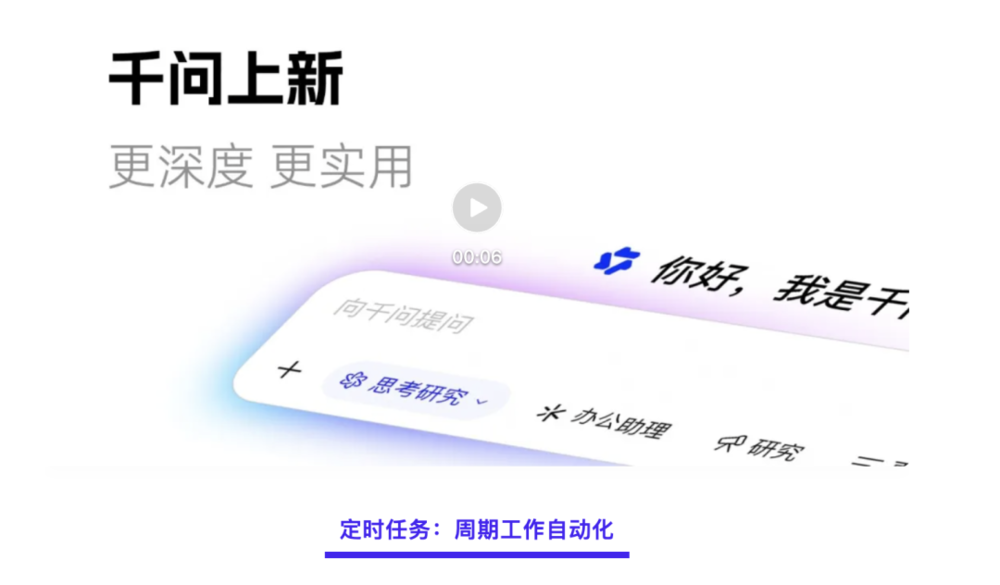
Alibaba is pricing enterprise AI agents while consolidating competing products—an important blueprint for AI workspace s
30-Second TL;DR
What Changed
Qwen Office pricing starts at 98 yuan per month for individuals and 198 yuan per seat per month for enterprise standard plans.
Why It Matters
The launch signals a shift from free consumer AI experimentation toward budgeted enterprise agent deployments. For enterprise AI builders, the decisive factors will be workflow integration, data access, measurable productivity gains, and renewal economics rather than feature count alone.
What To Do Next
Build a pilot on Qwen Office’s free tier and track concurrent-task limits, document access, workflow completion time, and projected per-seat ROI before committing to paid seats.
Key Points
- •Qwen Office pricing starts at 98 yuan per month for individuals and 198 yuan per seat per month for enterprise standard plans.
- •The free tier limits concurrent tasks to 10, while paid plans remove that limit.
- •Alibaba consolidated three overlapping agent products to reduce internal competition and clarify the enterprise product line.
- •Qwen Office and Qwen App share the Qwen brand but remain under separate organizational units with potentially overlapping use cases.
- •Alibaba’s broader strategy is to make one AI agent the entry point while collaboration tools become callable capabilities.
Deep Insight
AI-generated analysis for this event — not the original article.
Enhanced Key Takeaways
- •Qwen Office integrates deep-link capabilities with Alibaba's DingTalk ecosystem, allowing agents to execute tasks directly within enterprise communication workflows.
- •The consolidation strategy follows a broader 'AI-First' restructuring at Alibaba Cloud, aimed at reducing redundant R&D spending across the Qwen-related business units.
- •Qwen Office utilizes a proprietary 'Agent-Orchestration' layer that allows users to chain multiple specialized models (formerly Wukong and MuleRun) into a single automated pipeline.
- •The pricing model includes a 'Pay-as-you-go' API credit system for enterprise users who exceed standard seat quotas, targeting high-volume automation tasks.
- •Alibaba has implemented a unified data-privacy framework for Qwen Office that allows enterprise clients to opt-out of model training on their proprietary workspace data.
Competitor Analysis
- Qwen Office
- 198 CNY/seat/mo
- Microsoft 365 Copilot
- ~$30 USD/user/mo
- ByteDance Doubao Enterprise
- Variable/Custom
- Qwen Office
- Agent Orchestration
- Microsoft 365 Copilot
- Office Productivity
- ByteDance Doubao Enterprise
- Content/Knowledge Base
- Qwen Office
- DingTalk/Alibaba Cloud
- Microsoft 365 Copilot
- Microsoft 365 Suite
- ByteDance Doubao Enterprise
- Lark/Feishu
- Qwen Office
- Qwen-Max/Turbo
- Microsoft 365 Copilot
- GPT-4o
- ByteDance Doubao Enterprise
- Doubao-Pro
| Feature | Qwen Office | Microsoft 365 Copilot | ByteDance Doubao Enterprise |
|---|---|---|---|
| Pricing | 198 CNY/seat/mo | ~$30 USD/user/mo | Variable/Custom |
| Core Focus | Agent Orchestration | Office Productivity | Content/Knowledge Base |
| Integration | DingTalk/Alibaba Cloud | Microsoft 365 Suite | Lark/Feishu |
| Model Base | Qwen-Max/Turbo | GPT-4o | Doubao-Pro |
Technical Deep Dive
- Architecture: Utilizes a multi-agent orchestration framework where a central 'Controller' model delegates sub-tasks to specialized domain agents.
- Context Window: Supports long-context processing up to 1M tokens for document analysis and enterprise knowledge retrieval.
- Deployment: Offers hybrid deployment options, allowing sensitive enterprise data to remain within private VPCs while utilizing cloud-based inference.
- Tooling: Features a low-code 'Agent Builder' interface that allows non-technical users to define agent behaviors via natural language prompts and API connectors.
Future ImplicationsAI analysis grounded in cited sources
Timeline
- 2023-08Alibaba releases Qwen-7B, marking the start of the open-source Qwen model series.
- 2024-04Alibaba launches Qwen-Max and begins aggressive enterprise AI integration efforts.
- 2025-02Internal development of Wukong and MuleRun agents reaches maturity within Alibaba Cloud.
- 2026-05Alibaba initiates the consolidation of internal agent projects to streamline the Qwen product roadmap.
- 2026-08Qwen Office enters public beta, marking the first commercialized unified agent workspace.
Event Coverage
Weekly AI Recap
Read this week's curated digest of top AI events →
AI-curated news aggregator. All content rights belong to original publishers.
Original source: 虎嗅 ↗
This is a summary, not the original. Read the source, or get the weekly briefing.
The weekly digest
One email a week. Unsubscribe anytime.