Ukraine deploys fully autonomous AI-powered combat drones
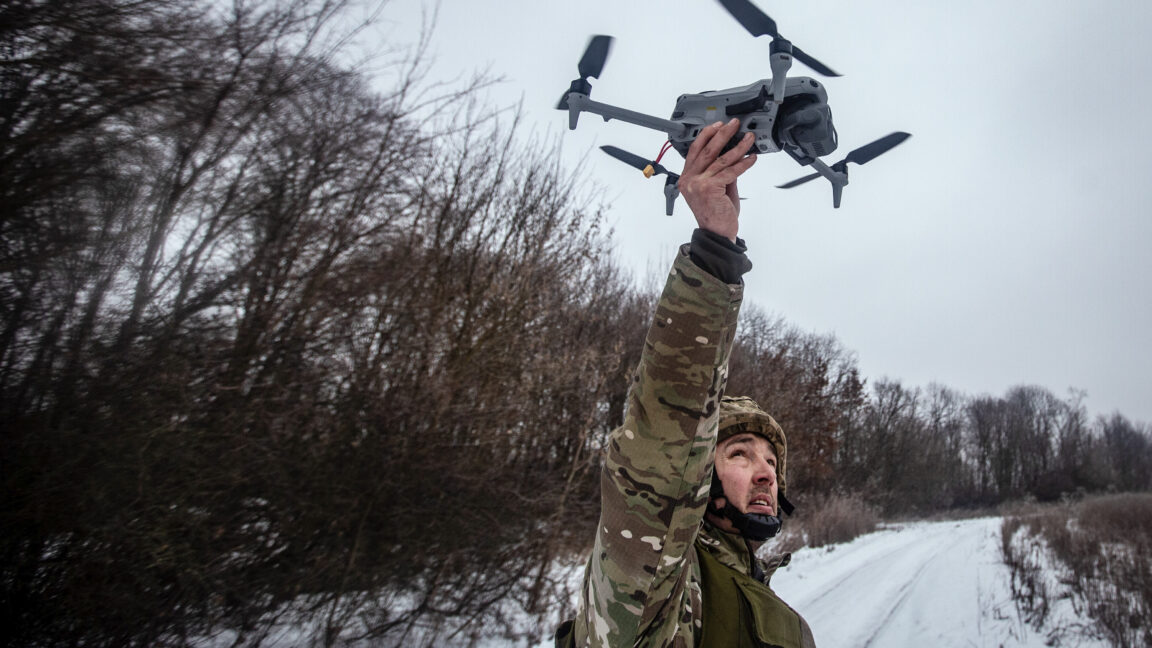
💡First-hand look at the real-world deployment of fully autonomous AI in high-stakes combat environments.
⚡ 30-Second TL;DR
What Changed
Ukraine successfully tested fully autonomous drones in combat scenarios.
Why It Matters
The integration of edge AI in high-stakes environments demonstrates the feasibility of autonomous decision-making in contested zones. This will likely accelerate global R&D in edge-based computer vision and navigation systems.
What To Do Next
Research edge-based computer vision frameworks like OpenCV or TensorRT for low-latency, offline object detection in resource-constrained environments.
Key Points
- •Ukraine successfully tested fully autonomous drones in combat scenarios.
- •The military is actively installing AI modules on various robotic platforms.
- •This development signals a significant evolution in autonomous weapon systems and edge AI deployment.
🧠 Deep Insight
Background and context from public sources — not the original article. 15 sources cited.
🔑 Enhanced Key Takeaways
- •Ukraine's AI-enabled mid-range drones are designed to autonomously bypass Russian air defenses, identify and engage targets, and distinguish decoys, primarily to disrupt Russian logistics and supply lines up to 150 kilometers behind the front lines.
- •The Ukrainian military's long-term strategic objective is to replace human warfighters in direct combat with autonomous unmanned systems to conserve limited human forces and overcome vulnerabilities like fatigue and stress.
- •Ukraine has developed and deployed autonomous interceptor drones, such as the LITAVR, capable of independently tracking and engaging Russian Shahed-type UAVs, automating up to 95% of the interception cycle to provide a cost-effective air defense solution.
- •Ukraine has significantly scaled its domestic drone production, manufacturing an estimated 4 million robotic and autonomous systems in 2025 and projecting 5-6 million in 2026, which has been a key factor in reversing Russian gains and expanding strike ranges.
- •Ukraine has established an online portal providing allied governments and defense companies direct access to over 2 million hours of combat drone footage, aiming to share battlefield data to accelerate the development of advanced autonomous weapons for its own forces and allies.
🛠️ Technical Deep Dive
- AI Navigation and Target Recognition: Ukrainian AI-enabled drones utilize neural networks and onboard computing systems (e.g., Nvidia Jetson Orin AI computers) to process real-time imagery from optical cameras.
- GPS-Denied Operations: These systems employ visual navigation through terrain matching, comparing real-time imagery with preloaded high-resolution satellite data to determine position and maintain course even when GPS signals are jammed or spoofed.
- Target Identification and Engagement: Algorithms analyze video feeds to distinguish between silhouettes of military equipment and decoys (based on object geometry, surface characteristics, and engine heat signatures), performing automatic lock-on and adjusting flight paths for precise engagement.
- Modular AI Integration: Ukraine's defense industry is developing standalone AI-driven software modules that can be integrated across various drone and robotic platforms, enabling functions like environmental perception, target recognition, and autonomous last-mile navigation.
- Interceptor Drone Autonomy: Systems like the LITAVR feature an automatic terminal guidance system, allowing the drone to independently track and attack a target after initial human designation, equipped with both daytime and thermal imaging cameras.
🔮 Future ImplicationsAI analysis grounded in cited sources
⏳ Timeline
📎 Sources (15)
Factual claims are grounded in the sources below. Forward-looking analysis is AI-generated interpretation.
Weekly AI Recap
Read this week's curated digest of top AI events →
👉Related Updates
AI-curated news aggregator. All content rights belong to original publishers.
Original source: Ars Technica ↗
This is a summary, not the original. Read the source, or get the weekly briefing.
The weekly digest
One email a week. Unsubscribe anytime.