UK Considers Consent Rules for Bossware
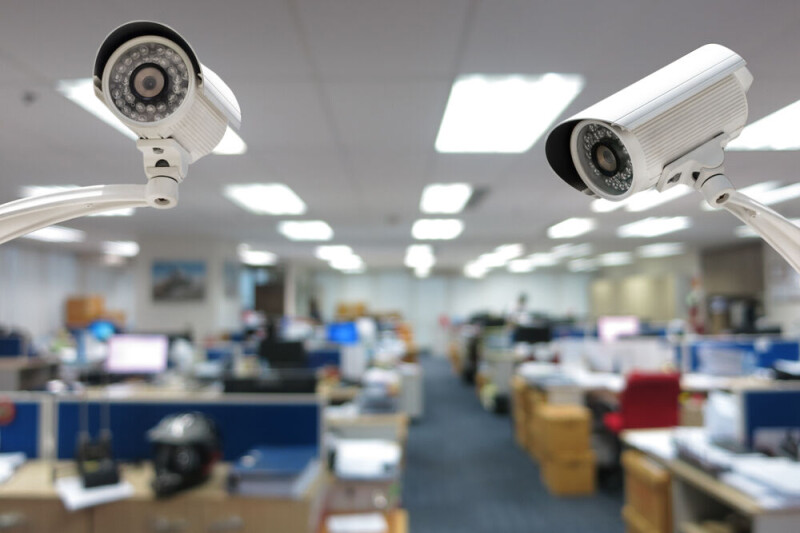
UK rules could reshape how AI productivity scoring and workplace surveillance are built and deployed.
30-Second TL;DR
What Changed
Employers may need to ask workers before installing workplace-monitoring software.
Why It Matters
If adopted, the proposals could increase compliance requirements for companies deploying AI-based employee analytics. AI vendors may need clearer consent flows, disclosure controls, and safeguards against opaque or overly invasive productivity scoring.
What To Do Next
Audit your AI workplace-analytics product and add explicit employee-consent, disclosure, and data-retention controls before UK deployment.
Key Points
- •Employers may need to ask workers before installing workplace-monitoring software.
- •Potentially regulated tools include AI productivity scores and keystroke logging.
- •Biometric monitoring and other employee-surveillance methods may also fall within the proposals.
Deep Insight
AI-generated analysis for this event — not the original article.
Enhanced Key Takeaways
- •The proposed regulations are being driven by the UK's Department for Science, Innovation and Technology (DSIT) as part of a broader strategy to modernize employment rights for the digital age.
- •Trade unions, including the TUC, have been lobbying for these changes, citing concerns that 'algorithmic management' can lead to discriminatory hiring, firing, and promotion practices.
- •The Information Commissioner's Office (ICO) has already updated its guidance on monitoring at work, emphasizing that transparency and data protection impact assessments (DPIAs) are mandatory for high-risk surveillance.
- •The proposals are expected to align with the UK's post-Brexit data protection framework, potentially diverging from the EU's AI Act which already imposes stricter transparency requirements on workplace AI systems.
- •Legal experts suggest that these rules may introduce a 'right to human intervention' for employees subject to automated performance management decisions, mirroring concepts found in GDPR Article 22.
Technical Deep Dive
- Bossware typically utilizes kernel-level drivers or API hooking to capture keystrokes, mouse movements, and application focus time.
- AI productivity scoring models often employ Natural Language Processing (NLP) to analyze communication metadata (Slack/Email) and sentiment analysis to gauge employee engagement.
- Biometric monitoring implementations frequently rely on facial recognition or gait analysis via office CCTV, processed through edge computing devices to minimize latency.
- Data exfiltration from these tools often involves encrypted telemetry streams sent to cloud-based dashboards, raising concerns about the security of sensitive employee behavioral data.
Future ImplicationsAI analysis grounded in cited sources
Timeline
- 2022-05TUC publishes 'Dignity at Work' report calling for regulation of AI-driven workplace surveillance.
- 2023-10ICO releases updated guidance on monitoring workers, emphasizing data protection law compliance.
- 2024-07New UK government signals intent to strengthen employment rights, including protections against unfair dismissal via AI.
- 2025-03UK government initiates formal consultation on the use of AI in the workplace and employee data rights.
Weekly AI Recap
Read this week's curated digest of top AI events →
AI-curated news aggregator. All content rights belong to original publishers.
Original source: The Register - AI/ML ↗
This is a summary, not the original. Read the source, or get the weekly briefing.
The weekly digest
One email a week. Unsubscribe anytime.