TSMC to Raise Prices for 7nm and Below Nodes
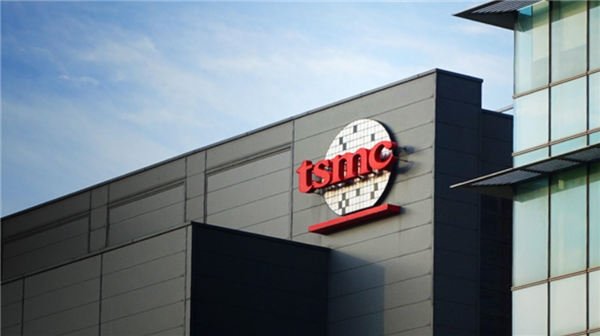
Rising TSMC foundry costs will directly impact the total cost of ownership for AI infrastructure and hardware.
30-Second TL;DR
What Changed
Price hikes apply to 7nm and all advanced nodes below it.
Why It Matters
Increased manufacturing costs for high-end AI chips will likely be passed down to AI hardware providers and cloud service companies, potentially raising the cost of AI compute.
What To Do Next
Review your hardware procurement budget for upcoming GPU or AI accelerator deployments as supply chain costs are rising.
Key Points
- •Price hikes apply to 7nm and all advanced nodes below it.
- •Expected price increase ranges between 5% and 10%.
- •The adjustment impacts roughly 75% of TSMC's total wafer revenue.
- •Notifications have already been sent to relevant customers.
Deep Insight
AI-generated analysis for this event — not the original article.
Enhanced Key Takeaways
- •The price adjustments are largely driven by the high demand for AI-accelerator chips, which utilize TSMC's most advanced nodes (N3, N2) and CoWoS packaging capacity.
- •TSMC is prioritizing capital expenditure for overseas expansion in the U.S. (Arizona) and Japan, necessitating higher margins to offset the increased operational costs of these facilities.
- •Industry analysts suggest that major clients like Apple, NVIDIA, and AMD have limited alternatives for high-end manufacturing, giving TSMC significant pricing power despite the hikes.
- •The move follows a broader industry trend of rising costs for EUV (Extreme Ultraviolet) lithography maintenance and the increasing complexity of gate-all-around (GAA) transistor architectures.
- •TSMC's utilization rates for 7nm and 5nm nodes have remained near capacity throughout 2026, providing the market leverage required to implement these price increases without significant volume loss.
Competitor Analysis
- TSMC
- Increasing (5-10%)
- Samsung Foundry
- Aggressive/Competitive
- Intel Foundry
- Variable/High
- TSMC
- N2 / N2P
- Samsung Foundry
- SF2 (2nm)
- Intel Foundry
- 18A / 14A
- TSMC
- CoWoS (Market Leader)
- Samsung Foundry
- I-Cube
- Intel Foundry
- Foveros
- TSMC
- Dominant (High-end)
- Samsung Foundry
- Challenger
- Intel Foundry
- Emerging
| Feature/Metric | TSMC | Samsung Foundry | Intel Foundry |
|---|---|---|---|
| Advanced Node Pricing | Increasing (5-10%) | Aggressive/Competitive | Variable/High |
| Leading Node | N2 / N2P | SF2 (2nm) | 18A / 14A |
| Packaging Tech | CoWoS (Market Leader) | I-Cube | Foveros |
| Market Position | Dominant (High-end) | Challenger | Emerging |
Technical Deep Dive
- The price hike specifically targets nodes utilizing EUV lithography, including N7+, N6, N5, N4, N3, and the upcoming N2 family.
- Advanced packaging costs, particularly for CoWoS (Chip-on-Wafer-on-Substrate) used in AI GPUs, are seeing separate, steeper surcharges due to extreme supply constraints.
- The transition to N2 (2nm) nodes involves the implementation of nanosheet transistor architecture (GAAFET), which significantly increases wafer production complexity and cost per square millimeter compared to FinFET.
- Yield optimization for sub-3nm nodes remains a primary cost driver, as defect density management requires more intensive inspection and repair cycles.
Future ImplicationsAI analysis grounded in cited sources
Timeline
- 2022-01TSMC announces significant price hikes across multiple nodes to fund massive capacity expansion.
- 2023-08TSMC begins mass production of N3 (3nm) technology, setting a new benchmark for foundry pricing.
- 2024-04TSMC secures U.S. CHIPS Act funding, committing to advanced node production in Arizona.
- 2025-09TSMC reports record-high utilization rates for CoWoS packaging due to the AI hardware boom.
Weekly AI Recap
Read this week's curated digest of top AI events →
Related Updates
AI-curated news aggregator. All content rights belong to original publishers.
Original source: cnBeta (Full RSS) ↗
This is a summary, not the original. Read the source, or get the weekly briefing.
The weekly digest
One email a week. Unsubscribe anytime.